From Vanity to Venture: How to Turn a Room in Your Home Into a Thriving Beauty Salon
There's a quiet revolution happening behind closed doors. Not in corporate boardrooms or co-working spaces, but in homes. In corners repurposed, rooms reimagined, and spare spaces that now serve a different function: income generation.
The beauty industry, long defined by glossy storefronts and salon chairs lined in a row, has moved in a new direction. More personal. More agile. And yes, more homegrown. Beauty professionals are ditching the overheads, reclaiming their time, and building something intimate and scalable from within their own walls.

Running a home salon used to sound like a pipe dream. Now it's just smart business.
*This post may contain affiliate links and I'll earn a commission if you shop through them. You can read my full disclosure here.
A Beauty Brand That Starts at Your Doorstep (and on Google)
If you've already got the hands, the skills, and the gear, you're halfway there. But let's be clear, having talent doesn't automatically get you clients. Visibility does. And in 2025, that means showing up online.
You can be the best lash tech or brow sculptor in your city, but if no one can find you, you're still invisible. The game now is local search. Booking convenience. Digital trust.
And that starts with one thing: your website.
You don't need to drop thousands on a custom build. Platforms like one.com give you everything you need to start a beauty salon website without writing a single line of code. Their website builder is plug-and-play, and more importantly, optimized to get you found. Think service pages, booking integrations, Google map embeds, photo galleries, and a blog for building topical authority in your niche. All in one dashboard.
Your site isn't just a landing page. It's your first impression, your booking assistant, your brand anchor, and your best marketing tool. If you're trying to run a home-based beauty business without one, you're building on sand.
Know the Rules Before the Renovation

Let's not romanticize. Turning a room into a business is still a business. That means local regulations, licensing, taxes, and the kind of red tape that separates side hustles from sustainable income.
Depending on where you live, you may need a business license, a special home occupation permit, or even neighborhood approval. States in the U.S. often require your cosmetology or esthetics license to be current and displayed. Some require annual inspections, even for home-based operations.
Before you buy that new chair or light fixture, check your zoning laws. The Small Business Administration has a great breakdown of home-based business permits and legal frameworks. It's not sexy, but it'll save you a compliance headache later.
And if you're taking payments, storing client data, or selling products? You'll also want to look into liability insurance and data protection policies. Your bedroom might double as your office, but it needs to function like a legitimate commercial space.
Your Room, Your Rules; But Make It Professional
Here's the thing: working from home doesn't mean operating casually. People will still judge your service by your space. The vibe, the cleanliness, the design. All of it matters.
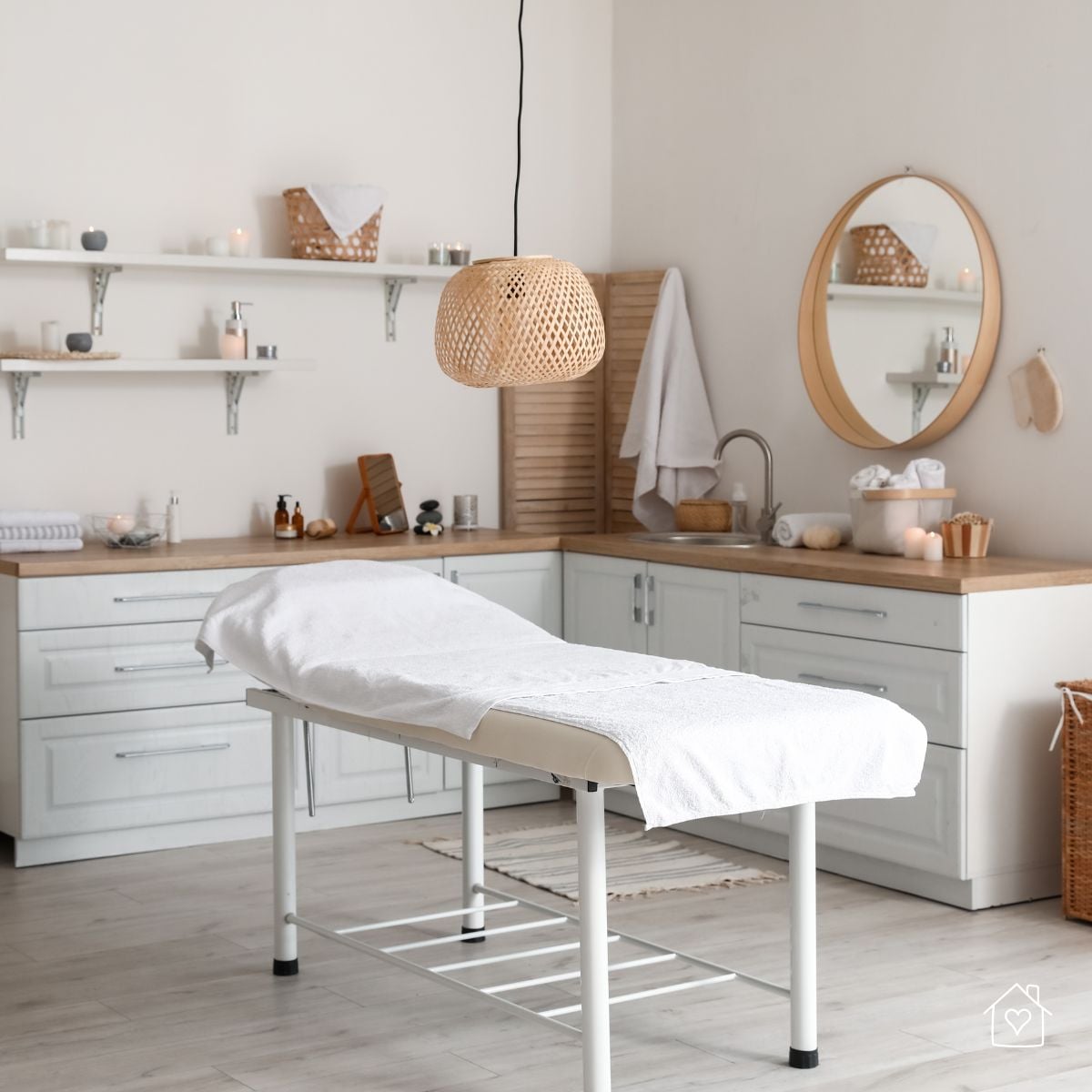
You don't need a floor-to-ceiling marble studio. But you do need a clean, well-lit space that feels like it was made for the work you're doing. Good lighting (natural if you can get it), a professional-grade chair, ample storage, and easy-to-sanitize surfaces are the baseline.
If clients have to walk through your kitchen to get to your chair, make sure your kitchen looks presentable. If the room doubles as a guest room, remove personal items. The more your space feels like a business, the more people will treat you like one.
It's not about faking it. It's about building confidence from the moment they walk in.
Hygiene Isn't Optional, It's a Value Proposition
This one's non-negotiable. You're working in close quarters with clients, often dealing with skin, tools, and shared surfaces. Especially in a post-COVID landscape, hygiene is part of your brand.
Keep things visible. Display your
Pro tip? Post a "What to Expect" hygiene page on your website. Clients love transparency, and it preempts awkward questions about your setup.
Attracting Clients in the Digital Wild
Once your home salon is operational, it's time to fill the chair.
Start local. Register your business with Google Business Profile. Post your service menu, hours, and photos of your work. Then sync it with your website to drive SEO. Use geo-targeted keywords like "home lash extensions in [City]" or "acrylic nails [Neighborhood]." Local search will do most of the heavy lifting for you.
Social media helps too, but only when paired with your own site. Platforms come and go, but your website is permanent. You control the content, the layout, the tone. That matters.
Also-reviews. Ask for them. Feature them. A dozen five-star reviews on your site and Google page can generate more bookings than a week of reels and stories.
Scaling Without Leaving Your House
Here's the magic of it all. You don't have to leave your house to grow.
Once your books are full, you can raise your rates, expand your services, launch digital products, or teach others. Your website can double as a shop. This is where things get interesting from a branding perspective. Instead of relying solely on third-party products, many professionals are starting to introduce their own lines. With options like organic private label spa products, you can offer clients something that feels exclusive to your business without the complexity of manufacturing from scratch. It reinforces your positioning, increases margins, and turns one-time appointments into repeat product sales that extend beyond the treatment room. You can start offering skincare kits, lash aftercare, or branded merchandise. You can even host virtual consultations.
The flexibility of a home-based setup is underrated. It gives you options. You're not stuck in a lease, you're not sharing revenue, and you're not beholden to anyone else's hours.
All you need is strategy, a clean space, and the right digital foundation.
The Bottom Line
You can keep waiting for the right commercial space to open up or you can carve out a corner of your home and make it pay. The barrier to entry has never been lower, and the tools to legitimize your business are sitting right in front of you.
Want to make it real? Start with a solid plan, a clear setup, and a proper website. Use tools that do the heavy lifting for you, like one.com. Make your space spotless. Get compliant. Then start telling people what you do.
This isn't about pretending to be in business. It's about building one. From home. On your terms.
Because at the end of the day, the only thing separating a vanity from a venture is how seriously you take the space and yourself.