How Epoxy Resin Helps Preserve Rare Wood Species
*This post may contain affiliate links and I'll earn a commission if you shop through them. You can read my full disclosure here.
Wood has always carried more than just physical structure - it holds memory. The rings reveal storms, droughts, and years of growth. The grain carries light and shadows in patterns that can't be repeated twice. Rare wood species, however, come with an added layer of fragility. They may grow slowly, appear in limited regions, or exist only in small quantities after natural events like storms or disease. Because of this, even a single fallen tree becomes incredibly valuable. Yet much of that tree often goes unused due to cracks, inconsistent density, or missing sections. Epoxy resin has quietly become one of the most effective ways to preserve what remains.
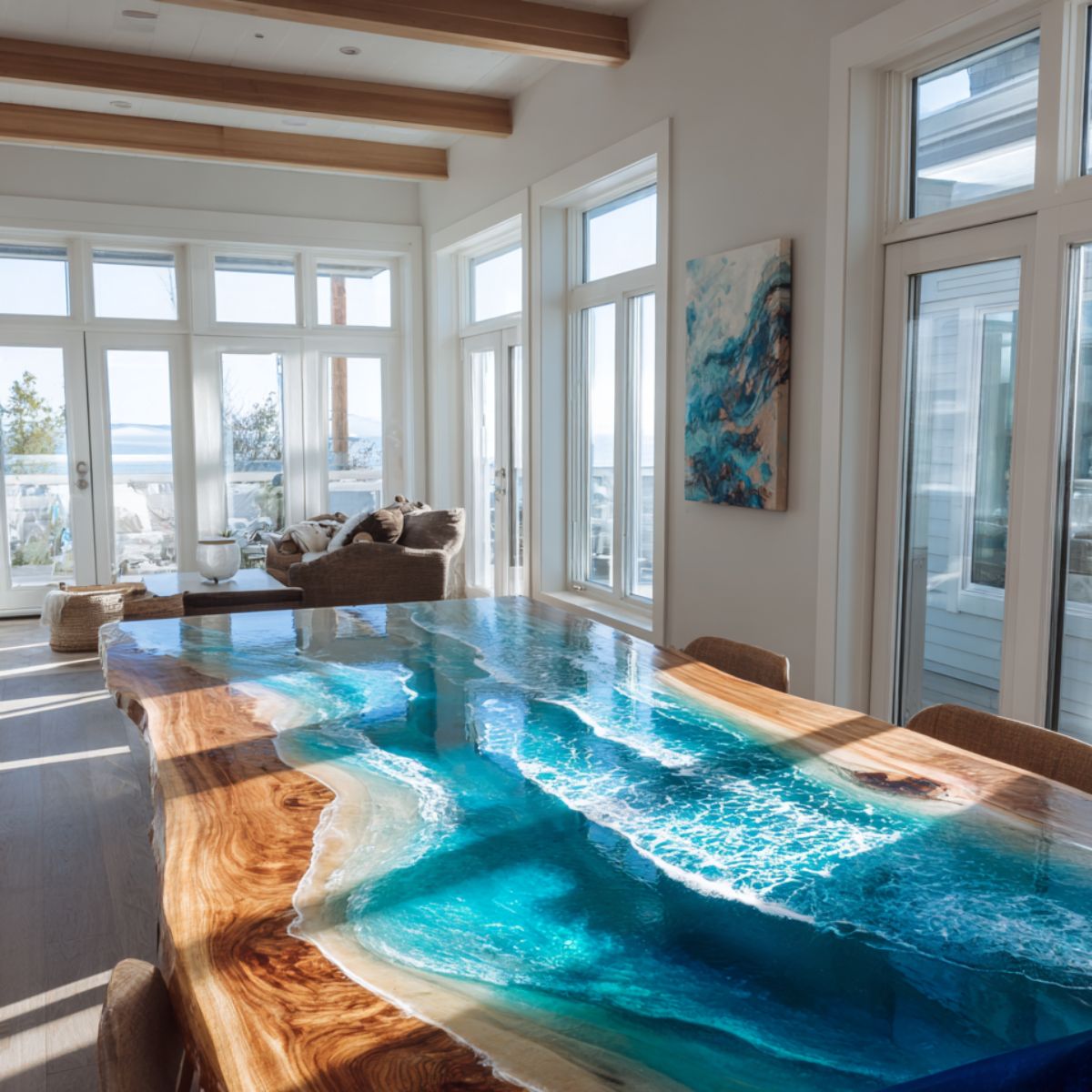
A clear example of this idea can be seen in modern designs such as an epoxy waterfall table, where resin helps stabilize imperfect slabs and turns unusable fragments into something both functional and expressive. Instead of cutting away irregular edges or discarding cracked areas, resin makes it possible to save them and reveal their natural beauty.
Why Rare Wood Is Often Difficult to Use
Rare wood species are not always endangered - some are simply difficult to find in healthy, uniform pieces. A fallen tree may have survived decades of weather, insects, and internal stress. Burls may be stunning but structurally unstable. Knots weaken surrounding fibers. Voids form where branches once grew. Traditional woodworking demands symmetry and predictability, forces that nature rarely provides.
As a result, large portions of rare wood must often be trimmed away to obtain a workable slab. This means a significant amount of a limited resource gets wasted. For species that cannot easily be regrown or replanted, losing even small portions feels irresponsible.
Epoxy resin, however, offers a solution that avoids the need for excessive cutting.
Strengthening What Nature Left Behind
When epoxy fills cracks, gaps, or hollow sections, it creates internal stability. Instead of collapsing or splitting further, the wood becomes reinforced. This allows craftspeople to keep more of the original tree intact.
- A deep crack becomes a design element rather than a structural failure.
- A hollow cavity becomes a feature filled with transparent or tinted resin.
- Loose fibers become locked in place, gaining strength without losing character.
In this way, resin acts as both a support system and a visual complement.
Highlighting, Not Hiding, Imperfections
One of the most remarkable things about epoxy is its ability to turn "defects" into beauty. Features like knots, mineral streaks, spalting, and insect trails are often extremely desirable in rare woods. These marks show the life of the tree - not just its appearance but its history.
Clear resin amplifies those features.
Tinted resin adds mood.
Metallic pigments create contrast.
Translucent tones offer depth without overpowering the grain.
Instead of hiding imperfections under opaque finishes or sanding them away, resin makes them part of the design.
Making Small or Oddly Shaped Pieces Usable
Rare wood often comes in fragments rather than large, perfect slabs. Without resin, many of those pieces would be too small or unstable to use. Epoxy allows multiple pieces to be suspended within a single cohesive design.
It makes it possible to:
- Join shorter pieces into full-length table slabs
- Use thin or narrow cuts that would otherwise warp
- Incorporate edge pieces with irregular or jagged shapes
- Surround fragments with resin to create larger, functional surfaces
This drastically reduces waste and helps ensure the entire tree is used respectfully.
Giving New Life to Trees That Fall Naturally
A surprising amount of rare lumber comes not from harvesting but from natural events - storms, lightning, disease, or simple age. These trees are often twisted, hollow, or partially rotted. Traditional woodworking can salvage only a fraction of the material.
Epoxy resin changes that outcome by allowing more of the tree to be used:
- Soft or unstable areas can be stabilized
- Hollow sections can be cast into solid forms
- Odd shapes can be preserved rather than discarded
- Decayed wood can be strengthened and protected
This approach makes fallen wood far more valuable and reduces pressure to cut living trees.
Reducing Demand for Freshly Harvested Rare Wood
Because epoxy allows imperfect or damaged wood to become fully functional, it shifts the demand away from flawless, freshly cut slabs. When artists and furniture makers embrace the beauty of irregular pieces, fewer trees need to be harvested to meet the desire for rare patterns and colors.
This change is subtle but meaningful: it encourages appreciation for uniqueness instead of perfection.
A Sustainable Mindset for the Future
Preserving rare wood with resin is more than a technical process - it's a shift in philosophy. It encourages people to see value in what already exists, even if it appears flawed. Instead of insisting on perfect lumber, makers can honor the natural story of a tree while protecting limited species from unnecessary harvesting.
Epoxy resin does not replace responsible forestry, but it supports it by reducing waste and extending the life of material that would otherwise be discarded.
Keeping Preserved Wood Beautiful Over Time
Once rare wood is stabilized and preserved with resin, proper care ensures the piece lasts for decades. Maintenance becomes part of the conservation effort - a way of honoring the material and the tree it came from.
For practical guidance, many owners refer to detailed resin care instructions that outline how to protect resin surfaces, avoid scratching, and maintain the clarity and durability of the finish over time.