The 10 Best Insurance Companies for Renters in 2026
Finding the best renters insurance company takes more thought than picking the lowest number on a quote screen. A policy that costs $7 per month can look like a bargain until a kitchen fire damages your belongings or a burst pipe from the apartment above sends water through your ceiling. Cheap coverage feels great right up until you need to use it.
Price matters, of course. Few renters want to pay for extras they will never need. At the same time, a rock-bottom premium means little if filing a claim turns into a frustrating back-and-forth or key protections are missing when disaster strikes. The strongest policies strike a balance between cost, coverage, customer experience, and convenience.
The renters insurance market looks very different in 2026 than it did just a few years ago. Digital-first insurers can issue policies in minutes from a smartphone, while long-established carriers continue to lean on broad coverage options, local agents, and decades of claims experience. Some companies focus on speed while others focus on flexibility. Only a few actually manage to deliver both.
This guide compares 10 renters insurance providers that stand out for different reasons. It breaks down pricing, coverage options, claims performance, discounts, and potential drawbacks. Whether you want the lowest possible premium, stronger protection for expensive belongings, or a policy you can manage entirely from an app, you'll find an option that fits the way you rent, live, and protect what matters most.
From time to time, articles on The How-To Home may reference third-party websites, businesses, products, services, or review platforms as part of editorial research. When evaluating companies or services, we may consider publicly available information such as customer reviews, business websites, service offerings, licensing information when available, and overall relevance to the topic.
Quick comparison: best renters insurance companies
| Insurance Company | Avg Annual Rate | Best For | NerdWallet Rating |
| Lemonade | From $60/yr | Replacement cost is an option on some claims, Extra Coverage | 4.5/5 |
| Amica | Not disclosed | Customer service excellence | 5.0/5 |
| State Farm | $110/yr | Low rates with agent support | 4.9/5 |
| Erie | $142/yr | Regional quality (12 states) | 4.7/5 |
| USAA | $146/yr | Military families | 5.0/5 |
| Allstate | $143/yr | Add-on coverage options | 4.⅘ |
| Travelers | $155/yr | Valuable items protection | 4.6/5 |
| Progressive | Varies | Auto bundle savings | N/A |
| Nationwide | $193/yr | Identity theft protection | 4.⅖ |
| Liberty Mutual | ~$151/yr | Online management | 4.⅘ |
What renters insurance covers
Every standard renters policy provides four types of protection:
Personal property coverage replaces belongings damaged or destroyed by covered perils like fire, theft, vandalism, and certain types of water damage. Coverage limits typically range from $15,000 to $100,000.
Personal liability coverage pays for legal and medical costs if someone gets injured in your rental or if you accidentally damage someone else's property. Standard limits range from $100,000 to $300,000.
Loss of use coverage reimburses temporary living expenses (hotels, short-term rentals, meals) if your apartment becomes uninhabitable after a covered event.
Medical payments to others covers minor injuries to guests regardless of who's at fault, typically up to $1,000 to $5,000.
The differences between insurers show up in coverage limits, add-on options, replacement cost vs. actual cash value, and how quickly claims get processed.
The 10 best insurance companies for renters
1. Lemonade: best for coverage value at low cost
Most traditional renters insurers have only recently begun catching onto the convenience, speed, and accuracy that a digital-first approach can offer policy holders. However, Lemonade has made this approach a hallmark of all their insurance offerings. With renters policies starting at $5/mo, it's easy to see why Lemonade has swiftly become one of the leading modern insurance providers for tech-savvy renters. What makes their product truly stand out is that, even at that price, personal property protection extends worldwide, covering items at work, in storage, or while traveling.
The Extra Coverage add-on is worth examining if you own anything above the standard $1,500 jewelry sublimit. It schedules individual items like rings, cameras, and instruments with no deductible and covers accidental loss, a combination that typically requires an expensive rider from traditional carriers. Bundle discounts reach $488/yr with car insurance and $94/yr with pet insurance. The company operates as a certified B-Corp.
Pros
- Replacement cost available on some claims, even at $5/mo starting price
- Extra Coverage for valuables at zero deductible
- Worldwide personal property coverage
- AI claims handling for straightforward cases
Cons
- No agent support by phone or in person
- Not available in every US state
- All policy management requires the app
Best for: Renters who want a digital-first experience and scheduled valuables coverage without paying premium rates
2. Amica: best for customer service ratings
Amica Mutual earns top marks for customer satisfaction, holding a 5.0/5 NerdWallet rating and the lowest consumer complaint rate among major renters insurers. Founded in 1907 as a mutual company, Amica has no shareholders pressuring it to minimize claim payouts. J.D. Power ranks Amica near the top of the property insurance satisfaction study.
A loyalty perk worth noting: Amica credits renters $100 per year (up to $500) toward a future homeowners insurance policy. Replacement cost coverage is available, and the company's A+ (Superior) AM Best rating signals strong financial health.
Pros
- Lowest consumer complaint rate among major insurers
- Top J.D. Power satisfaction scores
- $100/yr credit toward homeowners insurance
- A+ (Superior) AM Best financial strength
Cons
- Rates not publicly available online
- Digital tools trail insurtech competitors
- Unavailable in Alaska and Hawaii
Best for: Renters who prioritize personal service and plan to transition to homeownership
3. State Farm: best for low rates with agent support
State Farm's renters insurance averages $110/yr, the lowest among major national carriers. That pricing comes with access to one of the largest agent networks in the country, giving renters the option to discuss coverage in person rather than through an app or website.
The company's website and mobile app handle basic policy management tasks. State Farm offers numerous coverage customization options and bundle discounts with auto insurance. NerdWallet rates State Farm 4.9/5 for renters coverage.
Pros
- Cheapest average rates among large national insurers
- Massive local agent network
- Many coverage customization options
- 4.9/5 NerdWallet rating
Cons
- Less tech-forward than digital competitors
- Not available in every state
- Some areas require agent interaction for purchasing
Best for: Price-sensitive renters who want traditional agent support
4. Erie: best for satisfaction in the mid-Atlantic and Midwest
Erie Insurance combines competitive rates ($142/yr), a 4.7/5 NerdWallet rating, and above-average J.D. Power scores into one of the strongest regional renters insurance products available. The complaint rate sits well below the national average, and coverage options are generous.
Every policy must be purchased through an independent agent, which suits renters who want personalized guidance but frustrates those who prefer self-service.
Pros
- Excellent customer satisfaction and low complaints
- Competitive pricing at $142/yr
- Replacement cost coverage available
- Independent agent model for personalized service
Cons
- Available in only 12 states plus D.C.
- No online purchasing or quoting
- Agent interaction required for all transactions
Best for: Renters in Erie's 12-state territory who want high-quality service at moderate prices
5. USAA: best for military-connected renters
USAA's 5.0/5 NerdWallet rating and top J.D. Power scores make it the highest-rated renters insurer by most measures. Standard policies include flood and earthquake coverage, which virtually every other carrier either excludes or charges extra for. An electronics and tech package add-on covers device damage beyond normal wear.
Eligibility is limited to active-duty service members, veterans, and their families. Rates average $146/yr.
Pros
- Flood and earthquake coverage included in standard policies
- Top customer satisfaction across J.D. Power and NerdWallet
- Electronics/tech package available
- Low complaint rate
Cons
- Restricted to military community members
- Rates are average, not the cheapest
- Most renters don't qualify
Best for: Military-connected renters who want the broadest standard coverage available
6. Allstate: best for home-sharing hosts
Allstate's HostAdvantage coverage protects renters who list their space on Airbnb or similar platforms, filling a gap that most renters policies specifically exclude. Identity theft coverage, Claim RateGuard (prevents premium hikes after a claim), and multiple purchasing channels round out a solid mid-range option.
J.D. Power customer satisfaction scores fall below the industry average, a consistent weak spot. Rates average $143/yr.
Pros
- HostAdvantage for home-sharing hosts
- Identity theft coverage available
- Claim RateGuard protects rates after claims
- Online and agent purchasing
Cons
- Below-average J.D. Power satisfaction scores
- Higher rates than Lemonade and State Farm
- Digital experience lags insurtech competition
Best for: Renters who host guests through home-sharing platforms
7. Travelers: best for valuable items coverage

Travelers offers scheduled personal property coverage for jewelry, fine art, and collectibles at higher limits than standard policies allow. Identity theft coverage up to $25,000 matches Nationwide's limit. The insurer has operated since 1864, and its app handles policy management and claims filing.
Rates average $155/yr, above the national average. J.D. Power satisfaction sits below the industry benchmark despite the company's long heritage.
Pros
- Valuable items coverage for jewelry and art
- Identity theft coverage up to $25,000
- 160+ years in business
- Multiple discount options
Cons
- Below-average J.D. Power customer satisfaction
- Rates higher than digital-first competitors
- Traditional claims process
Best for: Renters with jewelry, art, or collectibles that need scheduled coverage
8. Progressive: best for existing auto customers
Progressive doesn't write its own renters insurance. Policies come from third-party carriers like Homesite, and the main draw is a bundle discount for current Progressive auto customers. The quote process is fast, and a Name Your Price tool lets you set a budget and see what coverage fits.
Claims quality depends on whichever third-party company underwrites your specific policy. NerdWallet doesn't rate Progressive's renters product because of this indirect model.
Pros
- Bundle discounts with Progressive auto
- Quick online quotes
- Name Your Price budgeting tool
Cons
- Policies underwritten by third parties
- Claims quality varies by underwriter
- No independent NerdWallet rating
Best for: Progressive auto customers who want a convenient bundle
9. Nationwide: best for high identity theft limits
Nationwide provides identity theft protection up to $25,000 as part of its renters coverage, the highest standard limit among major carriers. A brand-new belongings coverage option pays replacement cost on select items, and water backup coverage is available as an add-on.
At $193/yr, Nationwide is one of the most expensive options. J.D. Power scores sit above average, which partially justifies the higher cost.
Pros
- Identity theft protection up to $25,000
- Brand-new belongings coverage option
- Above-average J.D. Power satisfaction
- Water backup coverage add-on
Cons
- One of the most expensive major carriers
- Fewer discount options than competitors
- Higher cost without proportionally better base coverage
Best for: Renters concerned about identity theft who want built-in protection
10. Liberty Mutual: best for online tools
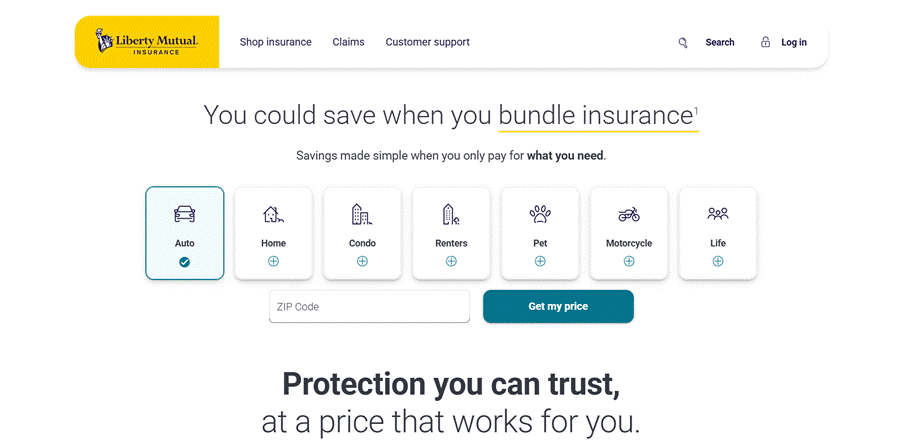
Liberty Mutual's digital experience handles quoting, purchasing, and policy management online with minimal friction. The insurer operates in most states and offers discounts for bundling, protective devices, and claims-free years.
Rates average approximately $151/yr, near the national average. J.D. Power satisfaction falls below the industry mark, and the company doesn't stand out in any single category beyond digital accessibility.
Pros
- Solid online quoting and management tools
- Wide geographic availability
- Multiple discount options
Cons
- Below-average J.D. Power satisfaction
- Average pricing without standout value
- No differentiating features beyond digital access
Best for: Renters who want a well-known carrier with functional online tools
How to choose the best insurance company for renters insurance
Compare deductible options
Your deductible is the amount you pay out of pocket before insurance kicks in. Most renters insurance deductibles range from $250 to $1,000. A higher deductible lowers your monthly premium but increases your cost when you file a claim. Choose a deductible you can comfortably afford in an emergency.
Check for bundling discounts
Most major insurers offer 5% to 25% discounts when you bundle renters insurance with auto or other policies. Lemonade's bundle with car insurance saves up to $488/yr. If you already carry auto insurance, check whether bundling delivers real savings versus buying renters coverage separately from a cheaper provider.
Understand replacement cost vs. actual cash value
Replacement cost policies pay the current price to buy a new version of a damaged or stolen item. Actual cash value policies subtract depreciation, paying what your item was worth at the time of loss. Replacement cost coverage typically costs a few dollars more per month and makes a significant difference at claim time. Providers like Lemonade include it by default; others charge extra.
Review online vs. agent service models
Digital-first insurers like Lemonade handle everything through apps and AI. Traditional carriers like State Farm and Erie route you through local agents. Neither model is inherently better; it depends on whether you prefer speed and self-service or face-to-face guidance.
Read the exclusions
Every renters policy excludes certain perils. Flood damage, earthquake damage, and pest infestations are common exclusions. If you live in a flood zone or earthquake-prone area, check whether your insurer offers add-on coverage or whether you need a separate policy.
Finding the right renters insurance: frequently asked questions
How do I choose the best renters insurance company?
Start with coverage needs, then compare prices. Identify what matters most to you: low cost, fast claims, agent support, or specific add-ons like identity theft protection. Get quotes from at least three providers at the same coverage levels to make a fair comparison. Lemonade, State Farm, and Amica consistently rank near the top across price, satisfaction, and coverage quality.
Can I bundle renters insurance with other policies for discounts?
Yes. Most major insurers offer multi-policy discounts when you pair renters with auto, pet, or life insurance. Lemonade offers bundle savings of up to $488/yr with car insurance and up to $94/yr with pet insurance. State Farm, Allstate, and Nationwide also provide significant bundling discounts.
What affects the price of renters insurance?
Location, coverage limits, deductible amount, claims history, and credit score (in states that allow it) all influence pricing. Urban apartments in high-crime areas typically cost more to insure than suburban units. Higher coverage limits and lower deductibles raise premiums. Protective devices like deadbolts and smoke alarms can earn discounts.
What are deductible options for renters insurance?
Most insurers offer deductibles between $250 and $2,500. A $500 deductible is the most common default. Raising your deductible from $500 to $1,000 typically reduces your annual premium by 10% to 15%. Choose a deductible that balances affordable premiums with manageable out-of-pocket costs.
Should I buy renters insurance online or through an agent?
Online purchasing is faster and often cheaper because digital insurers have lower overhead. Agent-based purchasing offers personalized guidance, which helps if you're uncertain about coverage levels or have complex needs. Lemonade's 90-second online sign-up works well for straightforward renters policies. State Farm's agent network suits renters who want hands-on help.
What's the difference between replacement cost and actual cash value?
Replacement cost pays what it costs to buy a new version of your item today. Actual cash value pays the item's depreciated worth at the time of loss. A five-year-old couch might have a replacement cost of $800 and an actual cash value of $300. Lemonade includes replacement cost coverage on certain types of claims.