Living in Regent's Park, London: What to Expect Before You Move
Few neighbourhoods in London command the kind of quiet respect that Regent's Park does. Grand white stucco terraces. A 410-acre royal park on your doorstep. Underground stations within walking distance. If you have been considering a move to this part of north-west London, you are likely looking at one of the capital's most enduring prime locations, one that appeals to families, professionals, and international buyers in equal measure.
This guide covers everything you need to know before committing: the architecture, the property market, transport links, schools, local life, and the practical costs involved. Whether you are buying or renting, the aim is to give you a clear picture of what life actually looks like here, long before you set foot in a viewing.
From time to time, articles on The How-To Home may reference third-party websites, businesses, products, services, or review platforms as part of editorial research. When evaluating companies or services, we may consider publicly available information such as customer reviews, business websites, service offerings, licensing information when available, and overall relevance to the topic.
Key Takeaways
- Property type matters: Flats average around £1 million; detached houses can exceed £8 million.
- Transport is a genuine strength: Three Tube stations sit on the park's southern edge, all in Zone 1.
- Schools are world-class: From Francis Holland to London Business School, education options are exceptional.
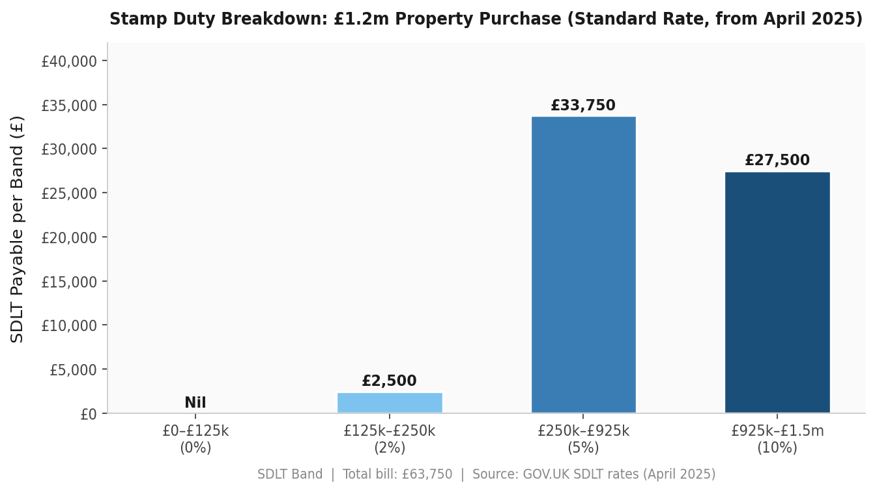
- Stamp Duty changed in April 2025: Budget carefully for SDLT costs on top of your purchase price.
- Working with the right agent makes a difference: Off-market listings are common in this area.
The Architecture: Why These Streets Look the Way They Do
Regent's Park is not simply a place to live near a large park. The entire residential area was conceived as a single architectural project. In the early 19th century, the Prince Regent (later King George IV) commissioned architect John Nash to design a sweeping urban set piece, connecting Carlton House in St James's through Regent Street all the way to the park and its surrounding villas.
The result is the series of stucco-fronted Nash Terraces that still define the Outer Circle today. Streets such as Cornwall Terrace, Chester Terrace, and York Terrace are genuinely grand, rows of white-painted houses that viewed from inside the park resemble long palace facades rather than individual homes.
To the east, the character shifts slightly. Here you find more reasonably proportioned family homes and well-maintained Victorian terraces. This part of the area suits buyers who want the Regent's Park postcode without the full mansion price tag.
The Property Market: Prices, Trends, and What to Expect
Regent's Park sits firmly within Prime Central London (PCL). That means prices move to their own rhythm, somewhat insulated from the wider market but not completely immune to it.
Based on recent Land Registry data compiled by KFH, the most current sold-price figures for the area show significant variation across property types:
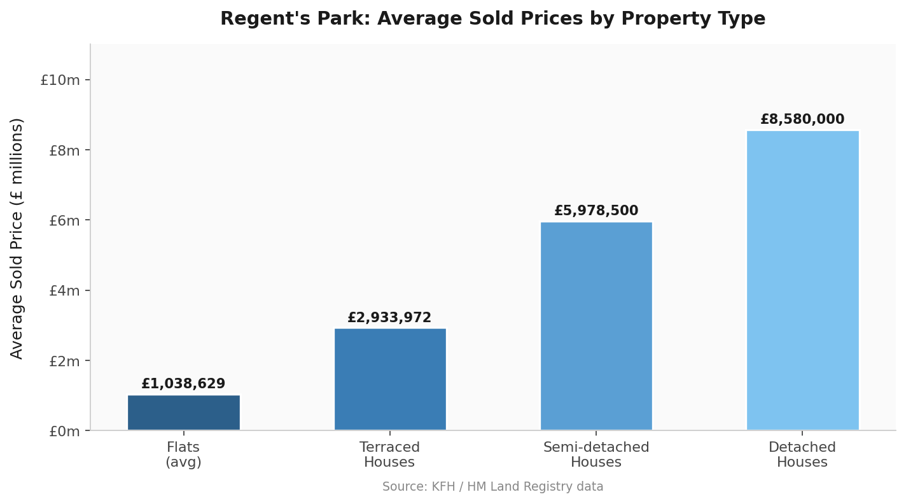
Overall sold prices in the area were 8.2% up on the previous year according to KFH data, suggesting a market that has recovered well after a brief correction. The Rightmove house price index places the wider area average at approximately £1.29 million across all transactions recorded over the last 12 months.
Regent's Park remains popular with the super-wealthy, including international buyers who prize the area for its architecture, green space, and central location.
If you are exploring listings in this area, speaking with experienced Regent's Park estate agents is genuinely valuable. Many of the best properties never reach the major portals, circulating instead through agents with long-standing relationships in the neighbourhood. Plaza Estates, for example, has been operating in central London for over 44 years and knows this market well.
Getting Around: Transport Links That Work
One of Regent's Park's strongest practical advantages is transport. For a neighbourhood this quiet and green, it is remarkably well connected.
Baker Street in particular is a major interchange. From there, the Jubilee Line takes you to London Bridge and Canary Wharf in under 20 minutes. The Circle and Hammersmith & City lines connect you eastward to the City and westward to Paddington, where you can pick up the Elizabeth line.
For rail travel, Marylebone station is a 9-minute walk from the park and connects to Buckinghamshire and Oxfordshire. Euston, a 15-minute walk south, opens up the West Coast Main Line for Birmingham and Manchester.
Schools and Higher Education: A Strong Academic Environment
Families consistently rate Regent's Park highly for its educational options. The choices span nursery through to postgraduate level, covering both state and independent provision.
Notable Schools and Institutions
- Francis Holland School - A leading independent day school for girls, based in the south-west corner of the park. Known for strong academics and pastoral care.
- North Bridge House - A well-regarded prep school for boys and girls aged 7 to 13 in Gloucester Avenue.
- Southbank International School - Close to Regent's Park, this school is recognized as one of London's premier IB institutions, with students from over 70 countries.
- London Business School - Located on the Outer Circle, offering world-ranked MBA and postgraduate programs.
- Royal Academy of Music - On Marylebone Road, this is the UK's oldest conservatoire and a global name in music education.
- Regent's University London - A private university based inside the park's Inner Circle.
The depth and variety of educational provision here is one reason families with children often choose the area over other prime London locations.
Daily Life in Regent's Park: What It Actually Feels Like
Residents frequently describe the area as surprisingly livable given how central it is. The park itself is 410 acres of green space, and it behaves like an enormous garden for the surrounding streets. Dog walkers, cyclists, and runners share the 4.5-kilometre Outer Circle route each morning.
The surrounding streets extend the lifestyle further. Marylebone High Street, a 10-minute walk to the south, is widely considered one of London's best local high streets: independent bookshops, specialist food shops, and good restaurants without the tourist crowds of Oxford Street.
Camden Market and Primrose Hill are both on the doorstep to the north. Primrose Hill itself is a short walk and offers one of London's best views across the skyline.
Understanding the Buying Costs in 2025
Moving to Regent's Park means thinking carefully about the total cost of purchase, not just the asking price. Stamp Duty Land Tax (SDLT) changed significantly from 1 April 2025, and the figures are material at prime London price points.
Under the current rates, the nil-rate threshold sits at £125,000 for standard purchasers. That means every Regent's Park transaction - even a modest flat - will involve a meaningful SDLT bill. For full current rates, see the GOV.UK SDLT residential property rates page.
Choosing the Right Agent: Why Local Knowledge Matters Here
Regent's Park is not a market where scrolling Rightmove alone will give you the full picture. A significant proportion of properties, particularly at the upper end, trade quietly without ever appearing online.
The agents with the strongest local networks hear about stock before it is formally listed, and they can also tell you which buildings have the best management, the lowest service charges, and the most reliable porterage. That kind of nuance only comes from years of operating in a very specific area.
What to look for in an agent:
- Genuine knowledge of both NW1 and NW8 postcodes, not just a general central London presence
- Access to off-market and discreet listings
- Experience with both sales and lettings in the same buildings
- Clear communication on leasehold specifics and service charge histories
- Willingness to accompany you on multiple viewings without pressure
If you are still in the early stages of your search, our guide on property search tips walks through how to structure your requirements before contacting agents.
Before you start viewings, it is worth reading our property search tips guide - particularly the advice on pre-approval, must-haves versus nice-to-haves, and how to structure your shortlist.
Practical Preparation: The Move Itself
Once your purchase completes, the physical move into a Regent's Park property comes with a few considerations specific to the area. Many buildings are mansion blocks with listed status, which can restrict what you bring through the front door in terms of large furniture or removal lorry access.
Check with your managing agent or freeholder before booking a removal company. Some buildings have dedicated loading bays and specific time slots for moves. Others, particularly the Nash Terraces, have narrow access roads that require smaller vehicles.
Our DIY moving hacks guide covers practical packing strategies that reduce stress and cost on moving day, and our step-by-step guide for moving your home and car simultaneously is worth reading if you are relocating from further afield.
Frequently Asked Questions
Is Regent's Park a good area to live in London?
Yes, consistently. It combines central London access with genuine green space, world-class schools, and architecturally significant housing. It ranks among the capital's most desirable residential areas for a reason. The quality of daily life here is genuinely high.
What is the average property price in Regent's Park?
It varies considerably by property type. Flats average around £1 million based on recent Land Registry data; houses typically start above £2.5 million and rise significantly from there. Detached properties on prestigious streets can sell for £8 million or more.
How many Tube stations are near Regent's Park?
Several sit within easy walking distance. Regent's Park station (Bakerloo), Baker Street (five lines), and Great Portland Street (three lines) are all on the southern perimeter of the park. All are in Zone 1, which means peak-hour fares and short journey times across central London.
Is Regent's Park suitable for families?
Very much so. The large houses and mansion-block flats accommodate families comfortably, and the park itself is an exceptional outdoor space for children. The concentration of strong schools from nursery through to sixth form makes it particularly popular with families relocating to London.
What are the main types of property available?
The area offers Nash Terrace houses on the Outer Circle, purpose-built apartments in mansion blocks along Park Road and Prince Albert Road, mews houses, and converted Victorian flats further east. The choice spans from one-bedroom apartments to six-and-seven-bedroom residences.
Do I need a specialist agent for this area?
It genuinely helps. A significant proportion of properties are sold off-market or discreetly. An agent with a long-standing local presence will know the stock, the buildings, and the sellers before anything appears online. That makes a material difference in a competitive, limited-inventory market.
Conclusion
Regent's Park stands apart from other prime London neighbourhoods because it delivers something rare: a sense of space and calm within easy reach of the entire city. The architecture is extraordinary, the transport connections are practical, and the day-to-day quality of life is consistently high.
The property market here rewards patience and good local knowledge. Knowing which buildings are well managed, which leases have been recently extended, and which streets offer the best value at a given budget takes time to learn from the outside. Working with people who understand this neighbourhood specifically - not just prime London in general - makes a real difference.
If you are at the stage of serious consideration, the next practical step is a conversation with agents who know Regent's Park from the inside.
References
1. KFH (Kinleigh Folkard & Hayward), Regent's Park Sold House Price Data, 2024/25 - https://www.kfh.co.uk/north-west-london/regents-park/sold-data/
2. Rightmove House Price Index, Regent's Park, updated May 2026 - https://www.rightmove.co.uk/house-prices/regents-park.html
3. GOV.UK, Stamp Duty Land Tax: Residential Property Rates, April 2025 - https://www.gov.uk/stamp-duty-land-tax/residential-property-rates
4. Cluttons, Guide to Living in Regent's Park, 2025 - https://www.cluttons.com/area-guides/guide-to-living-in-regents-park/
5. Zoopla, Living in Regent's Park Area Guide - https://www.zoopla.co.uk/guides/areas/regents-park/Fact Check: All statistics and data points in this article were verified against original sources as of July 2026. Property price data is sourced from HM Land Registry as compiled by KFH and Rightmove. SDLT figures are taken directly from GOV.UK (April 2025 rates). Transport information is sourced from TfL and Cluttons area guide. School details were verified against Cadogan Tate and Cluttons area guides. All sources are listed in the References section above