DIY HVAC Installation for Beginners: Affordable Options That Actually Work
My father built the house I grew up in. He did it all by himself....every beam, every nail, every screw, and all of the plumbing, electrical work, and carpentry, just to name a few things. That included the heating system, which was a thing of beauty.
He put in a boiler system so the house wouldn't have dry heat. That was my mother's adamant request (dust, and all the dust a traditional heating system stirs up, was her enemy!).
I was literally just talking about this with my nephew last week. He's a DIYer like my dad and has an amazing house, and he rightly gives the credit to the fact that he (like my dad) saved a TON of money by doing things himself. Not every project is a DIY project, but when it comes to heating and cooling, today's DIY friendly systems put a lot more of it within reach.
Professional HVAC installation often comes with labor costs that rival (or even exceed) the price of the equipment itself, and that can put off a needed upgrade for years. When the installation bill can double what you spend, even a modest system starts to feel out of reach. DIY friendly HVAC systems take that barrier away. You get control over both your timeline and your budget, and an affordable upgrade finally feels doable.
From time to time, articles on The How-To Home may reference third-party websites, businesses, products, services, or review platforms as part of editorial research. When evaluating companies or services, we may consider publicly available information such as customer reviews, business websites, service offerings, licensing information when available, and overall relevance to the topic.
Why Professional HVAC Installation Costs Push Homeowners Toward DIY
For a lot of homeowners, the hardest part of an HVAC upgrade is figuring out which costs are necessary and which ones have some wiggle room. The equipment is only one piece of the total price, and professional labor can make the whole project harder to plan around. DIY friendly options let you compare systems more directly and decide where your budget goes before you commit.
It turns into a frustrating cycle. Outdated equipment keeps driving up your monthly energy bills, while the cost of professional installation keeps a new system out of reach. And beyond the cost, there's the worry about finding a reliable contractor and getting on their schedule.
Finding someone you trust, coordinating availability, and making sure the work is done right can feel like a project all on its own. DIY systems take professional labor out of the equation, and that changes what's financially realistic for a household juggling a lot of priorities at once.
What to Look For in a DIY-Friendly HVAC System
A true DIY friendly system is engineered around components a homeowner can safely handle. It isn't a stripped down version of equipment meant for contractors. Beginner friendly design means precharged refrigerant lines, clear instructions, and components that connect without specialized tools or certification.
Complete HVAC kits matter because one missing part can stall your weekend project indefinitely (and that's the last thing you want halfway through!). A properly packaged system includes everything from the mounting hardware to the electrical connections, so you're not discovering midway through installation that a critical piece never shipped.
Look closely at the warranty up front, too. A system you installed yourself still needs protection if a compressor fails or a control board stops working. And making smart choices about your heating and cooling equipment can really lower your utility bills, since nearly 50% of the electricity you use at home goes toward heating and cooling.
Prioritize High SEER Ratings for Energy Efficiency
A SEER rating measures total cooling capacity relative to electric energy input during normal periods of operation. The higher the number, the better the efficiency.
That rating ties right into your monthly bill, because a higher SEER unit uses less energy to produce the same amount of cooling. Over years of regular use, that difference adds up. How quickly it pays for itself depends on your climate, your electricity rates, how much you run the system, and the upfront price difference between models.
Choosing a more efficient model means using less energy overall. Buying energy efficient residential central air conditioners is a recognized standard for reducing overall power demand, and features like variable speed compressors help a system draw less power when it doesn't need full capacity. The lifetime electricity savings exceed the up-front cost, which makes these systems the more cost effective choice.
Ensure Technical Support Is Available After Purchase
Support matters even with a beginner friendly system, because one unexpected step during setup can stop a project in its tracks if there's nobody to call. A question about wiring or where the mounting bracket goes might take two minutes to answer with the right person on the phone....or cost you a whole afternoon of trial and error without one.
Real, responsive human support is a lot different from a generic help center. When you're troubleshooting in the middle of an install, you need a person who can answer your specific question, not a static FAQ page. And support needs don't end once the system is running. Questions about maintenance or troubleshooting can come up long after installation day.
Methodology Behind the Top DIY HVAC Provider Selections
Affordability was weighed against comparable local installation costs, not just the sticker price. Availability of DIY specific systems was a must, especially precharged lines that avoid the need for refrigerant handling. Systems that require specialized equipment or EPA certification to install were disqualified, no matter the price.
Ongoing support and shipping reliability rounded out the criteria, because a low price doesn't mean much if a system shows up incomplete or a question goes unanswered. Providers with established reputations for answering technical questions and delivering complete orders earned priority.
The Best Affordable DIY HVAC Solutions for Homeowners
These providers were chosen because they cater to the real budget constraints of home improvement projects while still offering reliable equipment. Each one brings a different strength to the table, but all of them make DIY installation doable for homeowners without professional HVAC experience.
1. Ingrams Water & Air
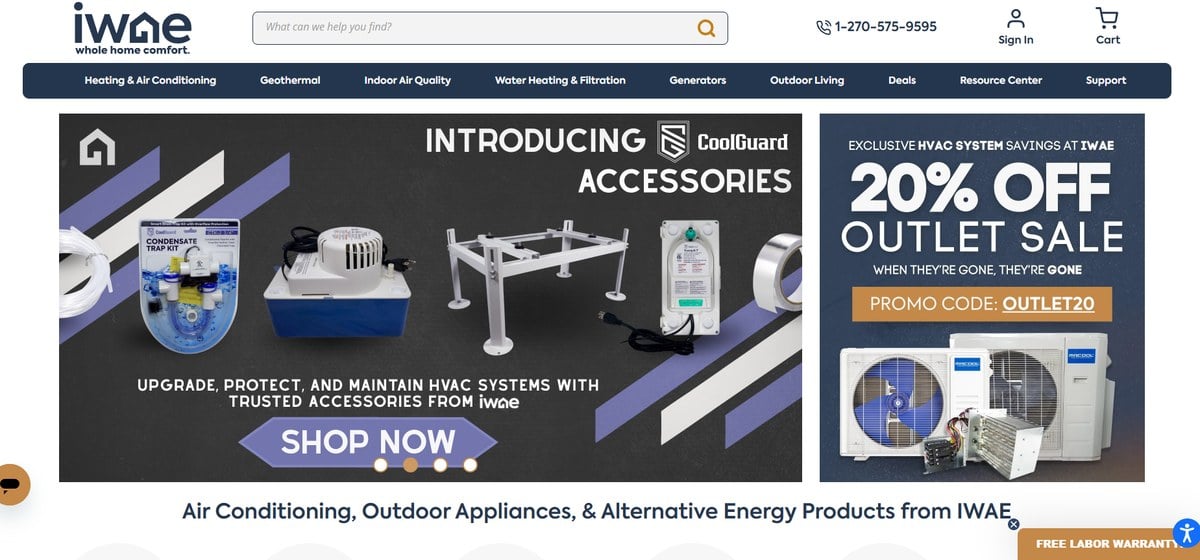
Ingrams Water & Air stands out for pricing that regularly beats what homeowners find through local installers, without compromising on equipment quality. Most products ship with lift gate service right to your home, and lifetime technical support means a question during setup (or years down the road) gets answered by a real person.
Key Features
- Price matching: A verified lower price on the same equipment gets matched.
- Real human support: Technical assistance is available by phone for installation and future maintenance questions.
- Rebate matching: The team helps connect eligible purchases with local energy-efficiency rebates and incentives.
- Fast freight shipping: Shipping with lift gate service is available on most orders, avoiding hidden freight costs.
2. Budget Air Supply
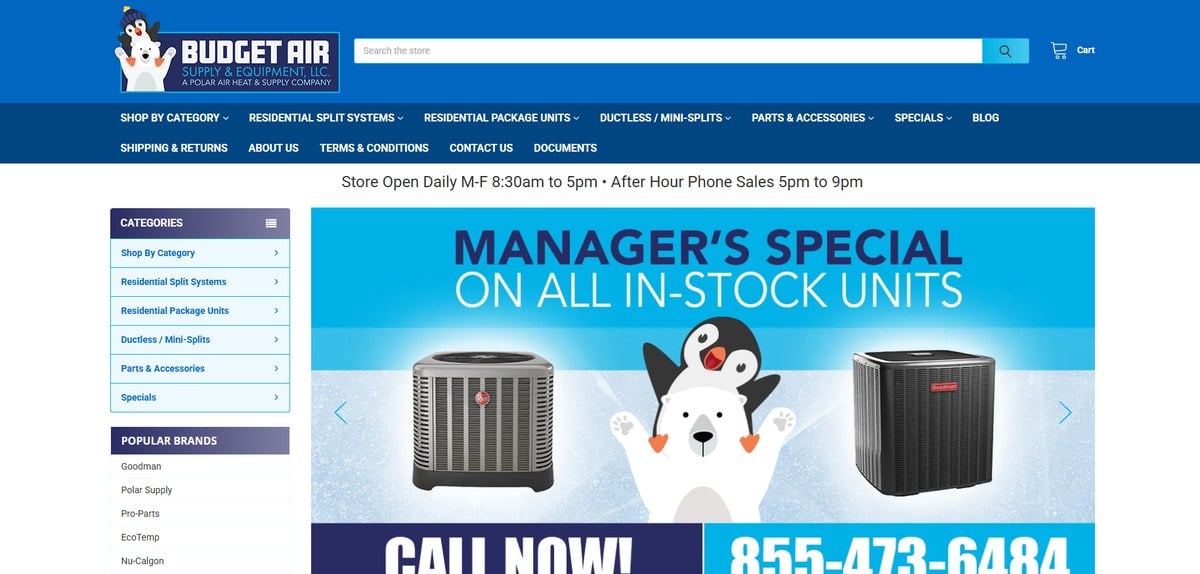
Budget Air Supply positions itself as a wholesale source for HVAC systems, carrying popular brands at prices closer to distributor cost than typical retail markup. Its catalog covers central air, mini splits, and furnace equipment, so you can compare a wide range of options in one place.
Key Features
- Wide brand selection: The catalog includes multiple manufacturers, making side-by-side comparison straightforward.
- Wholesale-style pricing: Listed prices sit closer to distributor cost than standard retail markup.
- Category-based navigation: Products are clearly organized, helping beginners narrow their choices without wading through irrelevant listings.
- Bundled equipment options: Some listings pair condenser and coil components together, simplifying ordering.
3. Budget Heating
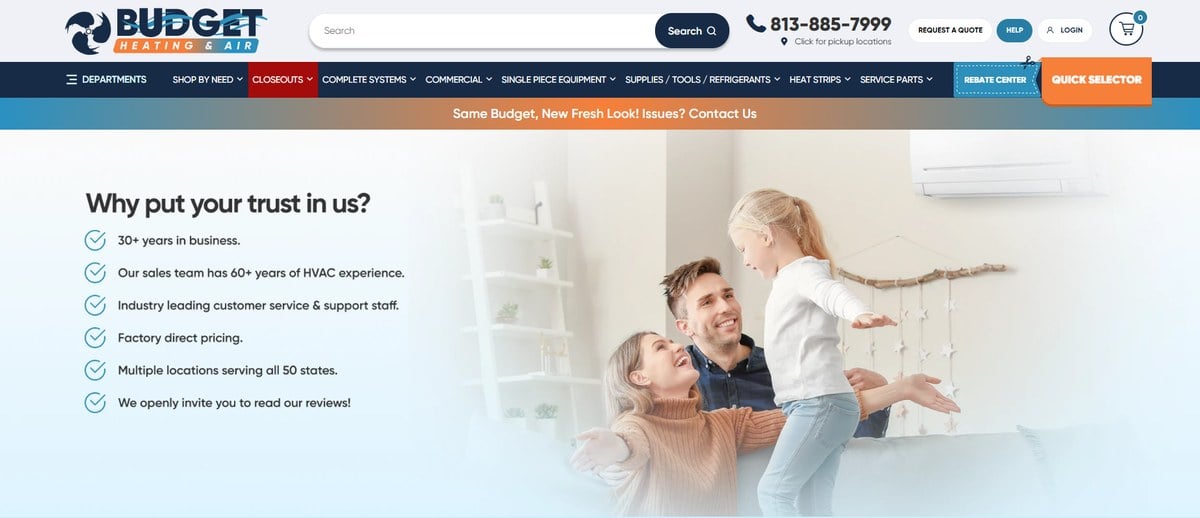
Budget Heating focuses on wholesale pricing for well known equipment brands, aiming to close the gap between what a distributor pays and what a homeowner usually sees at retail. It's a good fit if you already have a general idea of the system you want and you're mainly comparison shopping on price.
Key Features
- Competitive wholesale pricing: Listed prices reflect a wholesale-style model rather than standard retail markup.
- Brand-name equipment: The catalog centers on recognized manufacturers rather than lesser-known alternatives.
- Category-based browsing: Systems are grouped by type, helping narrow a search once you know roughly what you need.
- Simplified checkout: The ordering process is built around buyers who already know their target system.
4. Heat and Cool
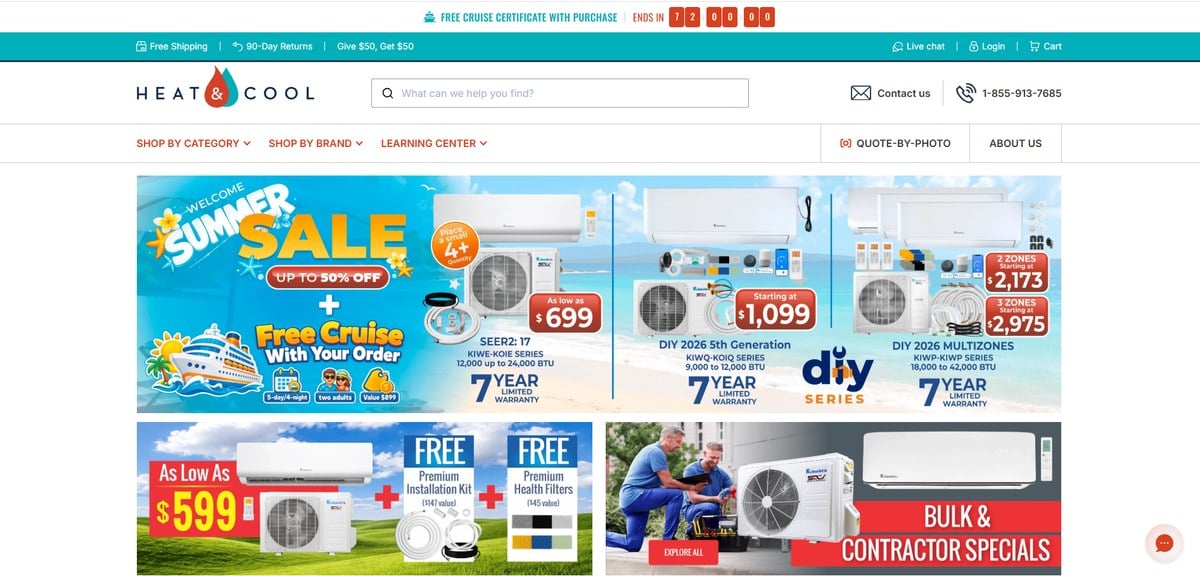
Heat and Cool has built a following among DIYers for its selection of ductless mini split systems, a category that's well suited to beginner installation since many models ship precharged. Product pages tend to include detailed specs, which makes it easier to compare capacity and efficiency across models before you buy.
Key Features
- Mini-split specialization: The catalog leans heavily toward ductless systems, a format well suited to single-room or zoned DIY installations.
- Detailed product specifications: Listings typically include capacity and efficiency details that make side-by-side comparison easier.
- Beginner-relevant filtering: Products can be filtered by category, helping narrow choices without needing HVAC expertise.
- Installation resource content: Product pages often link to model-specific guidance.
Frequently Asked Questions About DIY HVAC Installation
Even with the right system and provider, questions are going to come up as you plan. Here are answers to some of the most common ones homeowners have when starting a DIY HVAC project.
Which DIY HVAC brands offer the best warranty and support?
Providers like Ingrams Water & Air offer lifetime tech support and robust warranties to protect your investment. Good warranty coverage should protect major components like compressors and heat exchangers for several years, and solid support means you can call with a maintenance question years from now and still get help. Always double check the warranty terms before you buy, because some coverage requires professional installation to stay valid.
Are there financing options for DIY HVAC systems?
Many top online retailers offer financing to make these systems more accessible for homeowners on a tight budget. Financing spreads the cost of an upgrade into manageable monthly payments instead of requiring the full amount up front. Check with each provider about current financing terms and approval requirements.
Making Your DIY HVAC Decision With Confidence
Taking control of your home projects with a DIY HVAC system saves you money, time, and the headache of coordinating contractor schedules. The systems highlighted here combine affordability with genuinely beginner friendly design, so you're not left guessing halfway through installation. With the right provider and a little planning, upgrading your heating and cooling becomes a weekend project instead of a months long budget negotiation. My nephew would be the first to tell you....doing it yourself really does add up. What's the biggest project you've ever tackled on your own? I would love to hear!