Home Battery Backup: How Long Can a SimpliPHI Battery Keep Your Essentials Running?
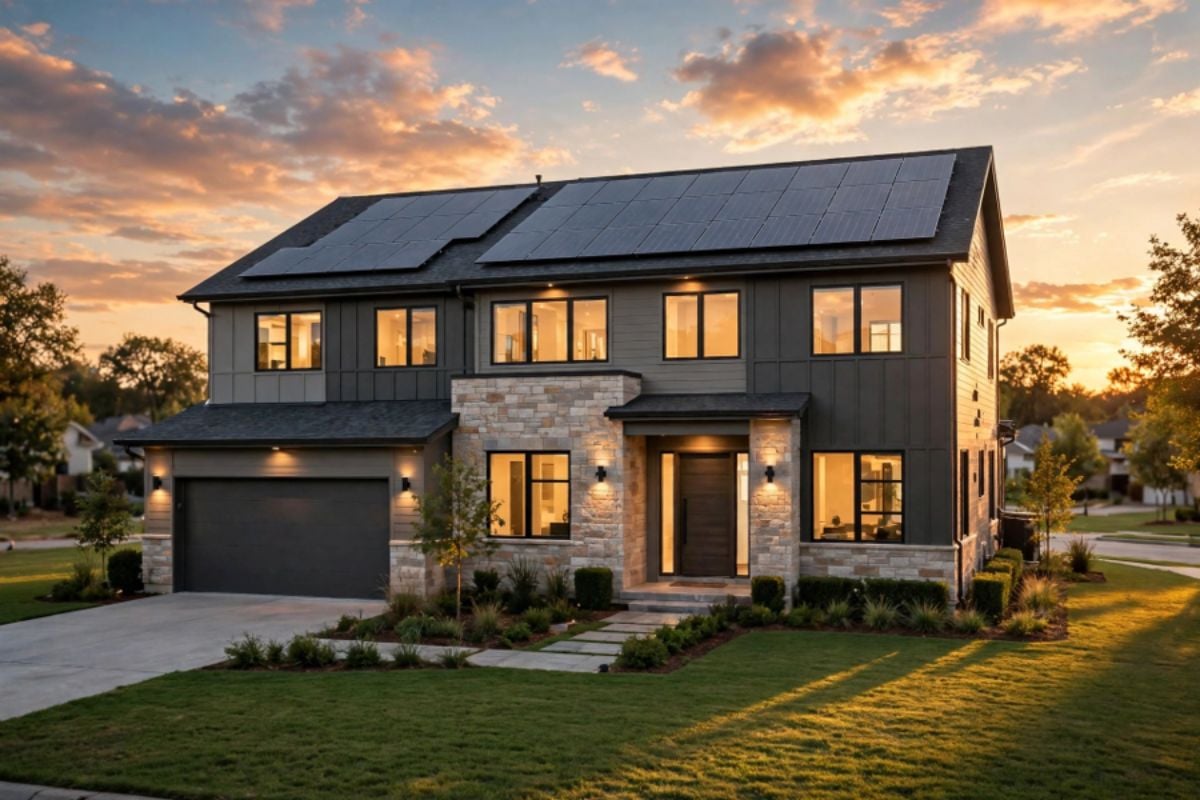
I don't own a generator. I've come close to buying one more times than I can count (usually right after the power comes back on), but I've never actually done it.
The weather where I live is pretty mild most of the year, nothing too scary. We do get our share of tornado warnings, high winds, and ice storms, though, and while our power doesn't go out often, when it does it's so inconvenient. In winter the house gets cold fast and I'm bundled under blankets. In summer there's no AC and I'm melting. Either way, I'm watching the clock, checking the power company's website far too often and counting down the minutes between updates....
Several of my neighbors have home battery backup systems, and I'll admit it: when my house is dark and their windows are glowing next door, I get a little jealous! I don't need the whole house running in those moments. A fan in the summer or a little heat in one room would make a world of difference.
That's what got me thinking about battery backup as an alternative to a generator. If you've been going back and forth on the same decision, this is a good place to start....
A SimpliPHI battery keeps the essentials running during an outage (lights, fridge, phones, and Wi-Fi) without a generator. How long it lasts depends on the size of the bank and what you plug into it. A single 3.8 kWh module covers an evening of essentials, and stacked 6.6 modules stretch backup from hours to days.
Before you choose a system, make a short list of what you'd actually want running when the power goes out. That list will tell you more than any advertised capacity number.
For context, Lawrence Berkeley National Laboratory reported that the median residential battery system installed in its 2024 solar-and-storage dataset had 13.5 kWh of capacity. If you only want to run a few essentials, you may need a lot less. Below, I'll walk through how to estimate backup time, how the SimpliPHI options compare, and what goes into a safe installation.
What a Home Battery Powers During an Outage
A home battery won't automatically power every outlet and appliance in your house. Most backup systems are built around a handful of essential circuits you choose ahead of time. So start by writing down what you'd really want running during an outage. Here are some example power draws (your own appliances will vary):
- Fridge (150 W while running)
- LED bulbs in the main rooms (under 100 W)
- Wi-Fi router and phone chargers (under 50 W collectively)
- Laptop (about 60 W)
- Sump pump or medical equipment (look for the nameplate wattage)
Together, those might use roughly 2 to 4 kWh over an evening, depending on how long they run and how often things like the fridge cycle on. A 3.8 kWh module could cover some modest essential-load scenarios, but its usable capacity may be lower than its nominal rating, and inverter losses reduce the energy that actually reaches your outlets. Larger appliances, including central air conditioning and electric ranges, need a separate calculation.
A fan is an easy add to that list. Heat is trickier. A plug-in space heater can draw as much as 1,500 watts, so even one would drain a single 3.8 kWh module in a couple of hours. If your furnace runs on gas, ask your installer whether it can go on a backed-up circuit, since a gas furnace draws far less power than an electric heater.
How Long Will One Battery Last?
To estimate battery runtime, divide usable battery capacity (kWh) by the average power draw (kW). I like to think of it like a gas tank: capacity is the size of the tank, and power draw is how fast you're using it up. Use usable capacity, and skip the nominal number, when you're planning for a real outage.
For example, a nominal 3.8 kWh battery at a steady 400-watt load (0.4 kW) gives a theoretical 9.5 hours before losses or discharge limits. At 80% depth of discharge, the 3.8 kWh module provides about 3.04 kWh DC, which works out to roughly 7.6 hours before inverter losses. Three 6.65 kWh modules total about 19.95 kWh nominal, or approximately 50 theoretical hours at 400 watts before losses and operating limits. Your actual runtime will depend on the system configuration, battery settings, temperature, and how your household's demand changes through the day.
Capacity is only part of the decision. The inverter also needs enough continuous output to run everything you picked at the same time, plus enough surge capability for the motors in refrigerators or sump pumps. A qualified installer can confirm both.
SimpliPHI Models Compared
Both models use cobalt-free lithium iron phosphate (LFP, or LiFePO4) chemistry at a nominal 51.2 volts (often described as a 48V-class system). Battery management and system controls help protect against things like overcharging, excessive discharge, and unsuitable temperatures. Features and approved configurations can differ by model.
A module is one battery unit, and a stack is several modules combined into a single bank, so capacity grows one module at a time. Choosing between the two comes down to how much storage the home needs.
| Specification | SimpliPHI 3.8 | SimpliPHI 6.6 |
| Nominal voltage | 51.2 V (48 V nominal) | 51.2 V (48 V nominal) |
| Capacity | 3.8 kWh (75 Ah) | 6.65 kWh (130 Ah) |
| Rated cycle life | 10,000+ cycles at 80% DoD | 4,500 cycles at 100% DoD |
| Efficiency | 98 percent | 96 percent or more (round-trip) |
| Weight | 86 pounds | 140 pounds (per current 6.6 manual; verify revision) |
| Stackable or parallel | Parallel: units combine to expand capacity | Stackable: up to 3 per stack, 18 per system (119.7 kWh) |
| Charge temperature | 32 to 120 degrees F (0 to 49 degrees C) | 14 to 122 degrees F (minus 10 to 50 degrees C), based on a stack of 3 with a battery controller |
| IP rating | No IP rating published | IP65 in approved installed configuration |
| Certifications | UL 1973, UN 3480 | UL 9540, UL 1973; UL 9540A fire-safety tested; IEC 62619 |
The specs above come from manufacturer documentation, so check them against the exact model and revision you're buying. Cycle-life figures are laboratory ratings, not a promise of that many years in any particular home.
SimpliPHI 3.8
The 3.8 is a good fit to consider for cabins, smaller homes, or essential-load backup, as long as the proposed battery and inverter can meet the expected load. Additional modules may be possible in a properly designed system.
- A built-in DC breaker provides a local means of disconnecting the battery; verify the breaker rating and installation requirements for the exact version.
- Also available in a 24V version for smaller, simpler systems.
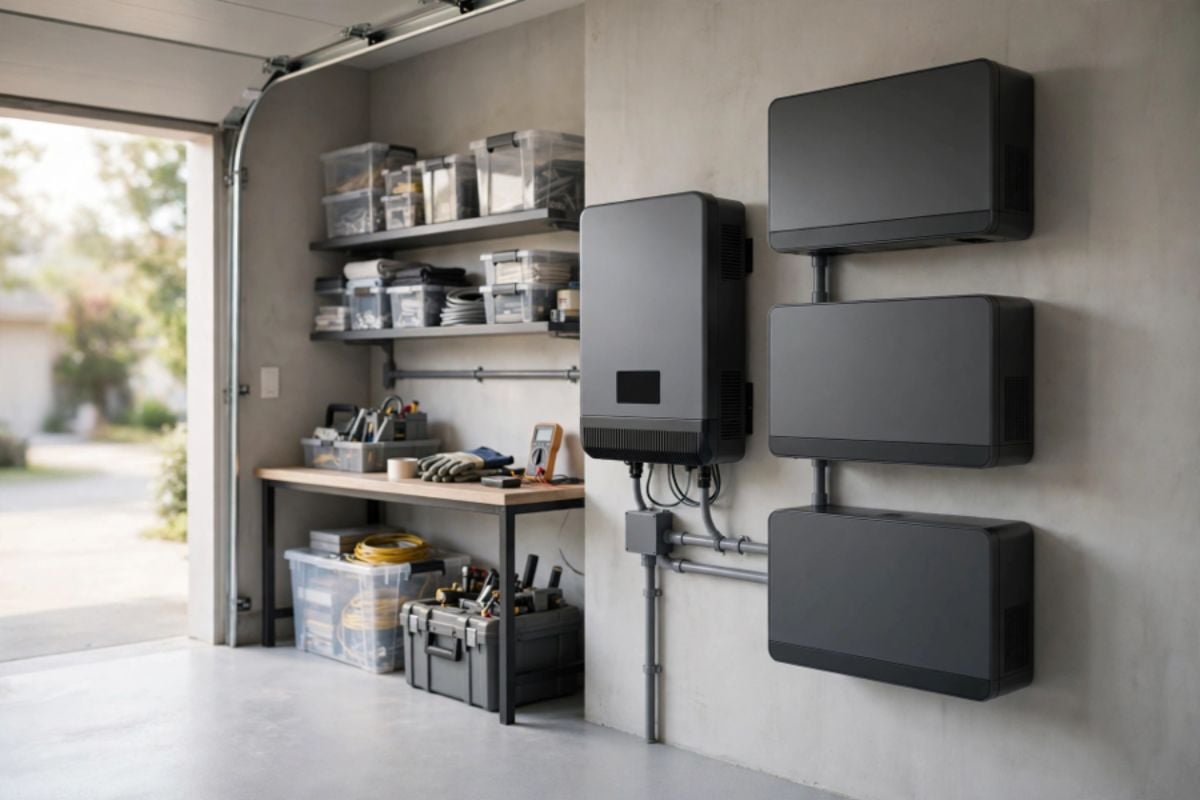
- Compact steel case mounts on a utility room or garage wall.
SimpliPHI 6.6
The 6.6 may suit bigger backup plans or installations designed to grow over time, including certain outdoor locations when the complete approved stack is installed correctly.
- Modules can be assembled into an approved stack configuration; consult the installation instructions for the required controller, base, and mounting components.
- CAN and RS485 connections support closed-loop communication with compatible inverters.
- An outdoor-rated configuration may avoid a separate enclosure, but the rating applies to the manufacturer-specified installed assembly, not necessarily an individual loose module.
What Sets LFP Apart From Other Lithium Batteries
Lithium iron phosphate (LFP) generally offers greater thermal stability than some other lithium-ion battery chemistries, and it contains no cobalt. That helps reduce certain fire risks, but it does not eliminate the possibility of thermal runaway or other electrical hazards. Safety also depends on the equipment, where it's located, how it's installed, and how it's maintained.
Safety Inside a Home
The manufacturer lists safety certifications and testing for the SimpliPHI 6.6, including UL 1973, UL 9540 and UL 9540A fire-safety testing. These designations aren't interchangeable: testing under UL 9540A is not the same as a stand-alone UL 9540A product certification. Don't assume a battery can go anywhere or needs no ventilation or temperature management. Follow the specific installation instructions and your local code requirements.

The Rest of the System: Equipment Beyond the Battery
A battery on its own isn't a backup system. A complete energy storage system (ESS) pairs the battery bank with the following equipment and services:
- 48V hybrid inverter: converts DC from the battery to home AC and manages charging
- Critical-loads panel: separates backed-up circuits from the rest of the house
- Transfer equipment: switches the home between grid power and battery power safely
- Disconnects, breakers, and wiring: sized to the bank and required by code
- Permits and inspection: required in most jurisdictions for a permanent installation
- A licensed installer: designs, installs, and commissions the system to code
Preconfigured battery-and-inverter packages can make choosing components easier, but an installer should still confirm compatibility, which circuits make sense, permits, and the installation plan.
Inverters Compatible With SimpliPHI
Compatibility comes first. Before purchasing, ask the installer or supplier to confirm the latest manufacturer-approved pairing and settings for your exact model:
- Confirm the inverter is a 48V model that supports lithium batteries.
- Check the current manufacturer compatibility and integration documentation for the specific battery and inverter revisions.
- For closed-loop control, confirm that the inverter can communicate with the battery over CAN or RS485.
- Size the inverter by its continuous and surge output for the loads it must carry, not by battery capacity alone.
- Match the inverter to your battery before purchasing either one.
| Confirmed model | Output | Notes |
| Briggs & Stratton hybrid inverter | 6 kW | The manufacturer's own inverter for SimpliPHI systems |
| Sol-Ark 8K | 8 kW | Closed-loop communication with the SimpliPHI 6.6 over CAN and RS485 |
| Sol-Ark 12K | 12 kW | Closed-loop communication with the SimpliPHI 6.6 over CAN and RS485 |
| Sol-Ark 15K | 15 kW | Closed-loop communication with the SimpliPHI 6.6 over CAN and RS485 |
The SimpliPHI 6.6 uses CAN and RS485 communications in supported configurations. Do not assume that every 48V lithium-compatible inverter is approved without checking the latest manufacturer documentation.
Charging Without Solar Panels
Yes, with one clarification: the batteries do not charge themselves. The inverter, or a charger working with it, does the charging, and generator charging depends on that equipment having a generator input. With the right inverter in place, three sources can fill the bank:
| Charging source | How it works | Typical use |
| Solar panels | The inverter charges the bank from panel output during the day | Daily cycling and off-grid systems |
| Grid | The inverter charges the bank from utility power at any hour | Backup-only systems and time-of-use savings |
| Generator | The inverter or charger accepts generator input during an outage | Extended outages and off-grid backup |
On some time-of-use electricity plans, a properly configured battery system may charge when rates are lower and supply power when rates are higher. Whether that actually saves you money depends on local rates, battery losses, utility rules, and equipment settings.
Placement, Temperatures, and Install Conditions
| Location | Works for | Notes |
| Garage | Both models | Wall or ground mounting; the most common choice |
| Basement or utility room | Both models | The compact 3.8 units mount neatly on a utility room or garage wall |
| Exterior wall or shed | SimpliPHI 6.6 | Outdoor rated when stacked, so no additional cabinet is required |
Temperature limits shape the shortlist of locations:
- Operating range, SimpliPHI 6.6: minus 4 to 131 degrees F
- Charging, SimpliPHI 6.6: from 14 degrees F upward, based on a physical installation of a stack of 3 and a battery controller
- Operating range, SimpliPHI 3.8: minus 4 to 140 degrees F; charging from 32 degrees F upward
- Confirm whether heating, cooling, or other temperature management is needed for the particular location and manufacturer-approved configuration.
Keep the system within its documented environmental limits, and have a qualified installer confirm clearances, moisture protection, mounting, disconnect locations, permits, and any other electrical and fire-code requirements that apply.
Matching the Bank to the Essential Loads
The SimpliPHI family discussed here includes a 3.8 kWh / 75 Ah option and a 6.65 kWh / 130 Ah option. Both are rated at 51.2V nominal and use lithium iron phosphate battery technology. The best fit depends on the number of circuits being backed up, their peak demand, and the expected outage duration.
A1 SolarStore, a solar equipment supplier active since 2017, lists the SimpliPHI 3.8 and 6.6 in its catalog alongside matched hybrid inverters and pre-sized energy storage packages, with published specifications for each. Runtime follows from those specifications: one 3.8 kWh module at a steady 400 W load delivers 9.5 hours before inverter losses, and the 3.8 is rated for more than 10,000 cycles at 80 percent depth of discharge.
FAQ
How many kWh do I need for home backup?
Start by adding up the average wattage of the devices you want to power and the hours you expect to use them. A light evening of refrigerator, lighting, phone charging, and Wi-Fi might use about 2 to 4 kWh, but it could be more or less in your home. Leave room for usable battery capacity, inverter losses, and a sensible reserve.
For perspective, the U.S. Energy Information Administration reported average annual residential electricity purchases of 10,791 kWh in 2022, roughly 30 kWh per day across all uses. That whole-home average is not the same as a critical-loads backup target.
How long do SimpliPHI batteries last?
Manufacturer ratings list more than 10,000 cycles at 80% depth of discharge for the 3.8 and 4,500 cycles at 100% depth of discharge for the 6.6 under specified test conditions. These are cycle-life ratings, not guaranteed calendar lifespans. Warranty coverage and real-world longevity depend on the exact model, use, installation, temperature, and warranty terms.
Can a home battery run my air conditioner?
Sometimes, but it depends on the system. A central air conditioner may draw several kilowatts and need a substantial start-up surge, so a single 3.8 kWh battery is unlikely to run one for long. A larger battery bank can store more energy, but the inverter and related equipment also have to be sized to handle the air conditioner safely. If you'd be happy with a fan or two, like me, the math gets a lot friendlier.
Is lithium iron phosphate safe in a home with kids?
LFP is generally considered a comparatively thermally stable lithium-ion chemistry, but no home energy storage technology is risk-free. The manufacturer lists safety testing and certifications for the SimpliPHI 6.6, and buyers should verify the current listings for the complete system they are considering.
Professional installation matters even more in a home with children. A qualified installer can choose a suitable location, secure the equipment, set up the required disconnects and clearances, and follow the applicable codes and manufacturer instructions.
Do I need solar panels to use a home battery?
No. Depending on the compatible inverter and charging equipment, a home battery can charge from utility power or a generator as well as from solar panels. So you can consider backup power even if rooftop solar isn't part of your plans.
Technical Sources and Further Reading
Briggs & Stratton, PHI 3.8 installation manual: https://energy.briggsandstratton.com/content/dam/energysolutions/files/resources-documents/Phi-3-8-2-9-1-4-730-installation-manual.pdf
Briggs & Stratton, SimpliPHI 6.6 battery manual (manufacturer documentation mirrored by RES Supply): https://ressupply.com/documents/briggs-stratton/SimpliPHI_6.6_Battery_Manual.pdf
Lawrence Berkeley National Laboratory, Distributed Solar & Storage 2025 Data Update (2024 installations): https://emp.lbl.gov/sites/default/files/2025-10/Distributed%20Solar%20%26%20Storage-2025%20Data%20Update.pdf