How to Clean Windows Like a Pro: 6 Steps to a Streak-Free Finish
If you have been staring at dirty windows and wondering why nothing you try actually works, I get it. Learning how to clean windows the right way changed everything for me. It is not just about the cleaner you use. It is about timing, the right tools, and a method that actually removes grime instead of just pushing it around. This guide covers everything from a simple step-by-step process to a full season-by-season plan so your windows stay cleaner all year long.

*This post may contain affiliate links and I'll earn a commission if you shop through them. You can read my full disclosure here.
Why Dirty Windows Are So Hard to Keep Clean
Streaky windows are frustrating because most people are unknowingly making the process harder.
The other culprit is paper towels. They leave lint on the glass and do not absorb evenly. Once you switch to a dry microfiber cloth and a good squeegee, the difference is immediately obvious.
What You Need to Clean Windows Properly
Gather your supplies before you start. Having everything within reach makes the process faster and the results better.
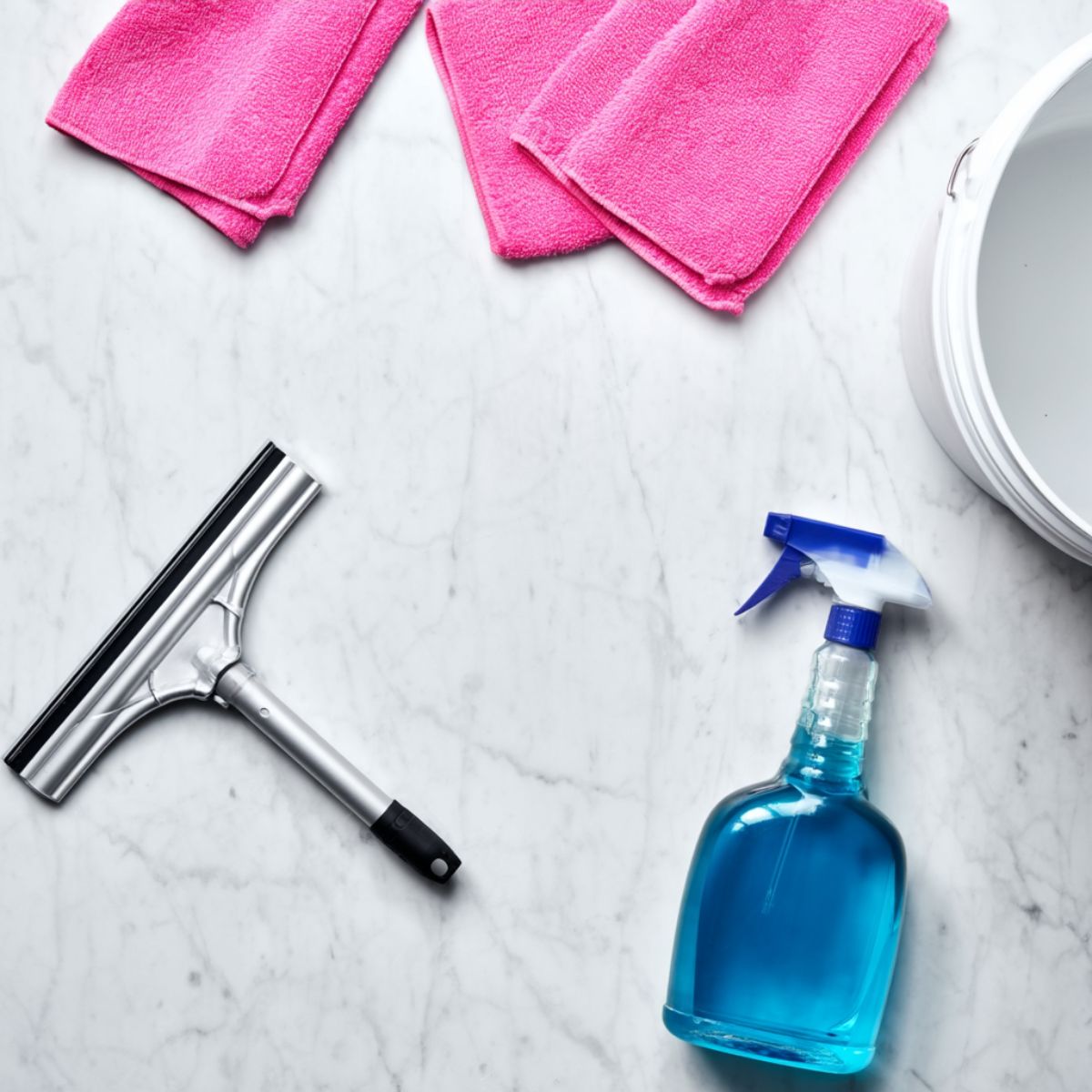
- A bucket of warm water with a few drops of liquid dish soap (Dawn dish soap works great)
- A spray bottle for smaller windows or touchups
- A microfiber cloth or soft brush for washing
- A squeegee (small squeegee for interior, larger for exterior windows)
- A dry microfiber cloth or lint-free cloth for edges and buffing
- White vinegar for stubborn stains and hard water spots
- A garden hose for rinsing exterior windows
- An extension pole for higher windows (skip the ladder when you can)
You can also mix your own window-cleaning solution: one part white vinegar to two parts distilled water in a spray bottle. It works just as well as most commercial glass cleaners and costs almost nothing.
How to Clean Windows Step by Step
This method works for both interior and exterior windows and gives you a streak-free finish every time.
Step 1: Prep the Area
Remove curtains, blinds, and anything on the windowsill. Use a dry soft brush or cloth to remove loose dirt and debris from the window frame, glass, and window tracks before you introduce any water. Wet loose dirt turns into mud and makes the whole process harder. This is an easy first step that most people skip and then regret.
Step 2: Wash the Glass
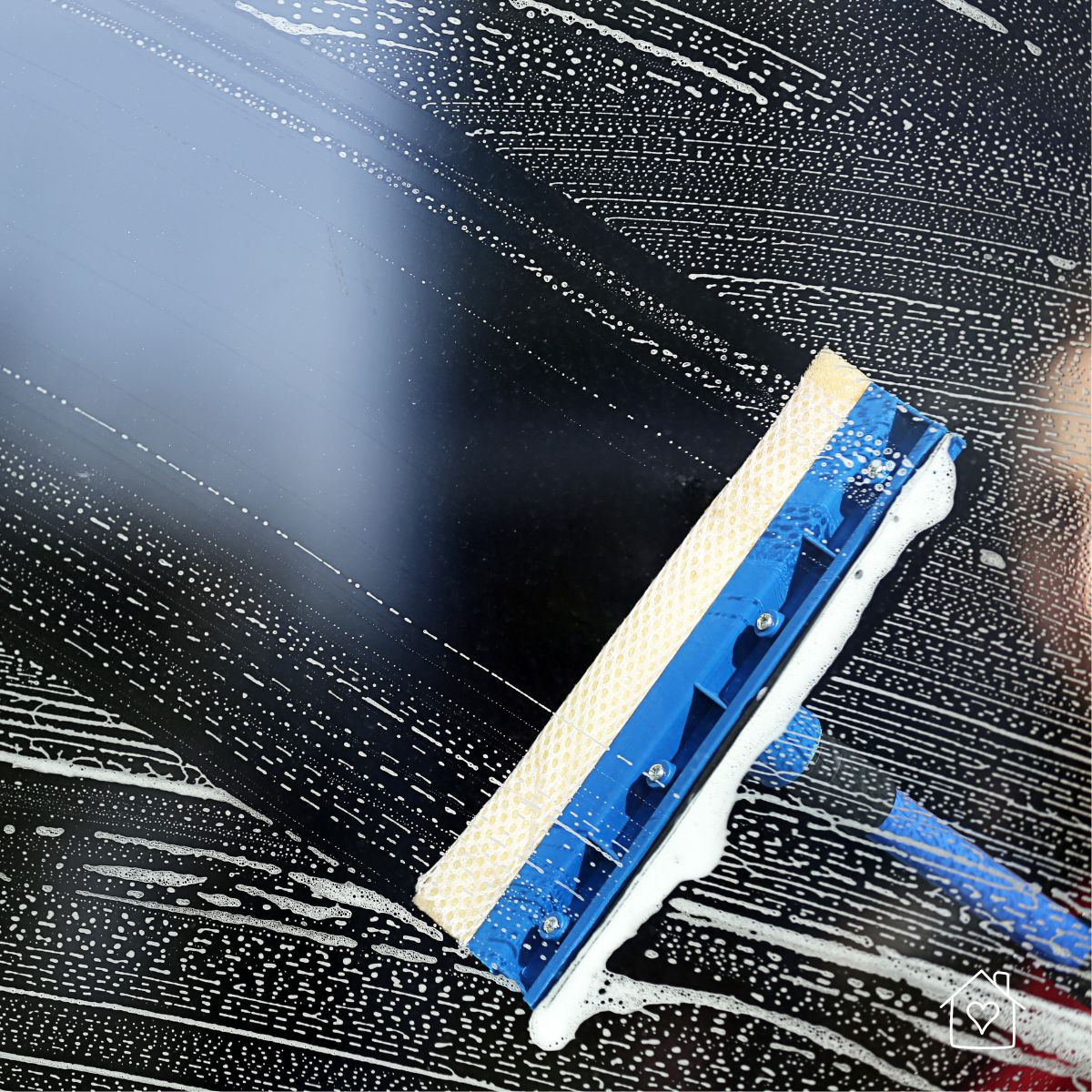
Dip your microfiber cloth or sponge in your soapy water and wash the entire glass surface using gentle pressure. Work from the top corner down to the bottom of the window so dirty water does not drip onto areas you have already cleaned. Pay extra attention to the window frame and edges where grime builds up.
Step 3: Tackle Stubborn Stains
Hard water spots, bird droppings, tree sap, and other stubborn stains need extra attention. Apply undiluted white vinegar or a vinegar solution directly to the affected area and let it sit for two to three minutes before scrubbing with a damp cloth. For mineral deposits that have really set in, a paste of
Step 4: Squeegee from Top to Bottom
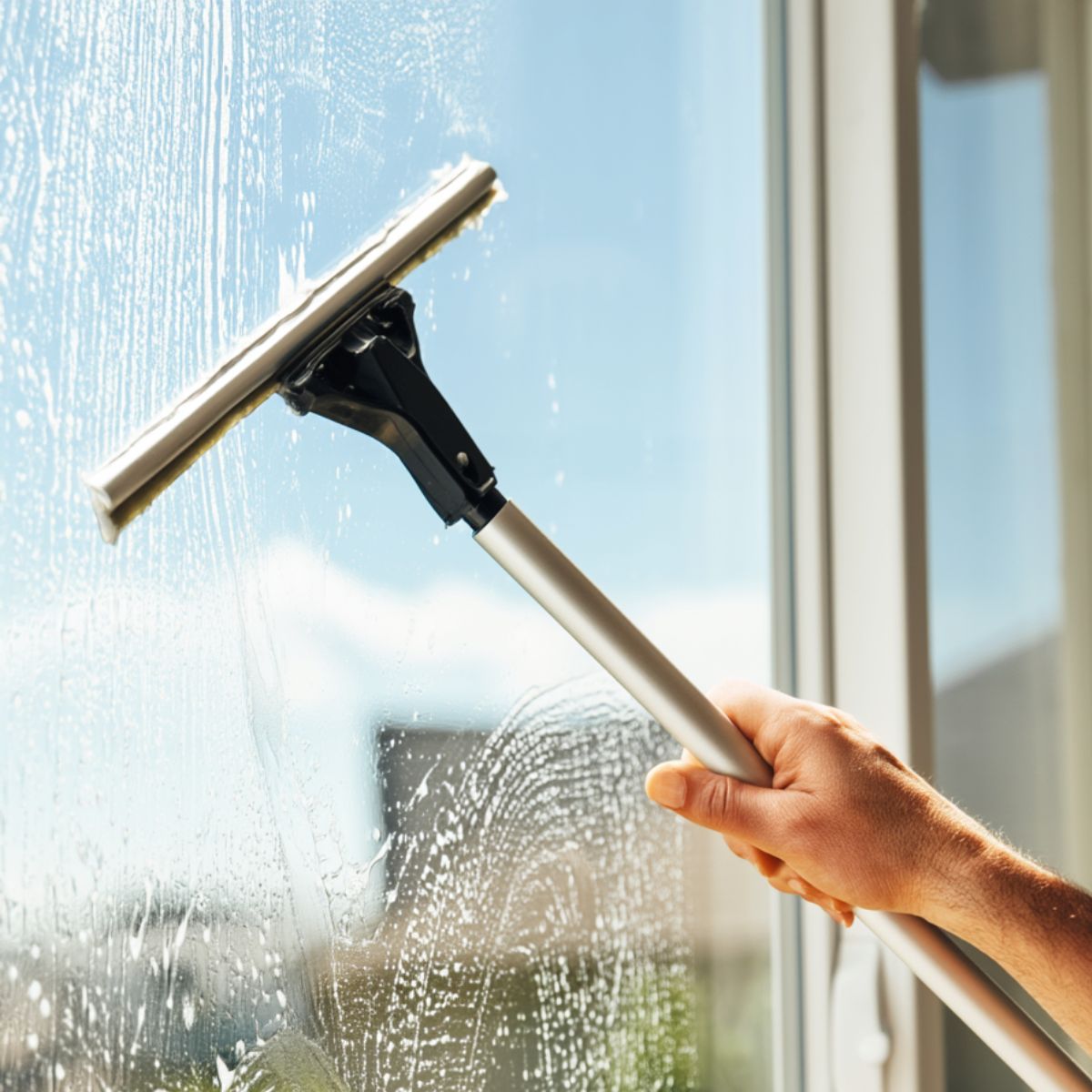
This is where most people either win or lose the streak battle. Hold your squeegee at a 45 degree angle and pull from top to bottom in overlapping straight lines. Wipe the squeegee blade with a clean cloth after every single pass. Skipping that step means you are redistributing dirty water across the window panes and streaks are almost guaranteed.
Step 5: Dry the Edges
Use a dry microfiber cloth to absorb any excess water sitting in the corners and along the edges of the window. This is the most overlooked step and the source of most streaks. Take an extra thirty seconds here and your finished result will look noticeably better.
Step 6: Buff to a Streak-Free Finish
Take a fresh dry microfiber cloth and lightly buff the glass in a circular motion. This removes any remaining haze and gives you a true streak-free shine. For best results use a separate cloth for this final step rather than the one you used to dry the edges.
How to Clean Outside Windows on Higher Floors
Cleaning the outside of your windows adds a level of complexity, especially on higher floors. For ground level exterior windows a garden hose to rinse and an extension pole with a microfiber head makes the job much easier and keeps you off a ladder. For double-hung windows, tilt the sashes inward to clean the outside of the glass from inside the house.
For windows on upper floors, safety precautions matter more than anything else. Use a sturdy ladder with proper stabilizers and never lean out further than you comfortably can. If reaching your exterior windows safely is not realistic, that is a very good reason to bring in professional help.
Your Season-by-Season Window Cleaning Guide
Each season brings different grime and different challenges.
Spring: Pollen and Post-Winter Buildup
Spring is the most important window
Summer: After Storms
Summer storms leave dirt and mold on exterior glass. Schedule a clean in mid-summer after a heavy rain stretch. Avoid
Fall: Pre-Holiday Prep

Leaves, debris, and the general dust of a busy summer season settle onto your windows and into your window tracks by fall. A thorough clean in September or October sets you up perfectly for the holidays when you actually want your home looking its best. Pay close attention to tracks and frames where leaves and seed pods collect.
Winter: Spot Clean Only
Unless your windows are visibly dirty and the weather is mild, skip a full clean in winter. Cold temperatures cause
When to Call Window Washing Experts Instead
DIY window
Regular professional
5 Tips for Keeping Windows Cleaner Between Washes
- Apply a water repellent treatment to exterior glass after
cleaning . Rain water beads right off instead of sitting and leaving spots. - Keep window tracks clean with a quick
vacuum and wipe down monthly. Dirty tracks lead to dirty glass. - Trim shrubs and trees close to your windows. Tree sap and pollen from nearby plants are a constant source of buildup.
- Use only a microfiber or lint-free cloth for touchups between deep cleans. Paper towels and old rags leave more behind than they remove.
- Clean window screens separately with a soft brush and soapy water at least once a season. Dirty screens transfer grime directly back onto clean glass.
Clean Windows Really Do Change How Your Home Looks and Feels
Once you know how to clean windows the right way and get into a regular
Frequently Asked Questions
What is the best way to clean windows without streaks?
The best way to clean windows without streaks is to use a squeegee with overlapping top to bottom strokes, wipe the blade after every pass, and dry the edges immediately with a dry microfiber cloth. Cleaning on a cloudy day rather than in direct sunlight also prevents the solution from drying too fast and leaving residue behind.
What should I use to clean windows at home?
A bucket of warm soapy water with a few drops of liquid dish soap is all you need for most windows. A spray bottle with a homemade window-cleaning solution of one part white vinegar to two parts distilled water works well for interior windows and touchups. Pair it with a microfiber cloth and a squeegee for best results.
Why do my windows streak no matter what I use?
Streaky windows are almost always a technique issue, not a product issue. The most common causes are cleaning in direct sunlight, using paper towels instead of microfiber, not wiping the squeegee blade between strokes, and leaving excess water in the corners. Switching your timing and technique makes a bigger difference than switching your cleaner.
How do I remove hard water spots from windows?
Apply undiluted white vinegar directly to hard water spots and let it sit for two to three minutes before scrubbing with a damp cloth. For mineral deposits that have set in deeply, a paste of baking soda and water or an oxalic acid based cleaner works well. Rinse thoroughly and dry with a clean microfiber cloth.
How often should I clean my windows?
Most homes benefit from cleaning windows at least twice a year, ideally in spring after pollen season and in fall before the holidays. If you live near trees, have pets, or deal with hard water, a quick clean each season keeps buildup from becoming a bigger project. Interior windows can go longer between full cleans with regular touchups.
How do I clean exterior windows on upper floors?
For exterior windows on higher floors, an extension pole with a microfiber or squeegee head lets you clean safely from the ground. For double-hung windows, tilt the sash inward to reach the outside glass from inside the house. For windows you truly cannot reach safely, hiring a professional window cleaning service is the right call.
Is it better to clean windows on a sunny day or a cloudy day?
A cloudy day is much better for cleaning windows. Direct sunlight causes cleaning solution to evaporate before you can squeegee it off, which leaves streaks and residue. If you need to clean on a sunny day, early morning before the sun hits the glass directly is your best option.
When should I hire a professional window cleaning service?
Hire a professional when your windows are on upper floors you cannot safely reach, when you have large picture windows or post-construction residue, or when hard water deposits have etched into the glass beyond what DIY cleaning can remove. Regular professional cleaning also extends the life of your windows by preventing surface damage from embedded grime.