How to Wash Sheets Properly for Soft, Fresh Bedding
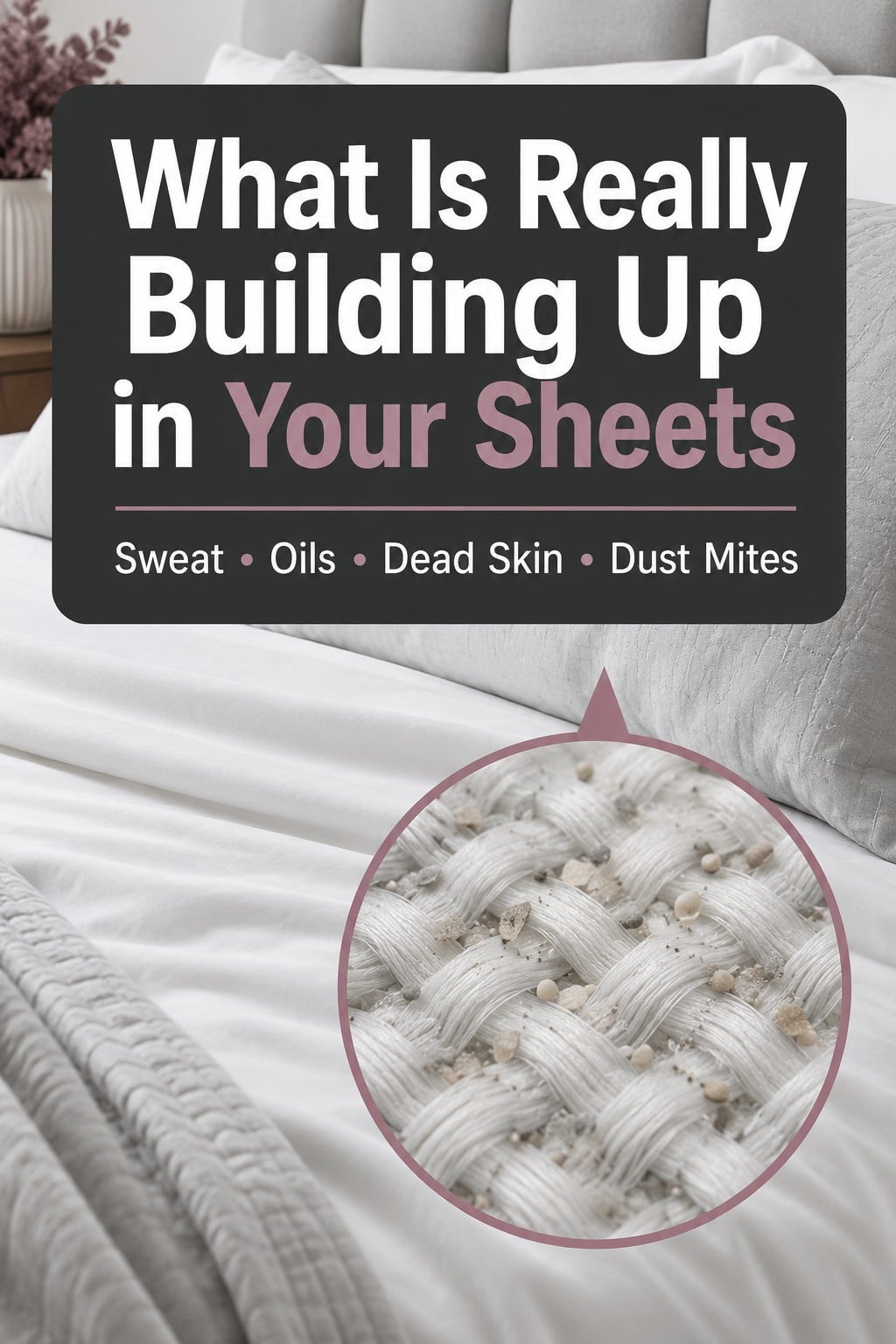
We spend about a third of our life in our sheets, and in that time they quietly collect sweat, body oils, dead skin cells, and everything else that comes off us at night. So learning how to wash sheets the right way is one of those small skills that pays off every single night. Do it well and your bed feels fresh, soft, and inviting. Do it wrong and you shorten the life of a good set fast.
*This post may contain affiliate links and I'll earn a commission if you shop through them. You can read my full disclosure here.
I have washed a lot of sheets over the years, cotton, linen, silk, and my beloved cooling sheets, and I have made just about every mistake there is. Here is everything I have learned, start to finish.
How Often Should You Wash Your Sheets?
Once a week is the sweet spot. If life gets busy, every two weeks is the outside limit before things start to feel less than fresh. Your sheets hold onto body oils, sweat, dead skin cells, and dust mites, and all of that can bother sensitive skin or leave you waking up with breakouts and skin irritations. Wash more often during flu season, after you have been sick, or after a night of heavy sweating.
One exception is your pillowcases. They soak up face oils, hair product, and drool, so they get dirty faster than the rest of the set. If you deal with breakouts or sensitive skin, wash your pillowcases every two or three days and keep the rest of the bed on the weekly schedule.
This is not just me talking either. Laundry care experts recommend a regular wash schedule for exactly these reasons, since letting that buildup sit is what breaks down fabric over time.
How to Wash Sheets the Right Way, Step by Step
Here is the simple routine that keeps sheets soft and lasting.
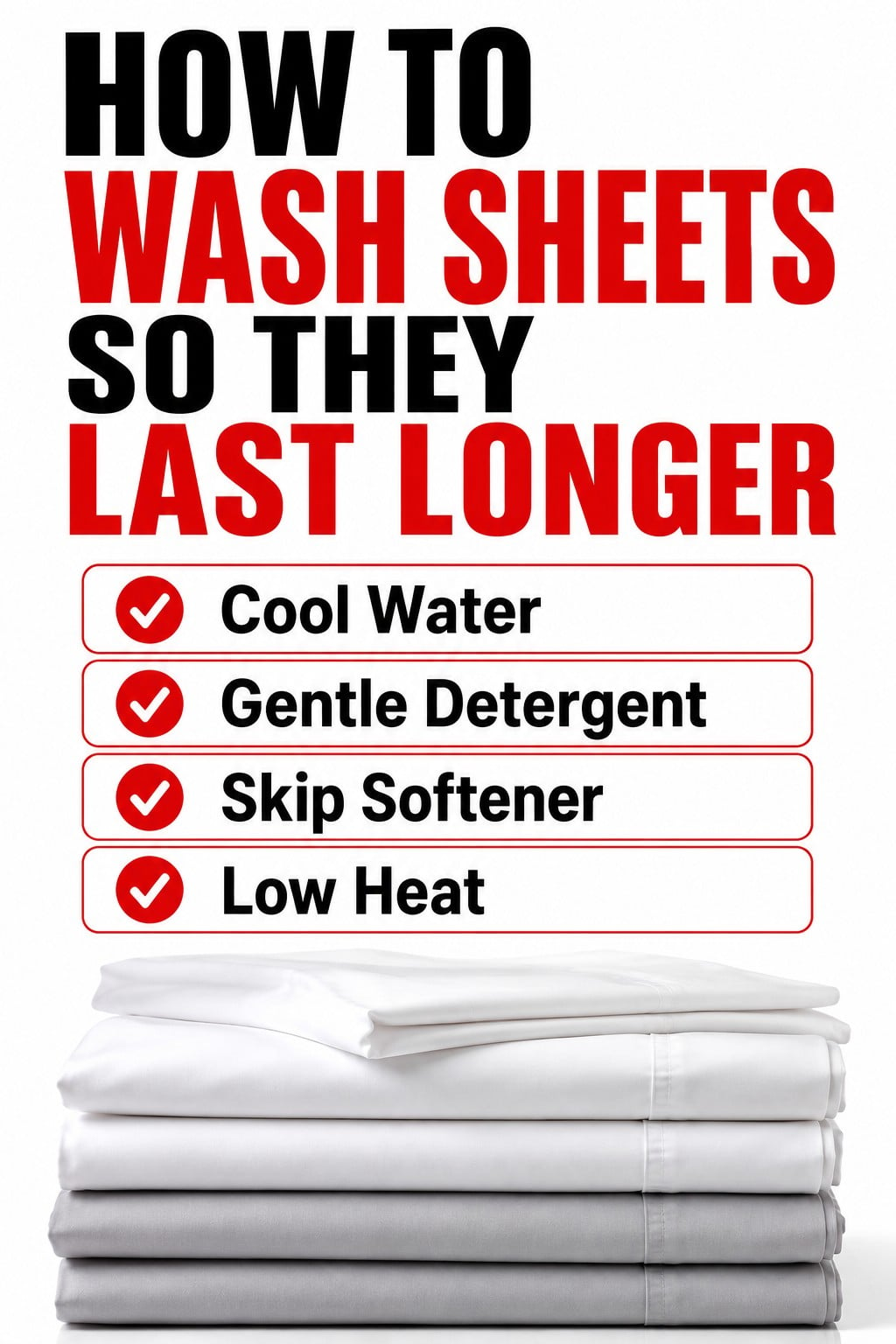
Start with the care label. Before anything else, check the care label. It tells you the safe water temperature, the right cycle, and any warnings for that fabric, and it saves you from ruining a nice set on wash one.
Pick the right water temperature. For most sheets, cool or cold water is the gentlest choice. It protects the fibers, holds the color, and still cleans well. Save hot water for white sheets or for the times you need to kill germs, like flu season, since hot water is harder on fabric over time.
Use a gentle detergent, and not too much. A mild, gentle detergent is all your sheets need. Too much detergent leaves a stiff residue that never fully rinses out, which is the opposite of soft. I switched to a plant based detergent from Truly Free that rinses clean and is easy on sensitive skin, and my sheets have felt better for it.
Choose a gentle or normal cycle. A gentle or normal cycle with a full but not overloaded machine gives sheets room to move and rinse. Wash them on their own so they do not twist around your clothes.
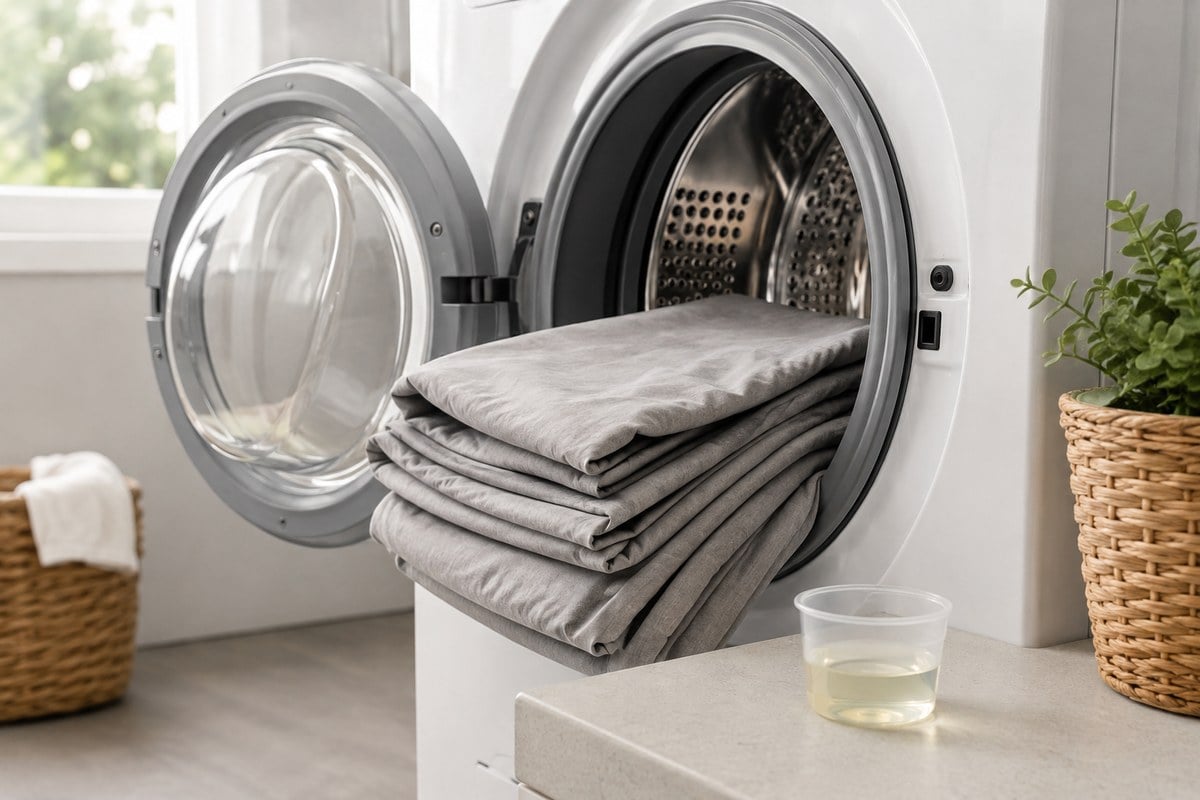
Skip fabric softener and dryer sheets. This one surprises people. Fabric softener and dryer sheets coat the fibers with a waxy film that builds up, cuts breathability, and actually makes sheets less absorbent over time. For softness without the residue, toss in a few wool dryer balls instead.
Drying Your Sheets Without Wrecking Them
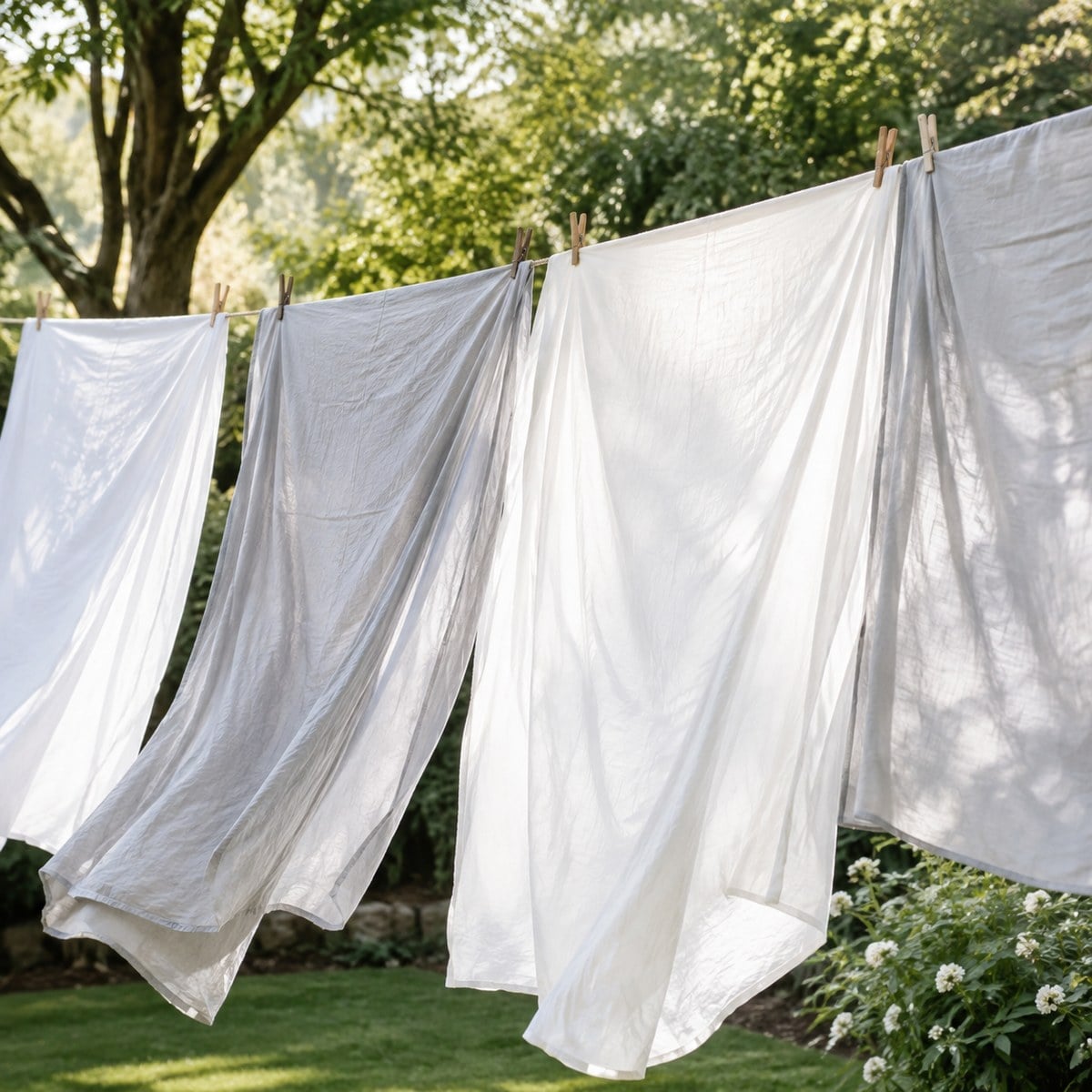
How you dry matters as much as how you wash. Tumble dry on low or medium heat, never high, since high heat breaks down fibers and sets wrinkles. Better yet, air dry or line dry when you can. A little direct sunlight naturally freshens and brightens white sheets, though keep colored sets out of harsh sun so they do not fade. Whatever you choose, pull the sheets out the moment they are dry and fold or make the bed right away to skip the ironing.
How to Keep Sheets Soft and Fresh
A few habits keep a good set feeling new. Always wash new sheets before the first use to rinse off the manufacturing finish, that stiff feel a fresh set sometimes has. If your sheets ever feel scratchy or hold detergent buildup, run them through an extra rinse with a cup of white vinegar, which strips residue and softens without harsh chemicals. Steer clear of bleach unless the label allows it, and keep a few wool dryer balls in rotation.
One more trick. If your sheets come out smelling musty even after a wash, the culprit is usually the washing machine, not the sheets. Run an empty hot cycle with a couple cups of white vinegar to clear mildew and detergent buildup from the drum, then wash your sheets again.
How to Keep White Sheets Bright
White sheets look like a hotel when they are fresh, but they yellow faster than any other color. That dullness is not age, it is body oils, sweat, and detergent buildup settling into the fibers. A few easy moves keep them crisp.
Add
Reach for oxygen bleach, not chlorine. When you do want a boost, an oxygen based bleach brightens without weakening the fibers the way chlorine can, and there is no harsh smell. Once a month is plenty.
Let the sun do the work. A stretch of direct sunlight naturally brightens white sheets while they air dry, and even a half hour makes a visible difference. Keep colored sets out of strong sun though, since the same rays that brighten white will fade a color.
If your whites have already gone yellow, soak them in hot water with a cup of
Washing Different Types of Sheets
Not every fabric plays by the same rules.
Cotton sheets are the easy ones. They handle warm water and regular washing, and they only get softer with time.
Linen loves a cool, gentle wash. Air dry it when you can, and it softens beautifully over the years if you treat it kindly.
Silk and satin sheets need the most care. Cold water, a delicate cycle, a mild detergent made for delicate fabrics, and air drying away from direct sunlight.
Bamboo sheets wash a lot like silk. Cold water, a gentle cycle, and easy on the agitation, since bamboo is delicate when it is wet. Air dry to keep that silky feel, or tumble on low and pull them out early.
Microfiber and cooling sheets have their own rules. Wash cold, use a gentle detergent, and skip the fabric softener completely, since softener clogs the very fibers that make them breathe. My cooling sheets are microfiber infused with silver, and I broke down exactly how I care for them in my full Silvery Comfort Sheets review.
Getting Stains Out of Sheets
Sheets see everything, so stains happen. The golden rule is to treat them fast and never dry a stain, since heat sets it for good. For blood stains, rinse with cold water first, never hot. For sweat and body oil marks, dab on a paste of
Storing Your Sheets So They Stay Fresh
Where you keep your sheets matters almost as much as how you wash them. Fold them while they are still warm from the dryer so they crease less, then store them somewhere cool and dry with a little airflow, like a linen closet that is not packed too tight. Skip sealed plastic bins, which trap moisture and can turn a clean set musty. If a set ever smells stale coming out of storage, that spot has a humidity problem, so move your sheets and air the area out.
The Little Habits That Make Sheets Last
The people whose beds always feel like a hotel are not doing anything fancy. They keep two sets in rotation, wash on a regular laundry day, run a full but not stuffed load, use a gentle detergent, and give each fabric the proper care it asks for. Small, boring habits, but they add years to a good set of sheets.
Your Freshest Bed Starts on Laundry Day
Washing your sheets well is one of the easiest upgrades to how your bed feels, and it costs you almost nothing beyond a little attention. Start with the care label, keep the water cool, go easy on the detergent, skip the softener, and dry on low. That is honestly the whole secret.
If you want the two things that made the biggest difference for me, it is a gentle plant based detergent that rinses clean, and a really good set of cooling sheets for the nights I run warm. Do you wash yours once a week, or are you a stretch it to two kind of person? I would love to know I am not the only one.....
How to Wash Sheets: FAQ
How often should you wash your sheets?
About once a week is ideal, and every two weeks is the limit before they start to feel less than fresh. Sheets collect sweat, body oils, and dead skin cells that can bother sensitive skin. Wash more often during flu season, after being sick, or after a hot, sweaty night.
What water temperature is best for washing sheets?
Cool or cold water is best for most sheets. It cleans well while protecting the fibers and holding the color. Save hot water for white sheets or when you need to kill germs, since hot water is harder on fabric over time and can fade colors and set some stains.
What is the best detergent for washing sheets?
A mild, gentle detergent is all sheets need, and less is more. Too much detergent leaves a stiff residue that never fully rinses out. A plant based, gentle formula rinses clean and is kinder to sensitive skin, which keeps sheets feeling soft wash after wash.
Should you use fabric softener on sheets?
No, and this surprises people. Fabric softener and dryer sheets leave a waxy film that builds up, reduces breathability, and makes sheets less absorbent over time. For softness without the residue, use a few wool dryer balls in the dryer, or add a cup of white vinegar to the rinse.
How do you keep sheets soft?
Wash new sheets before the first use, go easy on the detergent, and skip fabric softener. If they feel stiff, run an extra rinse with a cup of white vinegar to strip buildup. Dry on low heat or air dry, and pull them out promptly so they stay smooth.
Can you wash sheets in hot water?
You can, but you usually should not. Hot water helps with white sheets or sanitizing during flu season, but used regularly it wears down fibers, fades colors, and can shrink some fabrics. For everyday washing, cool or cold water keeps sheets looking cleaner and lasting longer.
How do you get stains out of sheets?
Treat stains fast and never dry them, since heat sets a stain for good. Rinse blood stains in cold water first. For body oils and sweat, work in a little stain remover before washing, and add a cup of white vinegar to the load for tougher, stubborn stains and smells.
How do you wash cooling or silver sheets?
Cooling and silver sheets need a cooler wash water, a gentle cycle, and a mild detergent, with no bleach or fabric softener, since softener clogs the fibers that help them breathe. Tumble dry low or hang to dry. I share the full routine in my Silvery Comfort Sheets review.