Parisian Apartment Vibes: How to Channel Effortless Elegance at Home
*This post may contain affiliate links and I'll earn a commission if you shop through them. You can read my full disclosure here.
I'll never forget stepping into my first real Parisian apartment. It wasn't the grandeur that got me-it was how nothing matched but everything worked. A gilded mirror hung above a flea market table. Velvet pillows next to worn leather. Framed photo prints leaned casually against the wall instead of being perfectly hung. The whole place felt like someone had spent decades collecting treasures.
That's what makes Parisian style different. It's not about buying everything new or following strict rules. It's about building a space that actually looks lived-in.
Start with the Bones
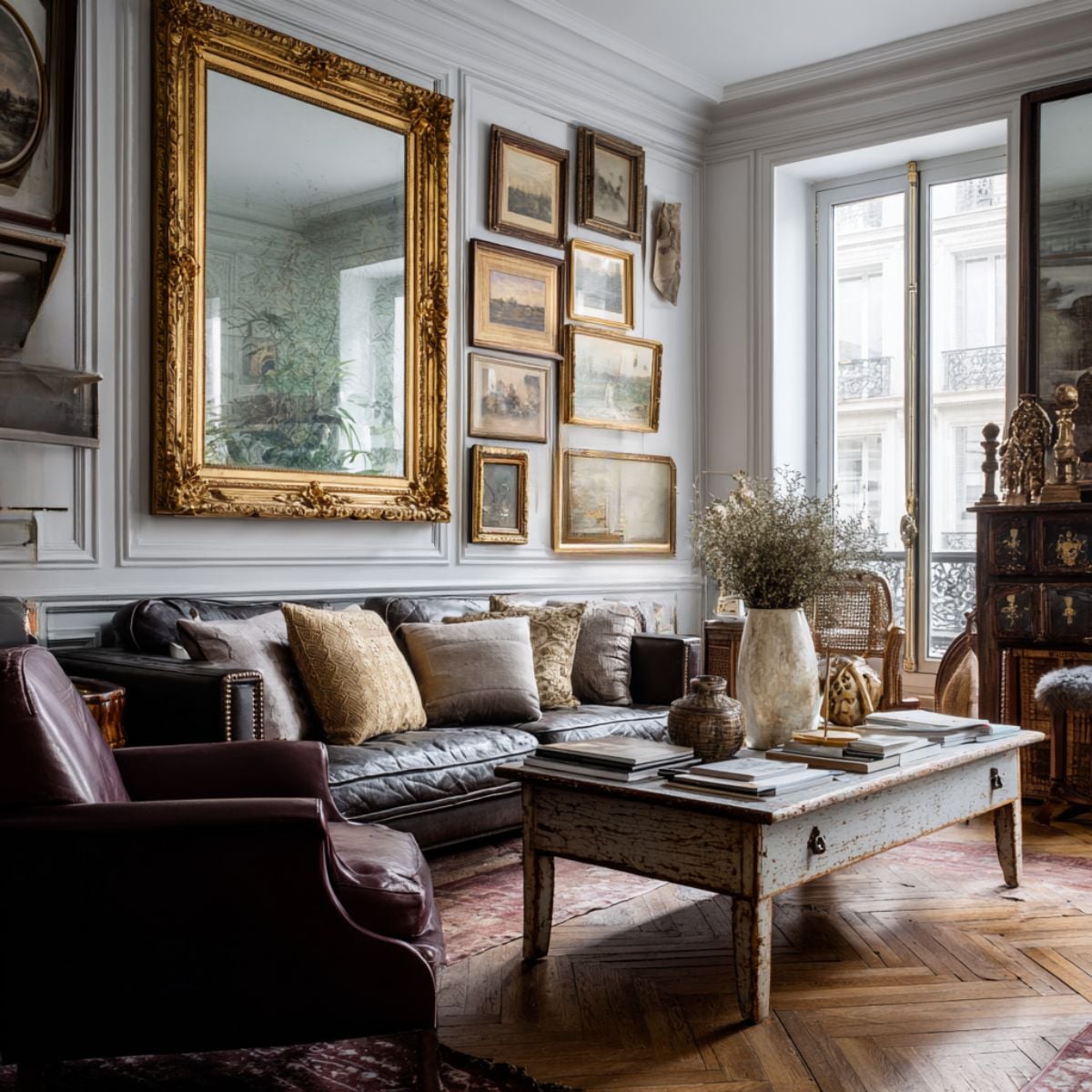
Those old Parisian buildings have serious architecture. The crown moldings and ceiling medallions from the 1850s weren't decorative-they covered up where walls met ceilings and reinforced structural joints. Many of those original plaster details still exist today.
You can add similar features without gutting your home. Hardware stores sell polyurethane molding for $60-180 per room. Paint it white, and your ceilings suddenly have definition. Picture rails work too-mount them a foot below the ceiling to break up tall walls and hang art without nail holes.
Can't install herringbone floors? Get an area rug with geometric patterns instead. Same visual effect, way less money.
Quiet Colors That Work
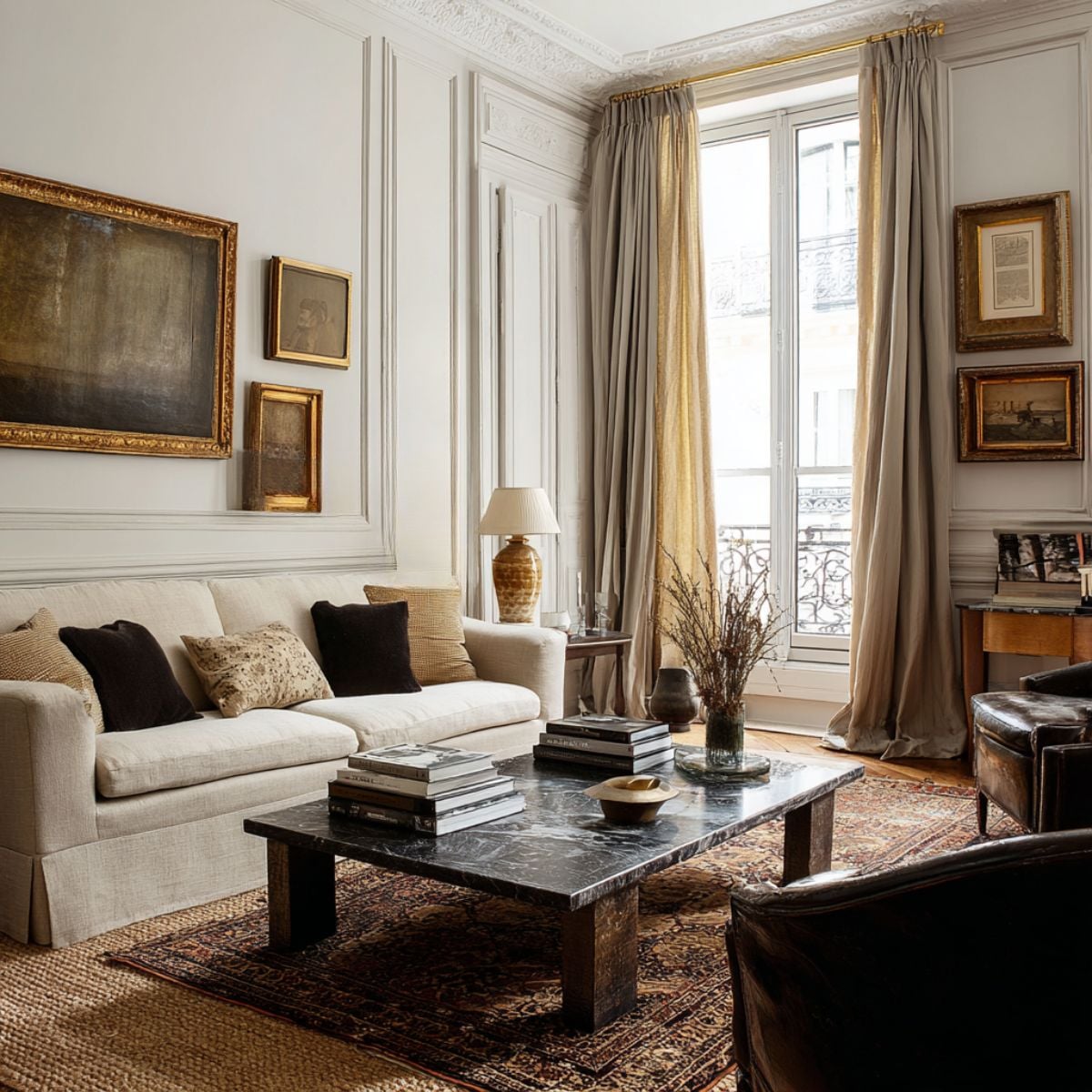
Walk around the Marais district and you'll see the same thing everywhere: cream walls, soft grays, warm beiges, maybe some greige. Boring? Not really.
Neutral walls let everything else stand out. Your grandmother's rug becomes the focal point. Flowers on the table pop. Colorful art doesn't compete with bright walls. Plus, you can swap pillows and blankets seasonally without repainting or buying new couches.
The Mixing Formula
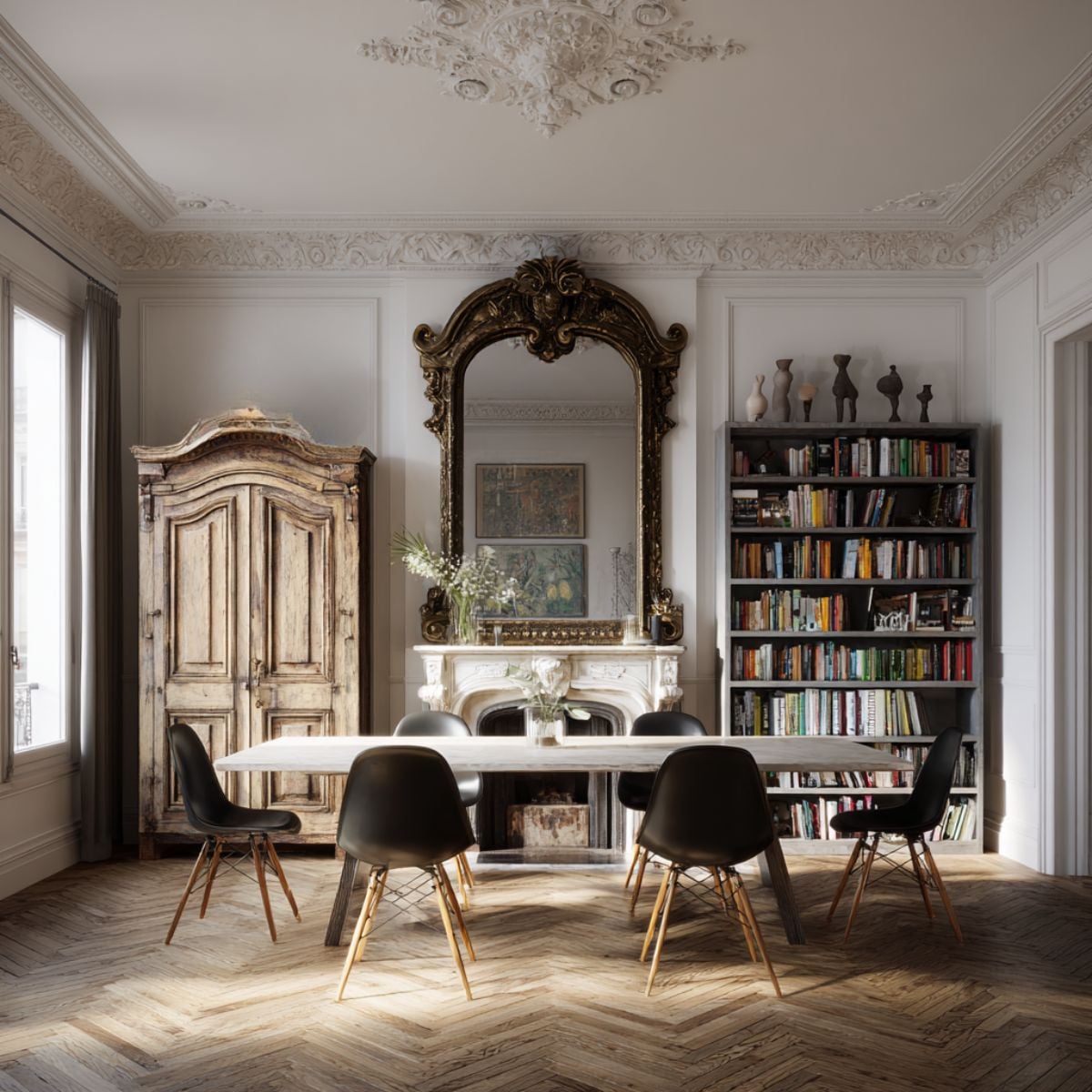
Parisian apartments throw together stuff from different eras and price points. A €2,000 antique armoire sits next to an IKEA bookshelf. An elaborate baroque mirror hangs over a minimalist console table. Thrift store chairs circle a sleek modern dining table.
This isn't new-design magazines started showing real Parisian homes in the '90s instead of perfect showrooms, and people noticed how nothing matched. But it works because of connections. Brass shows up on drawer pulls, frames, and lamps. Wood tones stay within the same family-darker oak with walnut, never blonde pine with mahogany. Colors max out at three or four throughout the space.
The New York School of Interior Design emphasizes that successful eclectic mixing requires editing-removing pieces until what remains actually works together rather than just accumulating items.
Start with one big piece-an oversized mirror, an antique cabinet, a statement chandelier. Build around it with simpler stuff that doesn't compete.
Why Texture Matters
Neutral colors mean texture has to do the work. Linen curtains, velvet pillows, leather books, brass candlesticks, marble counters-every surface should feel different. Layer a chunky throw over smooth linen. Put a jute rug under a vintage Persian. Stack books on a glossy tray next to a matte ceramic vase.
If you're working with limited space, layering textures becomes even more important since you can't rely on the quantity of items.
Less Art, More Impact
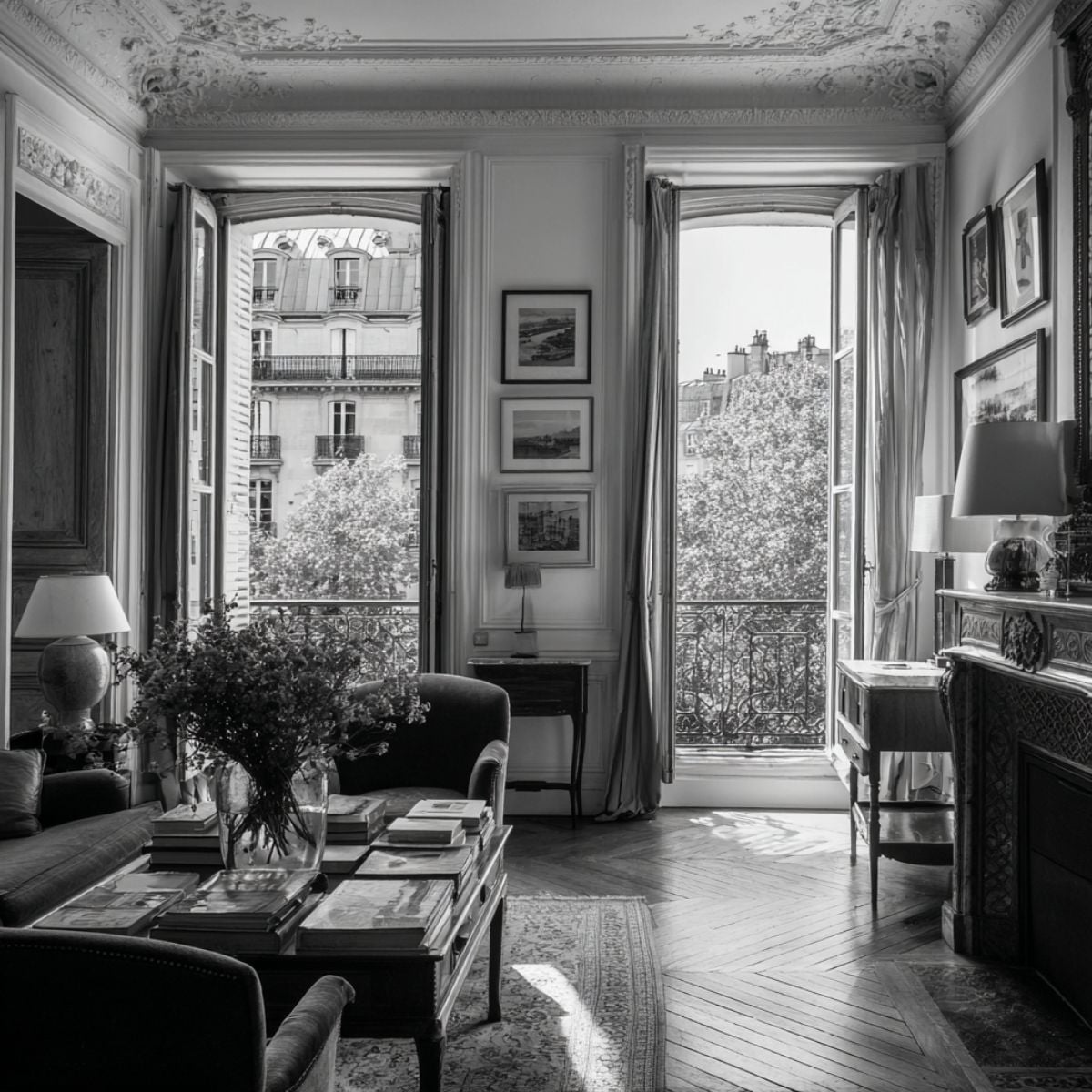
Parisians use less art than Americans. One black-and-white photograph in a basic frame can fill an entire wall-a portrait, a building detail, an abstract sketch. Monochrome prints never date and keep that calm, pulled-together look going.
Hang pieces at eye level, not up near the ceiling. Off-center placement often looks better than perfect symmetry.
Hunt for Character
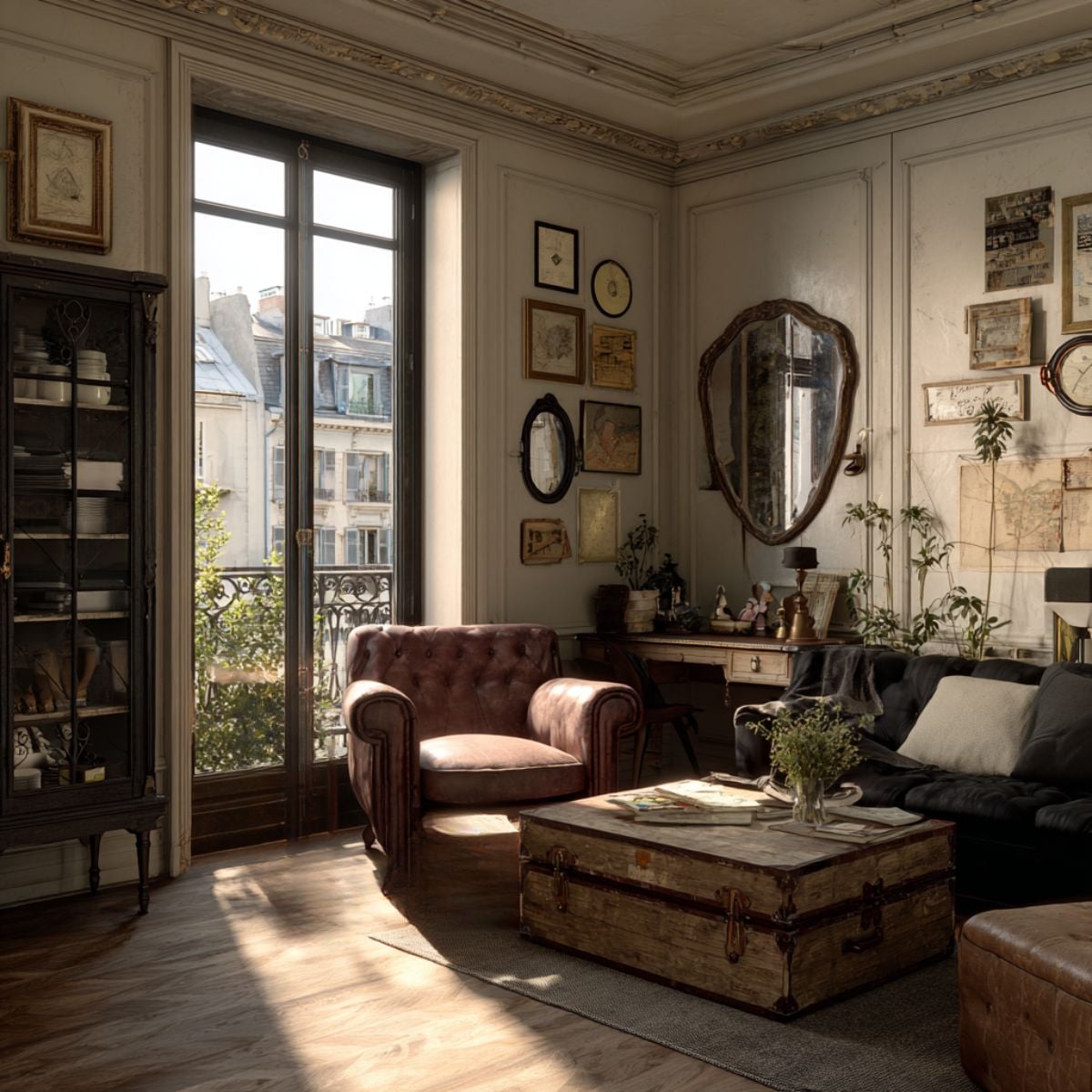
You can't get this look from West Elm. Hit estate sales and flea markets for mirrors, lighting, old frames, and furniture with good bones. Scratches and dings add character-that's the point.
Keep fresh flowers around. Let the curtains puddle slightly on the floor. Stack books you'll actually read on the coffee table. Proper curtain maintenance keeps that relaxed drape looking intentional, not sloppy.
The real trick? Choose what you genuinely love, not what's trending online. Mix expensive with cheap. Let your space evolve. That's when it starts feeling right.