The Few Pans a Small Kitchen Really Needs
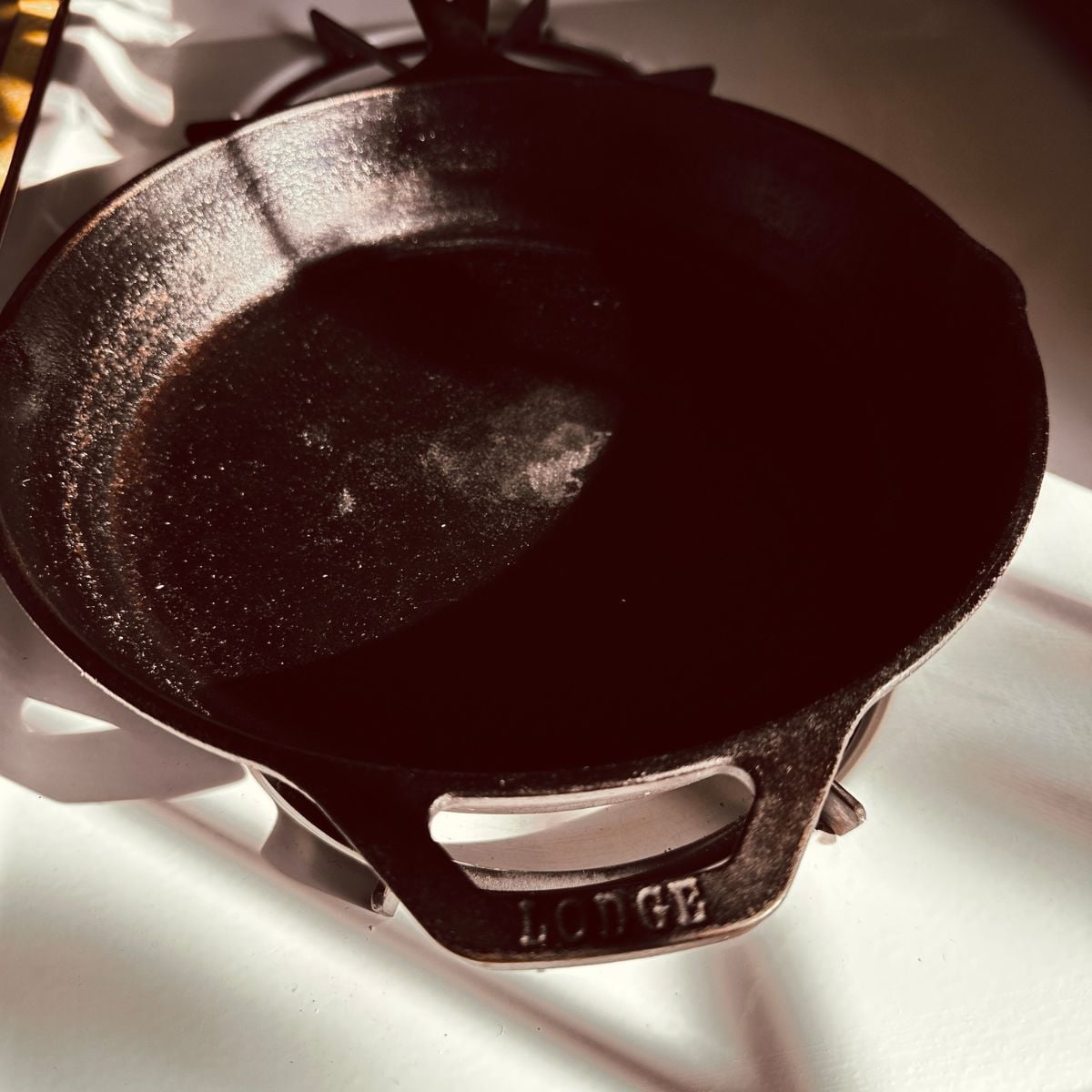
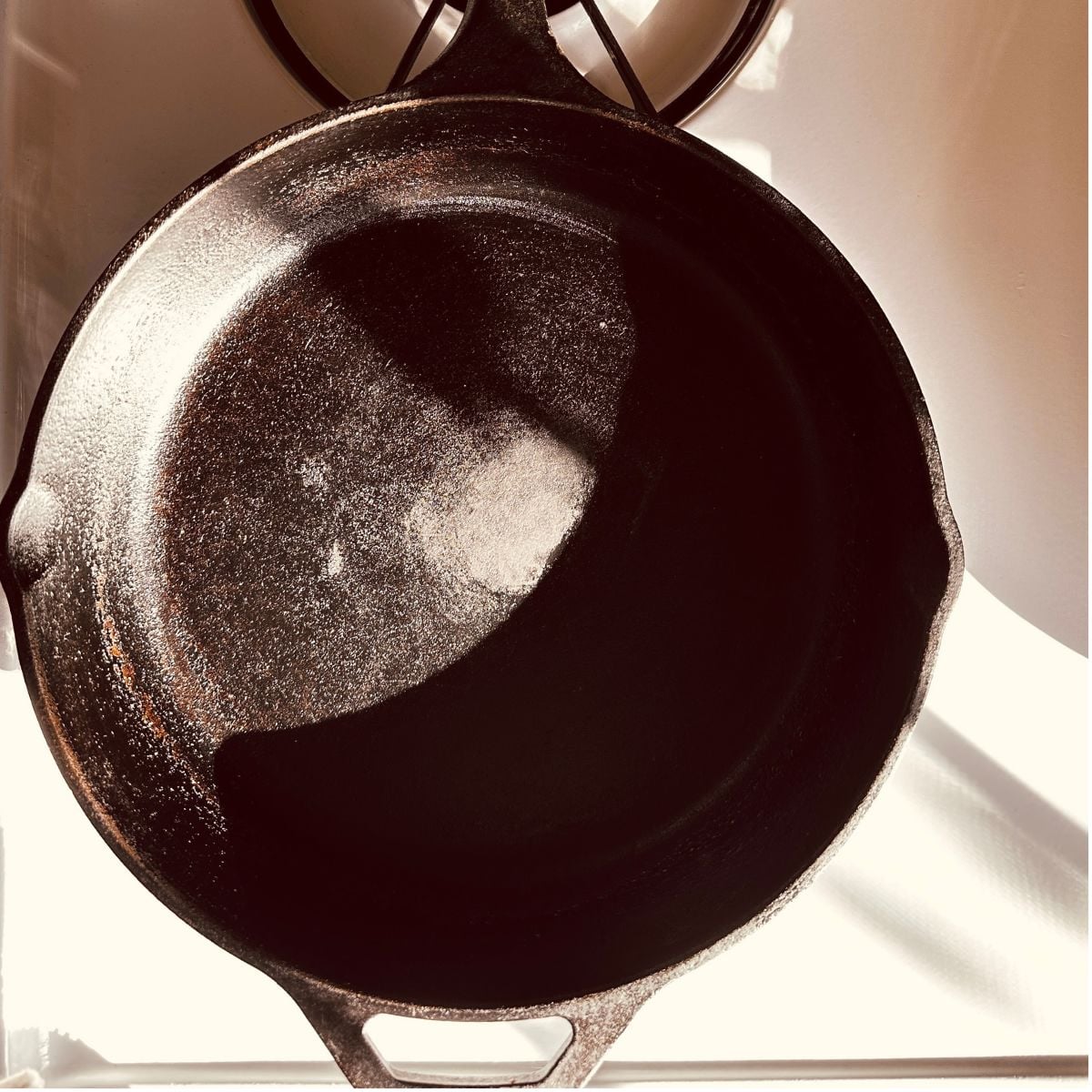
I have ONE pot and pan cupboard. Yes, one. That's the hard part of having a small kitchen and a bigger family (there are usually at least six of us at the table for dinner). It's also the reason one pan never leaves my stovetop... a Lodge cast iron skillet I use almost every single day.
It isn't my only cast iron, either. I keep several more stored in my oven, and the largest one comes out when I make my dad's homemade macaroni and cheese or a big chicken pot
If I could only keep three pans, it would be my medium cast iron skillet, my large cast iron skillet and my favorite wok. Does a wok count???
A small kitchen has a way of exposing every impulse buy... The grill pan you used twice, the tiny saucepan for melting butter, that stack of mismatched lids that never quite fits anything. In a big house, they hide at the back of a deep cupboard. In a small one, they take up space you need every single day.
The goal is a small set of pans that each earn their spot, so
From time to time, articles on The How-To Home may reference third-party websites, businesses, products, services, or review platforms as part of editorial research. When evaluating companies or services, we may consider publicly available information such as customer reviews, business websites, service offerings, licensing information when available, and overall relevance to the topic.
Start With How You Actually Cook
Before you buy or toss anything, think about a normal week in your kitchen. Jot down the five or six meals you make most often and which pan each one uses. Most households (mine included) find the same two or three pans doing nearly all the work.
This is also a good time to be honest about who you're feeding.
What Pans Does a Small Kitchen Really Need?
Most small kitchens need just three pans: a medium skillet, a deep pan with a lid, and one pot for pasta, soup and grains. With those three, you can fry, sear, braise, simmer and boil almost anything a weeknight calls for.
The skillet handles eggs, quick vegetables, fish and anything you want browned. The pot covers boiling and big batches. A small saucepan is a nice extra if you make rice or oatmeal every day, but plenty of people get by just fine with the larger pot.
The Case for One Deep Pan
If you only add one more piece, make it a deep pan with sloped or straight sides and a lid. It does the work of a skillet, a sauté pan and a shallow casserole all in one. You can brown chicken thighs, add tomatoes and let them simmer, then serve right from the pan.
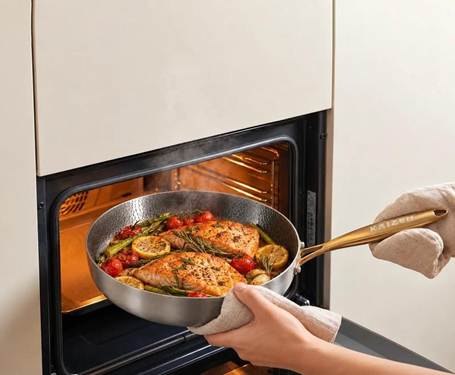
A deep pan that can go in the oven gives you even more range. You can sear salmon on the stove, add some vegetables, and finish the whole thing in the oven with only one pan to wash. In a small kitchen with a small sink, that matters more than any fancy feature.
Choosing Materials That Last
When space is tight, it pays to buy pans that won't need replacing every couple of years. Coated nonstick pans are easy to use, but that slick layer wears down with time, metal tools and high heat. Once it's scratched, the pan is on its way out.
Uncoated pans last longer. Stainless steel and cast iron are the classic picks (cast iron is what lives on my stovetop), and titanium is a newer option. You can see how titanium pans are built on kaizencookware.com, where the brand describes a pure titanium
Each material has a little learning curve. Stainless steel needs proper preheating so food doesn't stick. Cast iron is heavy and needs to stay dry and oiled. Titanium pans, according to their makers, do best on medium heat with a little oil rather than high heat. None of these is hard, but it helps to know before you buy.
How Do You Store Pans in a Small Kitchen?
You store pans in a small kitchen by nesting them, standing lids upright and using vertical space. Nest pans from largest to smallest, with a cloth or paper towel between each one so the surfaces don't scratch. With one cupboard holding every pot and pan I own, stacking is the only way I can make my kitchen work. Stack. Stack. Stack.
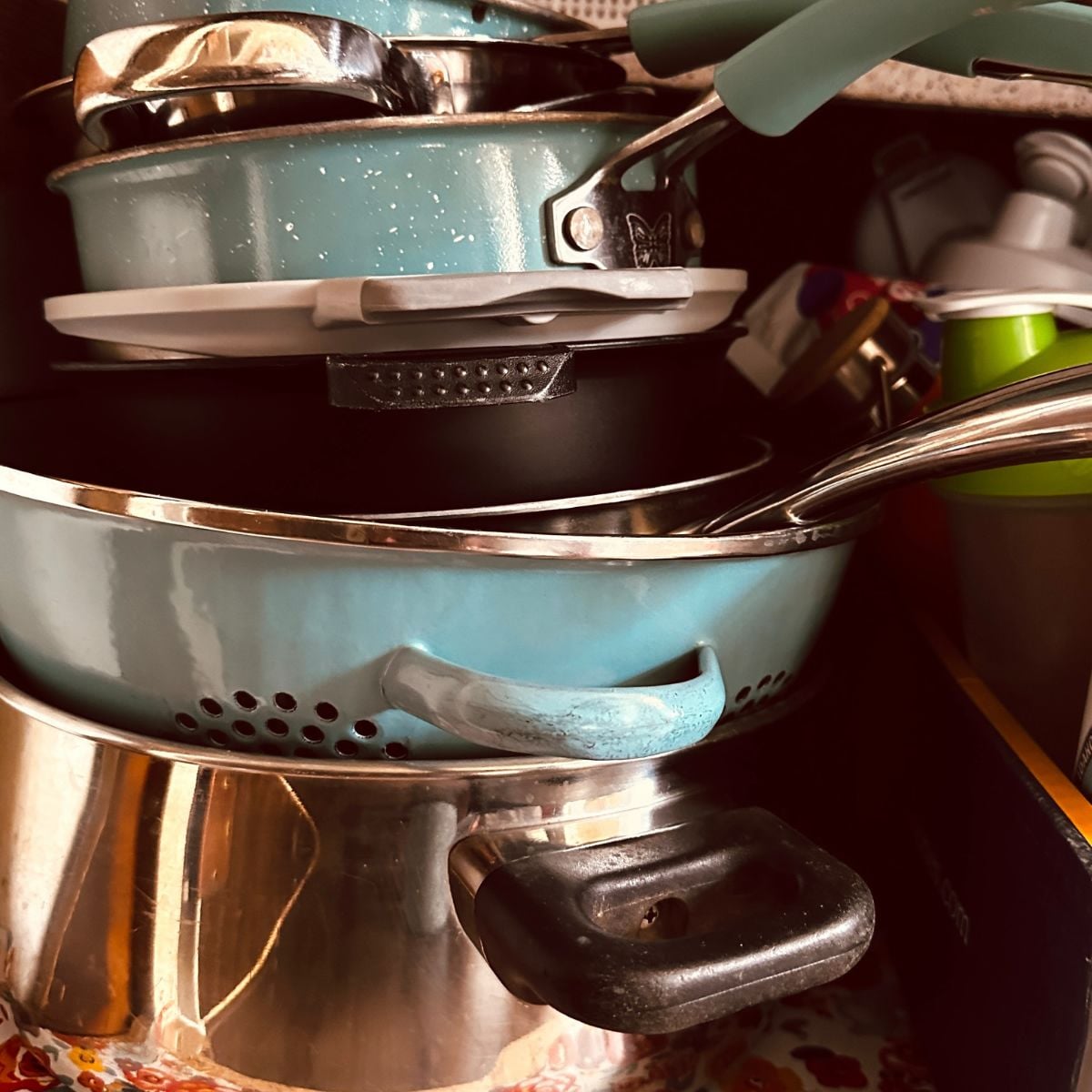
Lids are the real space hogs. A simple lid rack inside a cabinet door, or a file organizer standing up in a drawer, keeps them upright and easy to grab. If you have a bit of open wall, a rail with S-hooks can hold your most-used skillet within reach of the stove.
It also helps when pans share a lid size. If your skillet and deep pan both fit one lid, you can let the spare one go.
Letting Go of the Rest
Once your core pans are in place, the extras are easier to judge. If something hasn't been used in a year, it can probably go to a friend or a donation box. Specialty pieces like a griddle or a large stockpot can live in a basement or garage if you really only need them a few times a year.
A small kitchen works best when everything in it has a job. Three or four good pans you reach for every day will serve you better than a cupboard full of ones you don't. So tell me... if you could only keep three pans, which ones would make the cut?