The Mindful Home Office: Organizing for Focus and Aesthetic Balance
The world is changing faster than ever. Just a few years ago, working from home was a rare perk reserved for freelancers and the occasionally lucky employee. Then the pandemic questioned everything we knew about work. Now, for millions of people, remote work is just another Tuesday.
*This post may contain affiliate links and I'll earn a commission if you shop through them. You can read my full disclosure here.
As a result, a home office or even a dedicated work corner becomes essential and can make or break your comfort. Its design is about more than aesthetics or practicality. This space should support how your brain works, enhance concentration, and fit your notebooks, undated planners, or mood boards. The synergy of your system and aesthetics makes productivity the default, and this article will discuss how to achieve it.

Why a Mindful Home Office Matters
Essentially, your working space is a place where you can perform your professional tasks using the necessary tools, be it a laptop, a carpentry knife, or a watercolors collection. Sounds simple enough. But in practice, these basic requirements are surprisingly hard to meet at home.
The challenges stack up quickly:
Stress and mental load. A disorganized desk means wasted energy. You spend half your morning searching for that document, untangling cables, deciding what to tackle first. By lunch, you're tired without having done much actual work.
Blurred boundaries. When your office is also your living room, the line between work and life disappears. You check emails at dinner. You fold laundry during meetings. Without a clear physical boundary, your brain never fully switches off.
Creativity blocks. Cluttered space, cluttered mind. It's a cliché because it's true. When your environment feels chaotic, your thinking follows, so giving yourself visual breathing room lets ideas emerge naturally.
Concentration struggles. Every item on your desk competes for attention. That half-empty coffee mug, the random sticky notes, the phone buzzing nearby. Your brain processes all of it, whether you want it to or not.
So, should we all just give up and return to grey offices? Of course not. As the ultimate creator of your own space, you can make your work work for you.
Start with Decluttering and Intentional Layout
Before buying expensive organizers or rearranging furniture, start with subtraction. Most home offices suffer from too much, not too little.
Remove Visual Noise
Every item on your desk competes for your attention. Visual clutter increases cognitive load, making it harder to concentrate on the task in front of you.
The fix is simple but requires will. Look at your desk and ask how much of what's there you actually use daily. Probably not the stapler from 2019, the pen cup with fourteen pens where only three work, or the stack of papers you'll "get to eventually."
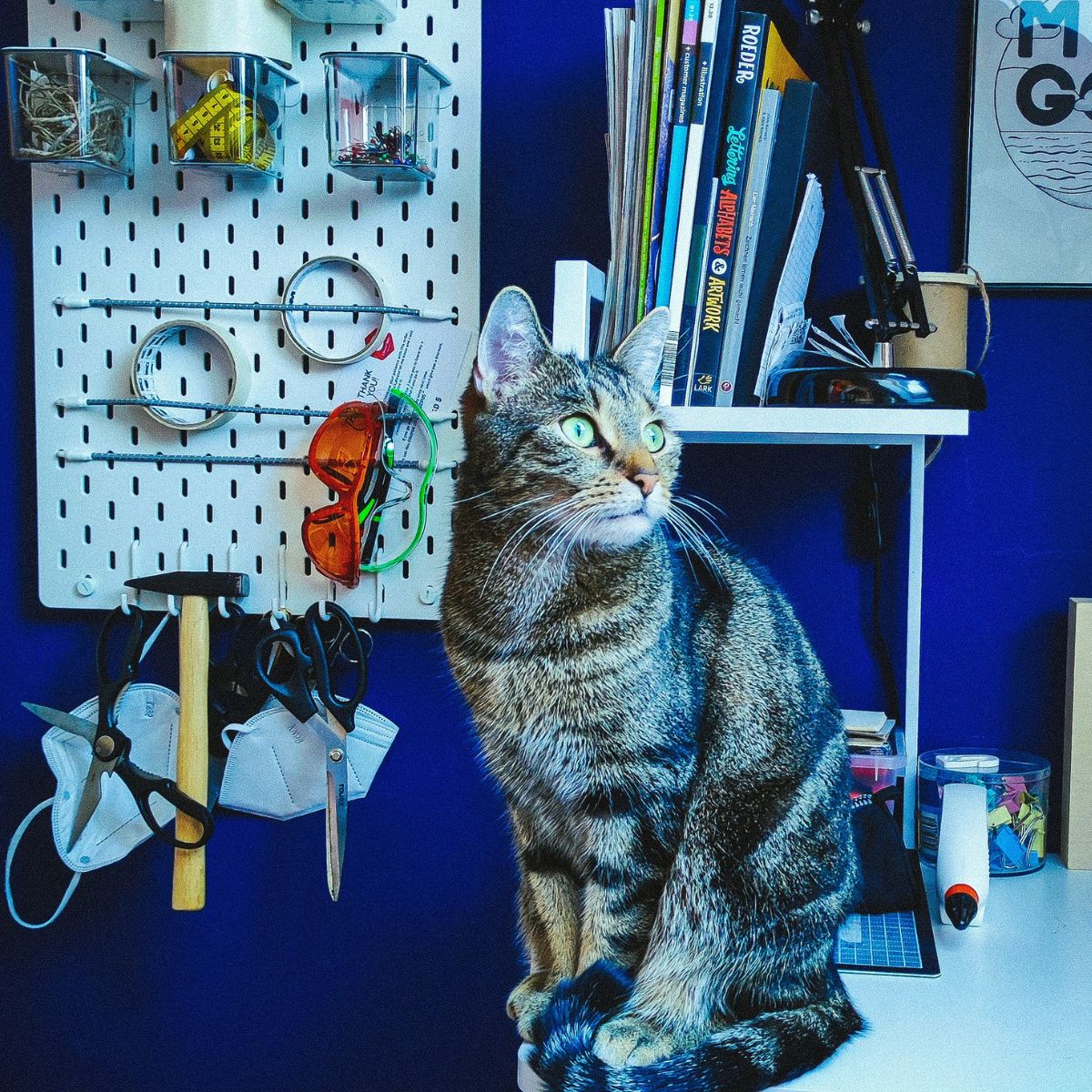
Keep only what you use daily within arm's reach. Everything else goes in a drawer, a cabinet, or out the door. Use neutral storage containers so your organization system doesn't create visual chaos.
Design Zones for Different Tasks
A mindful home office isn't one undifferentiated blob of workspace. Think of it in zones.
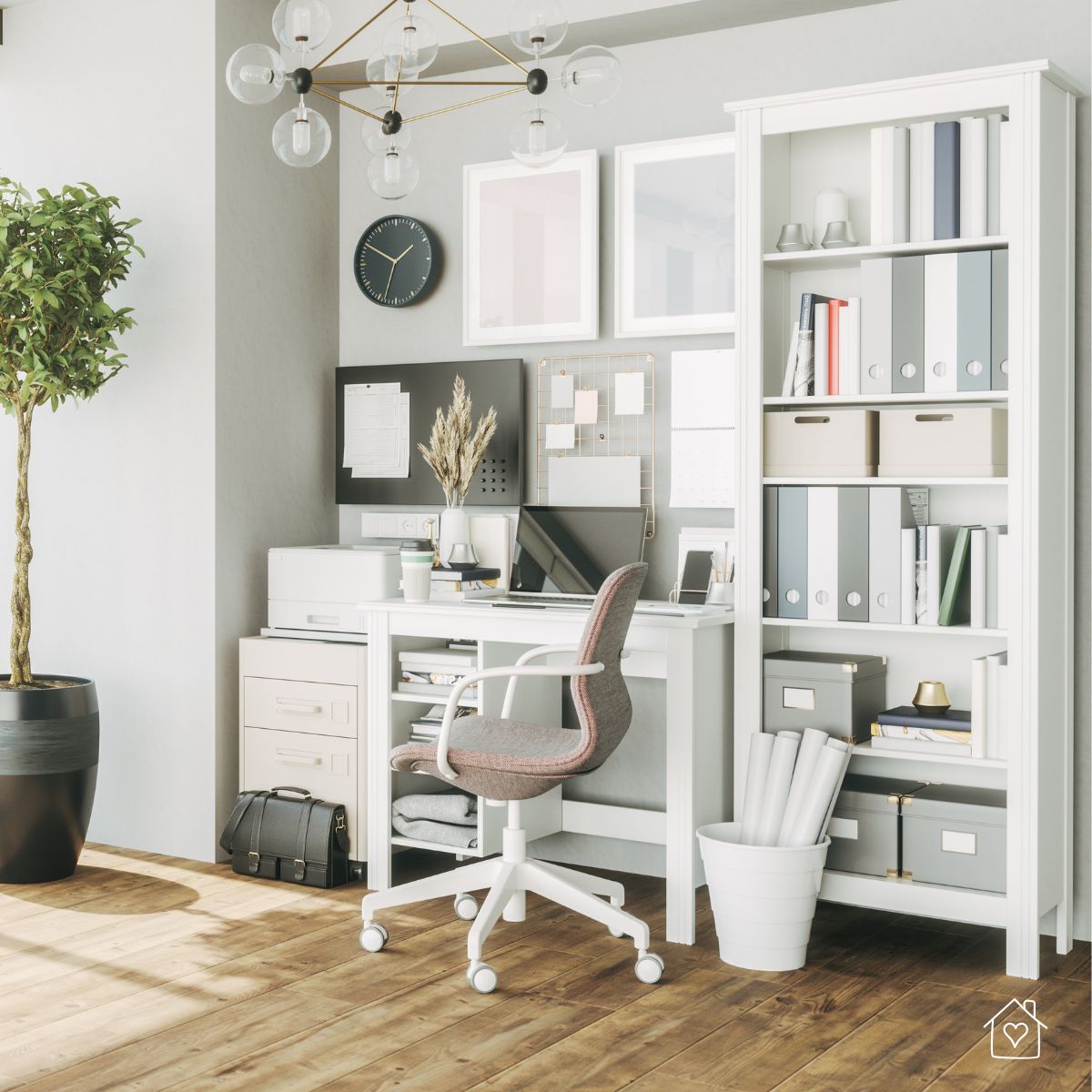
- Focus zone is your desk, where deep work happens, so keep it clear and intentional.
- Planning zone holds a wall calendar, a small bulletin board, or a dedicated notebook stand where you map out your week and track ongoing projects.
- Inspiration area is a small shelf with books that matter to you, a framed quote, or a plant that feeds your mind without pulling focus during work hours.
- Storage is for everything that doesn't belong in the first three zones, kept out of sight but organized enough that you can find it when needed.
Functional Planning Systems That Reduce Mental Load
An organized space is only half the equation. You also need a system for organizing your work itself. Your productivity rituals should rely on a trusted system so your brain can stop trying to remember everything.
Start with daily priorities by identifying two or three things that need to happen each morning or the night before. Write them down where you'll see them. Then add weekly reviews: once a week, step back and ask what got done, what's still hanging, and what needs attention next week. This prevents tasks from slipping through the cracks and reduces that nagging feeling that you're forgetting something.
Visual task tracking helps too. Choose a wall calendar, a kanban board, or a simple checklist. Seeing your work laid out reduces the mental effort of keeping track. The main challenge is to find what works for you. A planner, a wall calendar, a simple desk organizer. Once you find it, stick with it.
Balancing Productivity with Aesthetics
A home office should work well, but it should also feel good. You're spending hours here every day, so the space deserves some individuality.
Choose Calming Colors and Materials
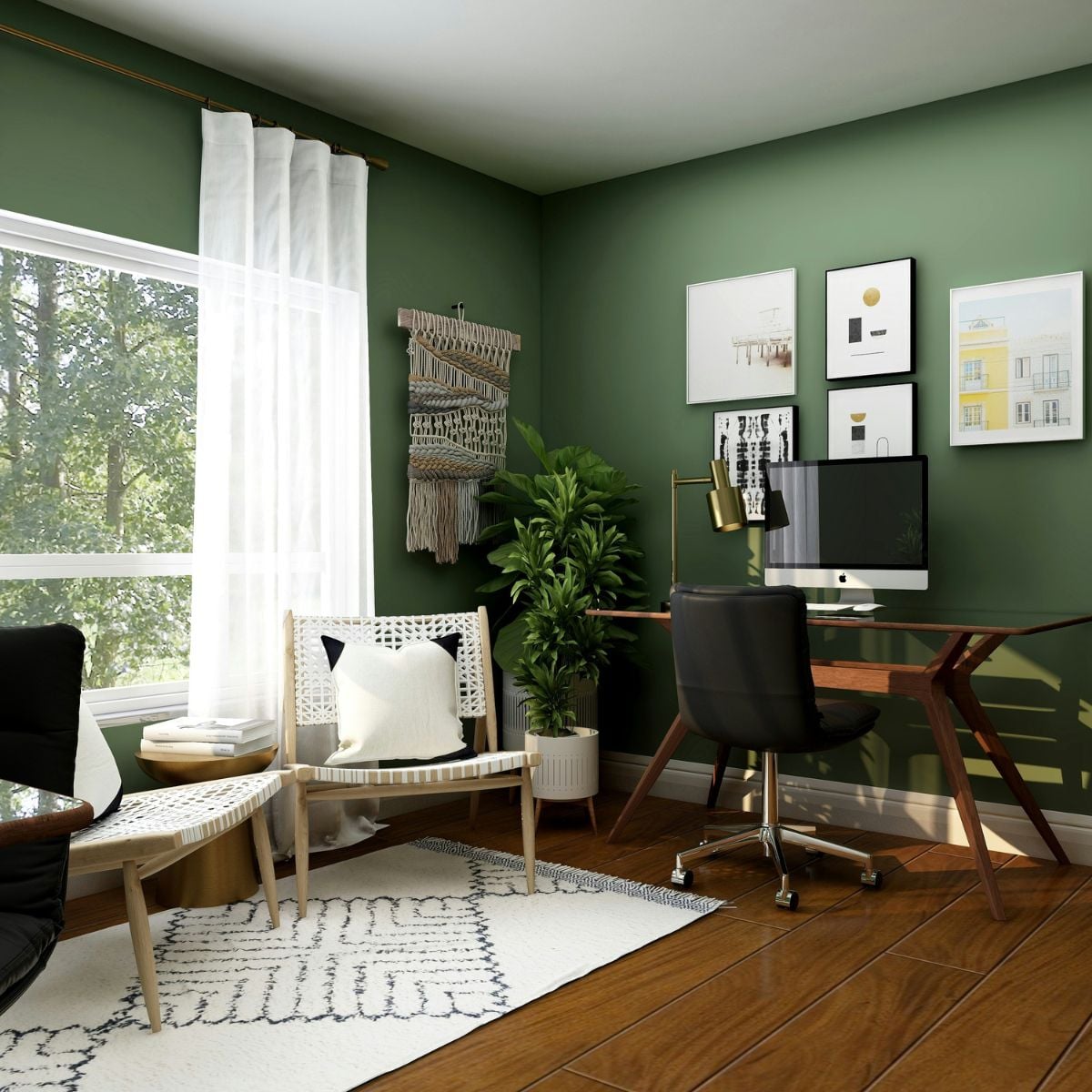
Color affects mood more than most people realize. Harsh whites and sterile grays can feel cold and institutional, while bright colors create stimulation when you need calm. Soft neutrals work best for focused work: warm whites, light grays, gentle beiges that recede into the background and let your mind settle.
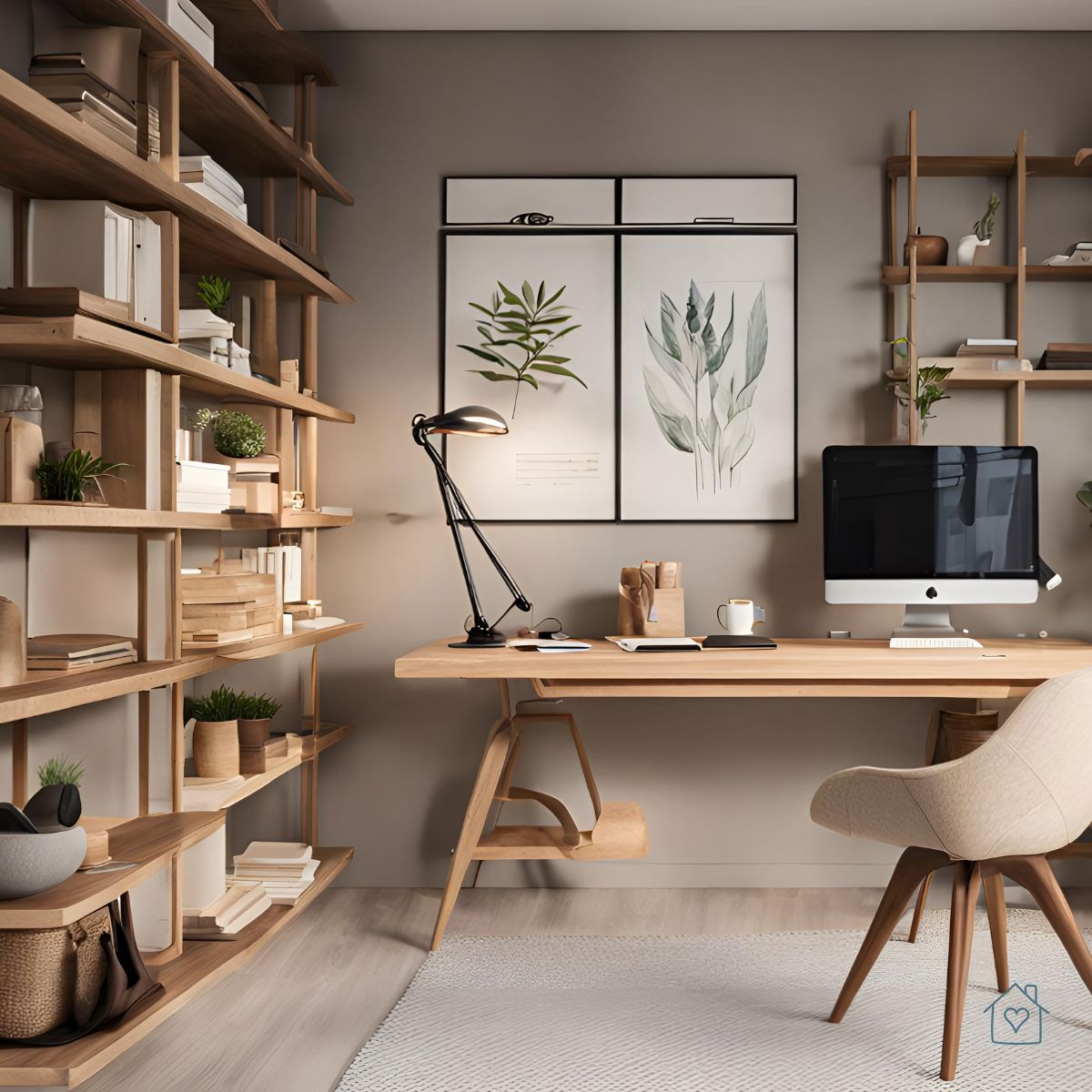
Materials matter too. Natural wood adds warmth without distraction, and matte finishes reduce glare and visual noise. Try to avoid shiny plastics and busy patterns.
Add Personal Elements That Inspire Focus
Minimalism doesn't mean stripping a room of personality. It means choosing intentionally. A single piece of framed art that means something to you, a small plant that brings life to the space, a meaningful object on the shelf. These personal touches make the room yours without turning it into a cluttered shrine. Balance matters: one or two meaningful items per zone, enough to inspire but not enough to distract.
Small Habits That Keep Your Workspace Organized
Organization isn't a one-time project but an ongoing practice. Without maintenance habits, even the most mindful setup devolves into chaos within weeks.
The five-minute reset makes all the difference. At the end of each workday, spend five minutes putting things back where they belong: clear the desk, file loose papers, close tabs. You'll thank yourself the next morning when you sit down to a clean space. Weekly workspace reviews extend this practice by encouraging you to look around with fresh eyes. What's accumulated that doesn't belong? What system isn't working? Small adjustments prevent big overhauls.
Try to keep one planning system, not five. Every new notebook, app, or tool adds complexity, so consolidate everything into one place for tasks, one place for notes, one place for schedules. Simplicity scales while complexity collapses.
And remember that digital clutter counts too. A desktop covered in random files creates the same cognitive load as a physical desk covered in paper, so apply the same principles to your computer.
Creating a Home Office That Supports Long-Term Focus
A mindful home office can be a masterpiece you deserve. It doesn't always require luxury materials or a lot of space, but it definitely starts with clear intentions. Start by removing the clutter, carve out your zones, pick one planning system, and adjusting it to your needs. With the right planning, you can make even just a desk your place of power.