The Small House Tool Kit: How to Choose Tools That Earn Their Space
Upstairs in my house, in the hall closet, there's a little tool kit for quick fixes. It holds a Worx screwdriver set, a mini saw and a mini hammer that belonged to my grandma. That little hammer has hung more pictures than I can count...
Downstairs in the garage, there's a whole wall of power tools.
That's my system after 18 years of working from home in a small house. You don't need a workshop to keep up with repairs. You need the right tools for your house and a smart place to keep them.
Start With the Jobs Your House Actually Needs
Before you buy anything, think about what actually breaks at your place. In most homes it's the same short list: loose cabinet hardware, sticky door hinges, wobbly shelves, furniture assembly, small plumbing fixes and wall repairs.
A good starter kit handles almost all of it:
- A screwdriver set or a multi-bit screwdriver
- An adjustable wrench
- A tape measure
- A utility knife
- A hammer
- Combination pliers
Then ask three questions before buying anything else. How often will I use it? Do I already own something that does the same job? Where will it live?
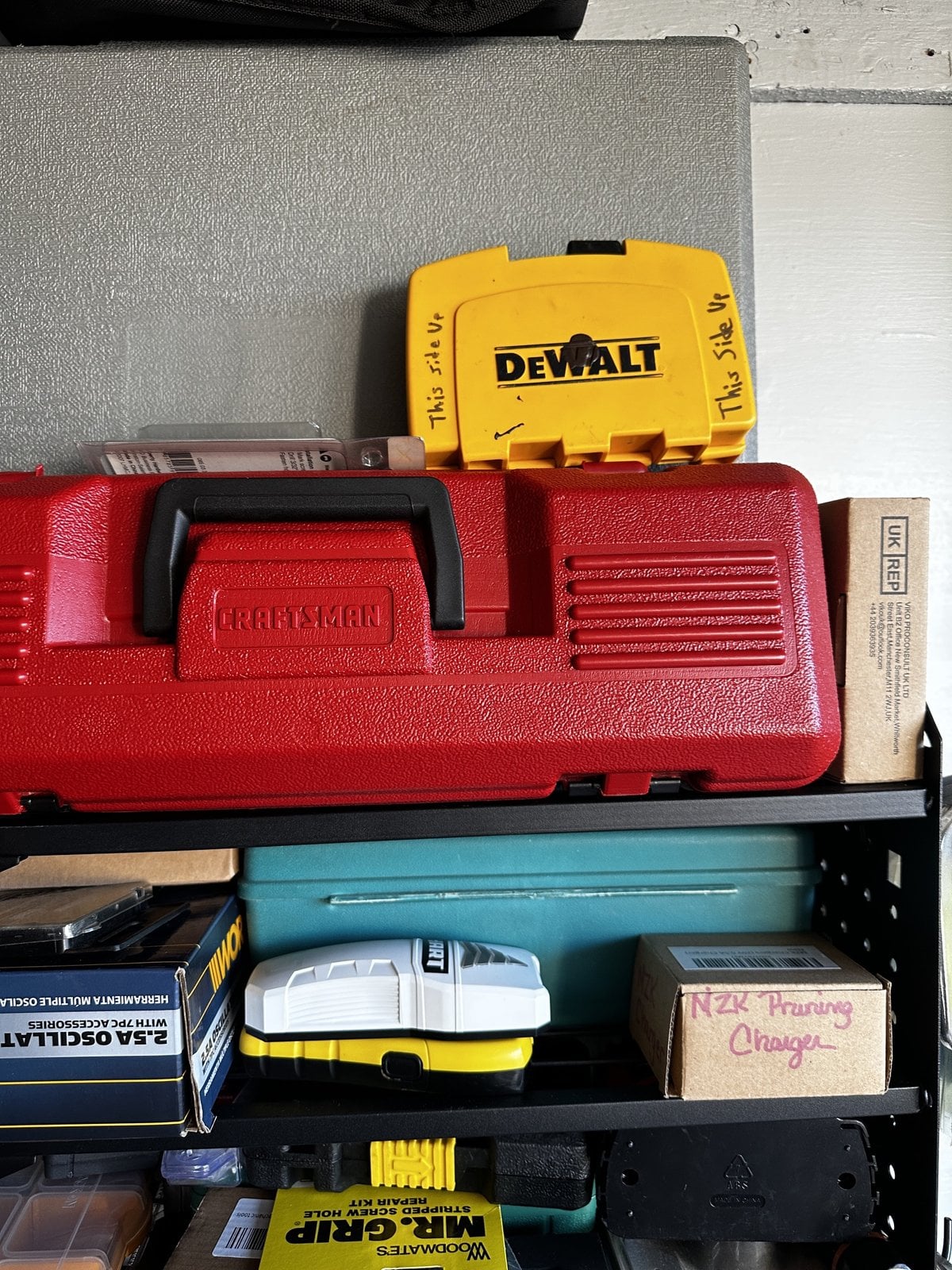
Some of the most useful things on my shelf are small and specific. A stripped screw hole repair kit like Mr. Grip takes up almost no room and fixes the loose hinge that keeps a cabinet door from closing right.
For big jobs you'll do once, skip the purchase. Rent the tool, or borrow it from a neighbor.
From time to time, articles on The How-To Home may reference third-party websites, businesses, products, services, or review platforms as part of editorial research. When evaluating companies or services, we may consider publicly available information such as customer reviews, business websites, service offerings, licensing information when available, and overall relevance to the topic.
Choose Tools That Do More Than One Thing
In a small house, every tool competes for space with everything else you own. Versatile tools win.
A multi-bit screwdriver replaces a drawer full of single drivers. An oscillating multitool sands, scrapes and cuts in tight spots. Mine is a WorkZone, and it lives on the shelf right next to my drill bit cases.
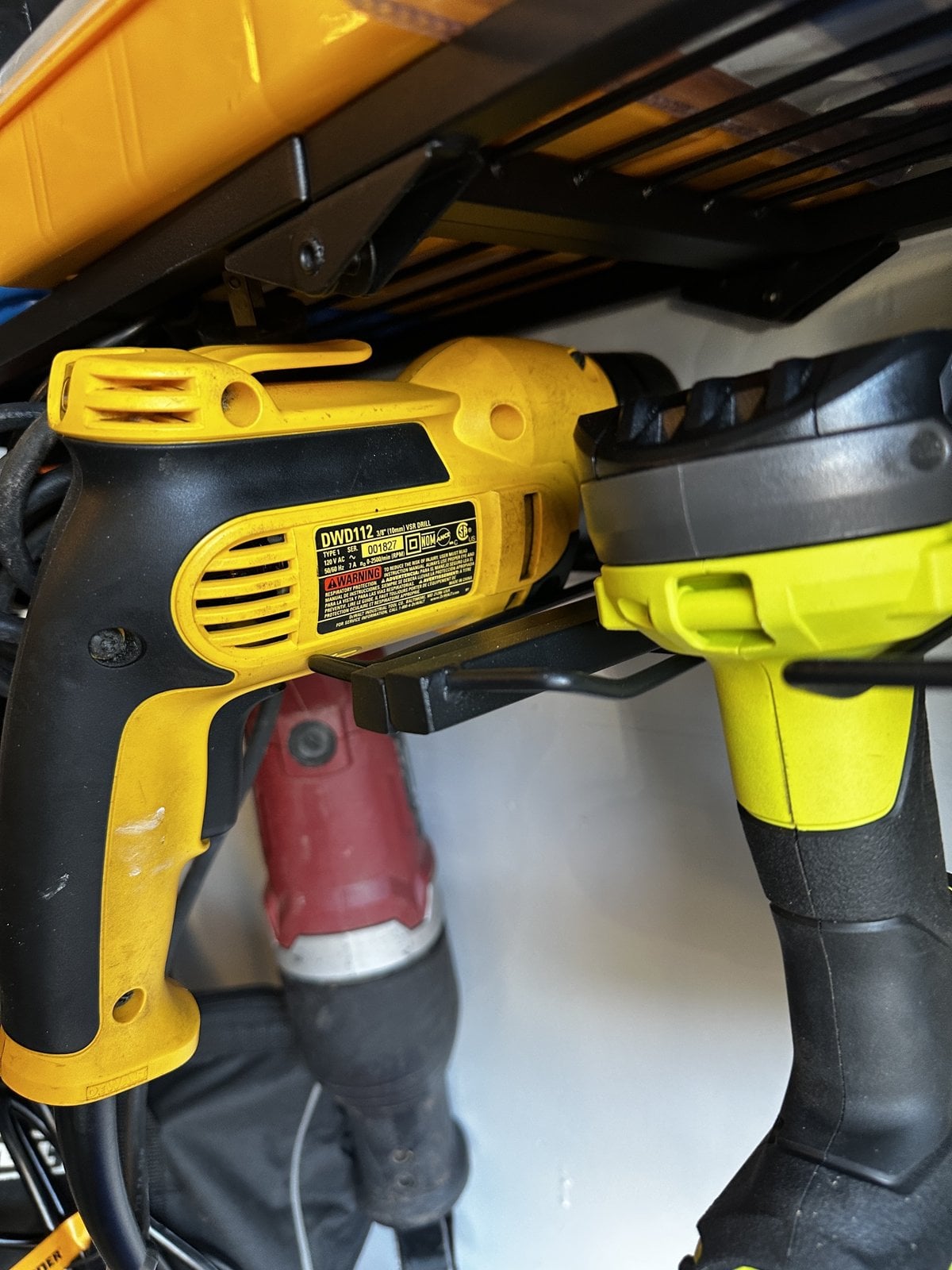
Then there's the drill. I own more than one, including a cordless Ryobi ONE+ HP, but my favorite is my DeWalt DWD112 because of it's power! It's a corded ⅜ inch drill, and it's the one I reach for first.
Small doesn't always mean better, though. A tool has to fit your hand and stand up to the job. A small hammer is perfect for hanging pictures. Building something sturdy needs a heavier one.
Give Your Tools Two Homes
Here's what has worked best for me: split your tools by how often you use them.
The everyday kit lives upstairs. Screwdrivers, a small hammer, a mini saw. It's small enough to fit in a cabinet and close enough that I actually fix things instead of putting off a five minute job for a week.
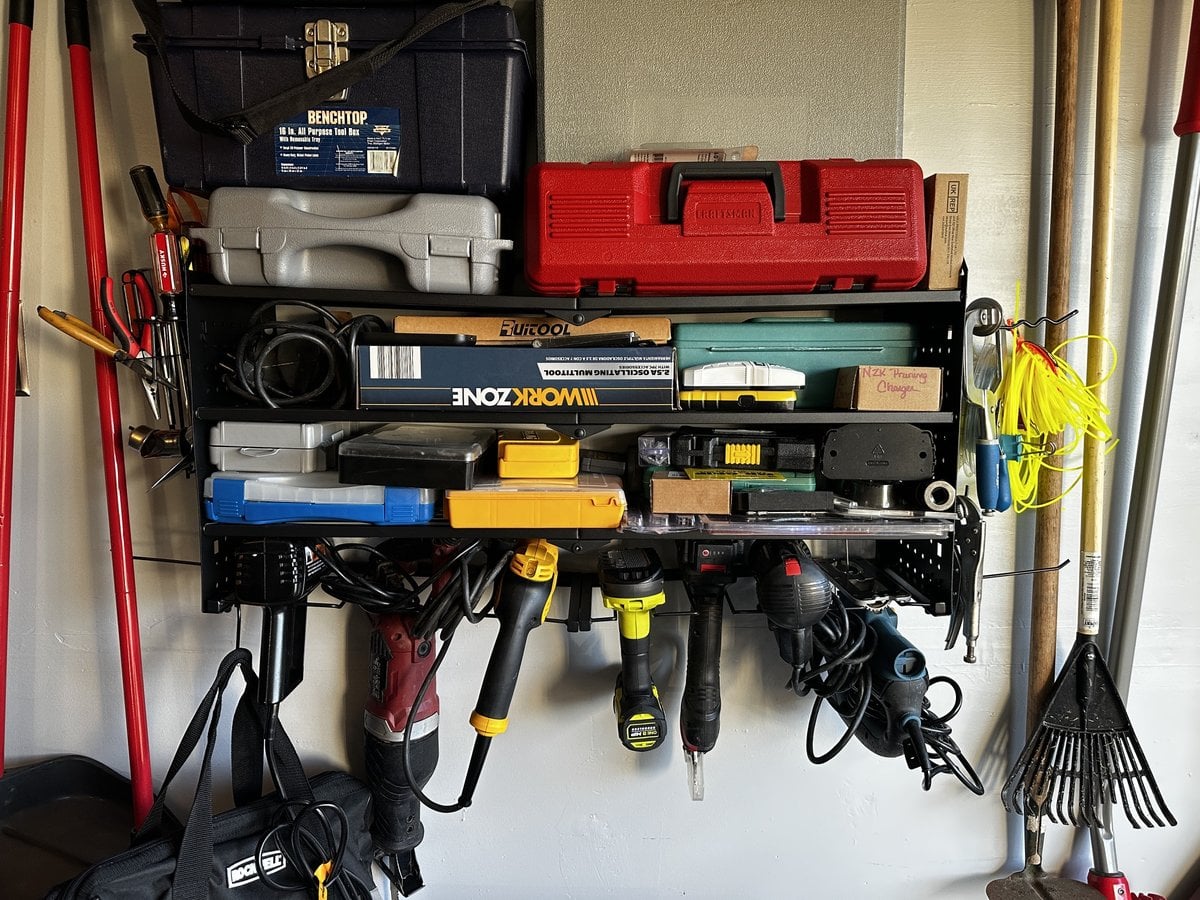
Everything else lives on one wall in the garage, which also happens to be our home gym. A wall mounted rack holds the power tools underneath, with bit cases and organizers on the shelves. Toolboxes, including my red Craftsman box, sit on top. Nothing touches the floor, so the gym space stays clear.
No garage? A sturdy cabinet, a closet shelf or a box that slides under a workbench or bed works too. A few more tips:
- Skip bulky packaging. Keep tools in compact cases or bags that actually fit your space.
- Keep like with like. All the bits together, all the screwdrivers together.
- Store heavy items low on sturdy shelves.
- Keep blades and sharp tools out of reach of kids and
pets .
Spend Money Where It Counts
Cheap tools are fine for a job you'll do once. For tools you use every month, quality pays for itself. A bargain drill that dies in a year costs more than a good one that lasts for decades.
My Grandpap was a carpenter and custom furniture maker. Because of him, I know what a dovetail joint is, and I can tell the difference between something built to last and something built to sell. Tools are the same. Before you buy, look at the materials, the build quality and the warranty.
You don't need top of the line everything. Spend on your drill and your screwdrivers. Save on the things that sit in a drawer.
If you're shopping in Canada, RONA's tool department carries big names like DeWalt, so you can compare drills, hand tools and storage in one place.
Work Safely in Tight Spaces
Small rooms make safety trickier. Before you start, make sure you have room to work without bumping furniture or losing control of the tool. Look for comfortable grips and locking features. Safety glasses and gloves belong in every kit, even the little one upstairs.
And know your limits. Electrical work, major plumbing and anything structural belong to a pro. We want to add more electric equipment to our house, and my plan is to have my electrician look at the panel first. That's not a job for my drill.
Small House, Smart Tools
A small house doesn't need a big workshop. Start with the jobs your house actually needs, pick tools that do more than one thing, give them two homes and spend on quality where it counts.
What's the one tool you reach for more than any other? Tell me in the comments...