Home Organization Choices That Reduce Moving Stress and Space-Wasting Mistakes
In real estate and household moves, the expensive mistakes usually start before the truck shows up. A hallway becomes a staging area, the garage fills with half-packed bins, and someone decides the spare room can carry the overflow for "just a few weeks." That is how short-term clutter turns into operational drag.

Good home organization is not about perfect labels or neat shelves. It is about making space decisions early enough to avoid damage, missed deadlines, duplicate purchases, and the kind of last-minute scrambling that puts pressure on everyone involved.
The same logic applies whether a family is preparing for a sale, settling into a new lease, or making room for a renovation. The households that stay calm usually are not the ones with the most storage. They are the ones that decide what belongs where before the pressure peaks.
*This post may contain affiliate links and I'll earn a commission if you shop through them. You can read my full disclosure here.
The cost of getting storage wrong
Poor planning around moving and storage tends to create downstream problems that are larger than the mess itself. Boxes get stacked in ways that hide essentials. Furniture sits where it blocks access to utilities or repairs. Items that should have been separated for sale, donation, or long-term keeping all get treated the same, which leads to rehandling and avoidable labor. At that point, many teams begin comparing streamlined Phoenix entry lockers based on how they actually perform day to day.
For households, that can mean extra trips, damaged belongings, and the quiet frustration of not being able to find what you need when it matters. For landlords, agents, and property managers, the bigger issue is continuity. A move that drags on can complicate access, inspection timing, turnover, and trust. Once a space stops functioning as expected, the cost is rarely only financial.

There is also a planning cost that often gets overlooked. When people cannot quickly identify what they already own, they buy duplicates. When they cannot reach what they need, they postpone repairs or daily tasks. When they run out of room in the middle of a move, they start making decisions under pressure, and pressure is where good judgment tends to disappear.
The pattern is familiar enough to be understated. A few bad decisions at the start often create far more work at the end. That is especially true when household storage has to support a sale, a lease transition, renovations, or an out-of-state relocation.
Three things worth sorting before the first box is taped
Before anyone starts stacking belongings into a unit, closet, or spare room, the plan should be clearer than the pile. The most useful organizing question is not where the box will go, but what role that item plays during the move and after it ends.
Separate what is moving from what is waiting:
A move becomes easier when every item has a category, not just a destination. What is going with you immediately, what needs short-term holding, what should be sold or donated, and what can be stored longer term are not the same question. Mixing those groups is one of the fastest ways to create rework.
It helps to think in terms of timing and usefulness. Everyday dishes, medications, chargers, bedding, and work essentials belong in a different system than seasonal decor or keepsakes. The more clearly those groups are defined, the less time you spend reopening boxes or repacking things that were never meant to be in the same stack.
Plan for access, not just capacity:
A space can be large and still be poorly used. If the things you need first end up at the back, the setup is wrong. Keep seasonal gear, documents, tools, and basic household items reachable. Think through loading order, weight, and the path from the door to the items that matter most. One practical limitation: even a careful setup can be disrupted if the move date changes, so leave room to adapt.
This is where container choice matters. Uniform boxes stack more predictably than random bags and mismatched tubs. Clear labels are useful, but they work best when paired with a simple layout: front for high-priority items, middle for medium-term items, and back for things you will not need soon. Good access planning also reduces the chance of crushing fragile items or burying something important under heavier goods.
- Keep frequently used items near the front.
- Use uniform containers where possible.
- Leave an aisle wide enough to reach the back without unloading half the room.
Do not treat the garage as free storage:
The garage often looks like the easiest overflow space, which is exactly why it causes trouble. It becomes a catch-all for boxes, tools, paint, household records, and the things nobody has time to decide on. That creates liability issues in a storm, during pest problems, or when access to vehicles and equipment matters. A garage that no longer serves its main purpose is not efficient; it is just hidden clutter with a roof over it.
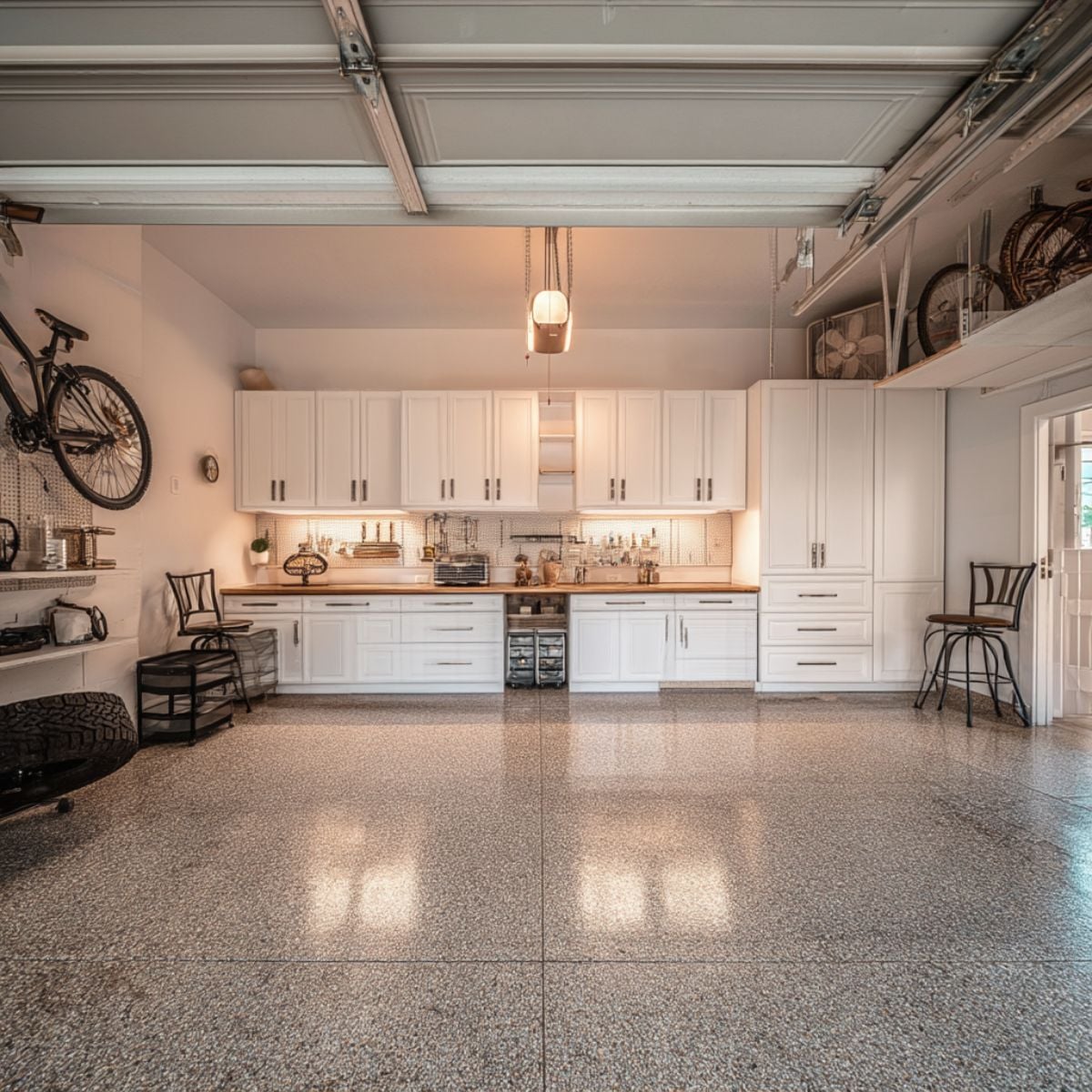
The same warning applies to any room that is supposed to stay usable. Once storage spills into an area that needs to support daily life, the whole home becomes harder to manage. A good temporary solution should stay temporary, and it should never make the house less functional than it was before the move began.
A leaner way to prepare the house
The cleanest moves are usually the ones that are staged with some restraint. The goal is not to make the home look empty. It is to make it workable.

That means building a simple process and sticking to it. The house should not become a sorting table for every decision at once, because that is how important items get buried under the less important ones.
- Start with a room-by-room triage. Pull out obvious keep, discard, donate, and store categories before anything gets boxed. This prevents mixed bins, which are expensive because they have to be reopened later.
- Pack by sequence of use, not by where things fit. Label for the first week, the first month, and the long haul. If a box matters in the first two days, it should never end up buried behind holiday decor.
- Reserve the most accessible space for the items that affect daily continuity: bedding, chargers,
cleaning supplies, basic kitchenware, paperwork, and key tools. That small discipline saves time every day the move is still unfinished. - Create one dedicated "do not pack yet" zone for items that are still in use. Keeping essentials separate reduces the chance that a phone cord, school form, or kitchen pan disappears into storage too early.
- Take photos of electronics setups, wall arrangements, and furniture assemblies before disassembly. That makes rebuilding faster and prevents avoidable guesswork when you are tired on move-in day.
What organized households seem to understand
There is a quiet business lesson in good household planning: space is never just space. It carries time, labor, and accountability. When belongings are assigned a place with some discipline, the household runs with less friction. When they are not, everyone pays in small ways that add up. The bill shows up as lost hours, duplicate purchases, delayed repairs, or one more weekend spent hunting for something that should have been easy to reach.
The hardest part is that bad planning can look harmless at first. A room full of packed boxes may seem temporary, even sensible. Yet temporary arrangements often become semi-permanent, and semi-permanent is where operational drag settles in. The better habit is to make each decision do one job clearly, even if that means leaving some empty space. Empty space is not wasted when it keeps the rest of the home functioning.
That perspective is useful well beyond a single move. Households that revisit their storage habits periodically tend to make better decisions about what they keep, what they replace, and what they can safely let go. They also tend to experience fewer surprises when life changes. In that sense, organization is less about aesthetics and more about flexibility. A home with room to adapt can absorb change without turning every change into a crisis.
Small decisions that keep the whole move steadier
Home organization, moving preparation, and storage planning work best when they are treated as part of the same process. The point is not to create a showroom. It is to keep the household usable while life is in motion.
That usually means deciding earlier, packing more deliberately, and resisting the impulse to make every spare corner do the job of a planned system. A little discipline up front can spare a lot of liability, rehandling, and last-minute pressure later. In this part of home management, the useful solution is rarely the most dramatic one. It is the one that keeps continuity intact.