How to Decorate with Accent Chairs: Placement, Scale, and Pairings
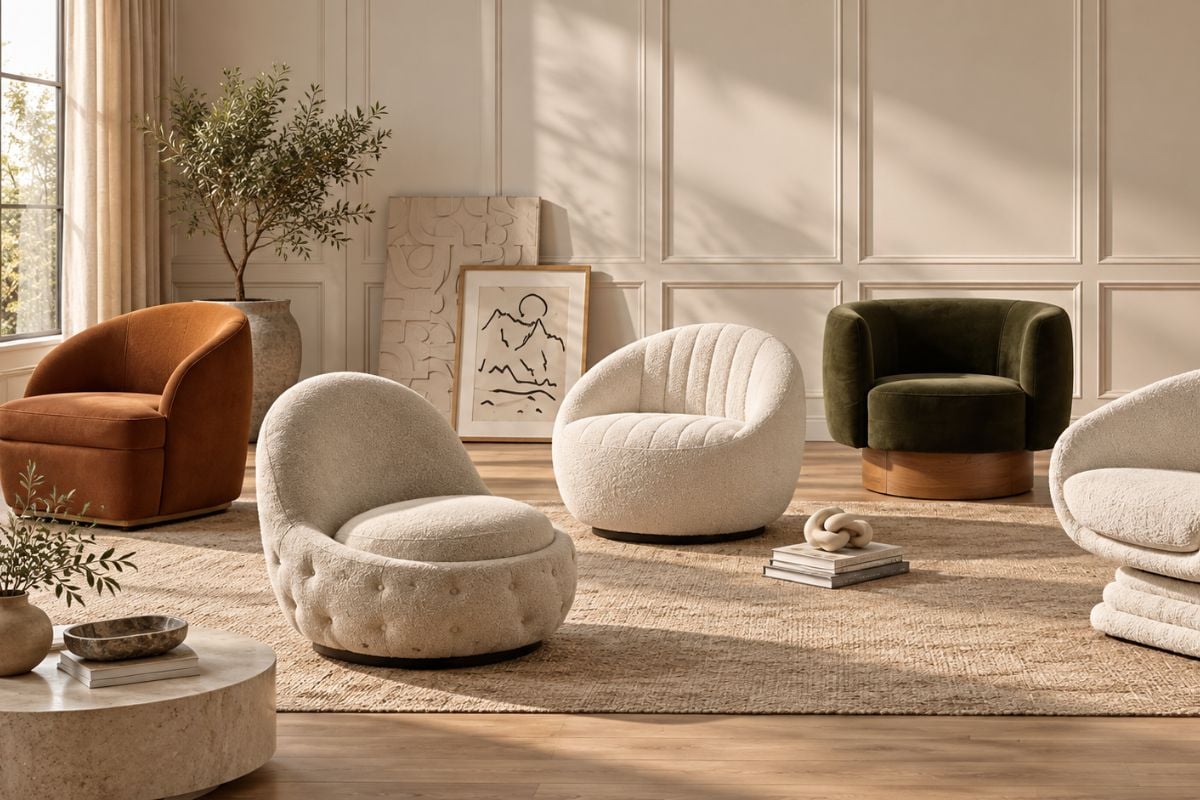
An accent chair can make a room feel finished, or it can leave you walking around it every time you cross the room. The difference usually isn't the chair. It comes down to where you put it, how big it is compared to everything around it, and what you pair it with.
When I was growing up, my mom was an interior decorator, and nothing in our house was bought without clear intent. That included the chairs in our sitting areas. My favorite by far was an orange silk barrel chair on wheels. It was reserved for guests and for entertaining, but when my mom and dad were out, I sat in that chair to read. It sounds so silly, but that was my big attempt at rebellion as a child. I'm not sure if my mom ever knew... I never admitted it!
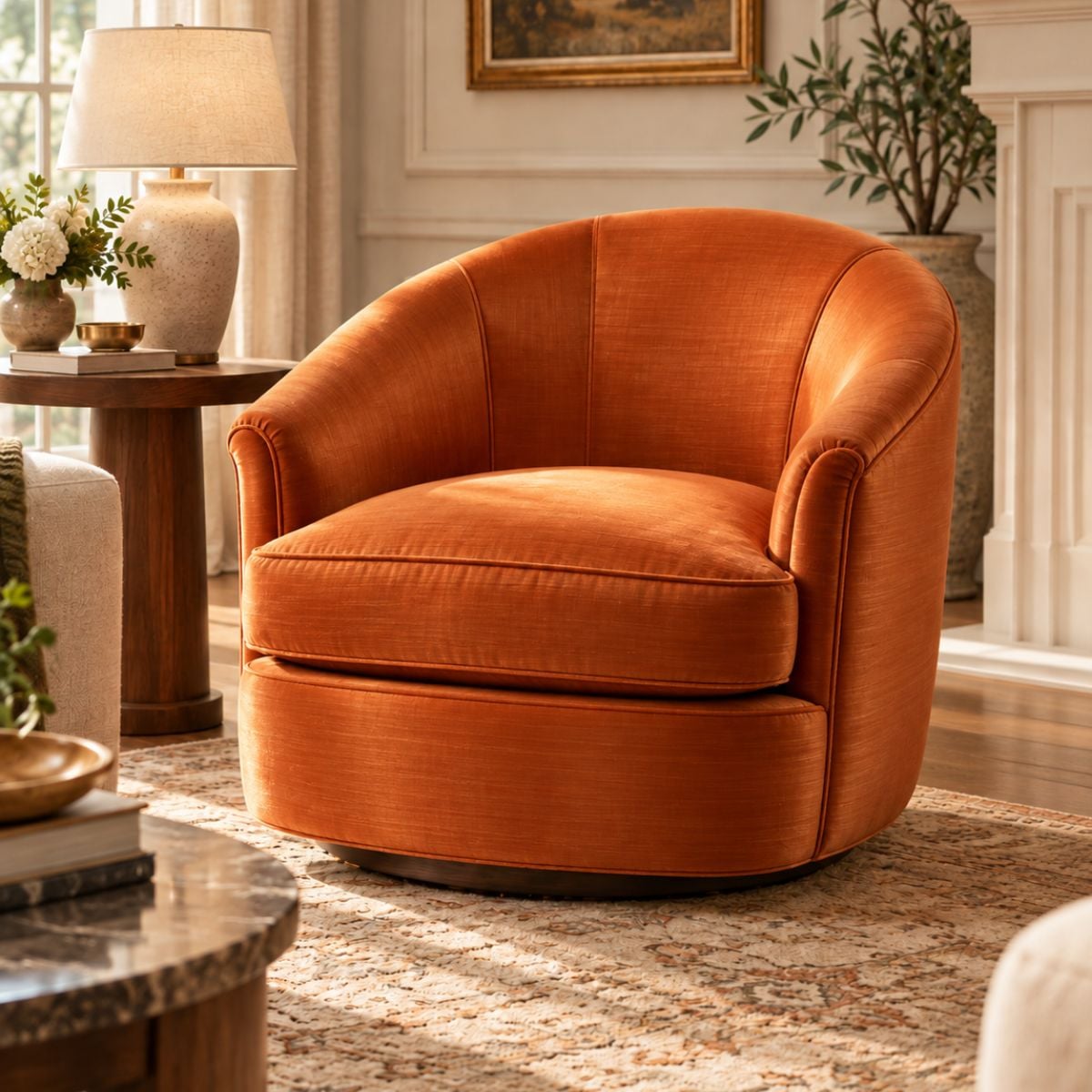
That chair had a spot, a job and a reason to be there, and so did every other chair in the house. Those three things decide whether an accent chair works in your room: where it goes, how big it is next to everything around it, and what you pair it with. A chair in the wrong spot gets walked around every time you cross the room. A chair that's right makes the room feel finished. We'll take them in that order.
From time to time, articles on The How-To Home may reference third-party websites, businesses, products, services, or review platforms as part of editorial research. When evaluating companies or services, we may consider publicly available information such as customer reviews, business websites, service offerings, licensing information when available, and overall relevance to the topic.
This guide covers those three things in order, plus chair types, comfort, and a few checks before you order. The measurements are common rules of thumb, not standards, so adjust them to your room.
Start with Placement: Give the Chair a Job
Before you buy a chair, decide what it is for. It might add seating for guests, finish an empty corner, or give you a place to read. The job tells you where the chair goes, and often what kind of chair it should be.
Flank a sofa or fireplace. Two chairs on either side of a fireplace, or one at each end of a sofa, give a room a calm, balanced look. A matched pair works well here even when the chairs don't match the sofa. This layout suits rooms with a clear focal point, like a fireplace, a large window, or a media wall.
Create a conversation area. Set two chairs opposite the sofa with the coffee table between them, or place them at right angles to the sofa so they close off the group. Turn them slightly inward rather than square to the wall. The goal is a group where people can talk without raising their voices.
Fill a corner. A single chair at a slight angle softens a corner that feels flat. Add a small side table or a floor lamp, and leave a few inches between the chair and the wall so it doesn't look pushed in.
Build a reading nook. Choose a spot near a window, then add a chair with arms, a slim side table, and a lamp. A footstool makes long reads easier but takes floor space, so measure the whole nook, not just the chair.
Use other rooms. A compact chair in a bedroom corner or at the foot of the bed gives you a place to sit and put on shoes. A low, armless chair suits a tight entryway. A swivel chair works in a home office, and a glider or cozy upholstered chair suits a nursery, ideally one that can move to another room later.
Spacing at a Glance
- Seat front to coffee table: about 14 to 18 inches, close enough to reach a cup and far enough to stand up and pass.
- Side table: right beside the arm, close enough to reach without leaning, with its top level with the arm or a couple of inches lower.
- Main walkways: 30 to 36 inches. A path you seldom use can be narrower.
- Seats that face each other: usually no more than about 8 to 10 feet apart, so conversation stays easy. About 3.5 feet is the close end.
Every seat needs a surface within reach. If the coffee table is too far from a chair, give the chair its own side table.
Get the Scale Right
A chair that looks right in a showroom can overwhelm a small room, and a delicate one can look lost next to a big sectional.
Match visual weight, not size alone. A chair with a solid upholstered base and wide arms looks heavy. One with open legs and slim arms looks light, even at the same dimensions. In a small room or beside a slim sofa, choose the lighter look. Beside a sectional, lean light as well: a sectional already carries a lot of mass, and a heavy wingback next to it can crowd the walkway.
Compare heights with the sofa. The chair doesn't need to match the sofa, but the two should feel related. A very low chair can disappear next to a high-backed sofa, and a tall chair back shouldn't block a window or a piece of art.
Try the tape test. Mark the chair's footprint on the floor with painter's tape, then walk past it the way you normally would. If it feels bulky, or it blocks a door, vent, or walkway, it is probably too big.
Check every side. If the chair will float in the room, you'll see its back. Choose one that's finished on all sides.
Choose the Chair Type for the Job
| Type | Best use | Space it needs |
| Armless or slipper | Extra guest seat, small rooms, entryways | Small |
| Open-frame or sling | Small rooms, or beside a sectional | Small; looks lighter than it measures |
| Swivel | Offices, nurseries, small rooms, or pairs in a large room | Small to medium, plus room to turn |
| Club or barrel | Closing off a conversation group, or a pair facing the sofa | Medium |
| Wingback | Larger rooms, or a formal pair at a fireplace | Large |
| Chair-and-a-half, or chair with ottoman | Reading and lounging | Large |
Check Comfort Before Looks
Overall width and depth tell you whether a chair fits the room, not whether you'll enjoy sitting in it. Check the seat height and seat depth on the spec sheet, then measure a chair you already find comfortable and compare. An upright seat suits reading and conversation; a deeper, softer one suits lounging. Arms help when you read and when you get up.
When you know the size, type, and job, browse a wide range of accent chairs and use your measurements to narrow the list.
Pairings: Make the Chair Look Like It Belongs
A good pairing makes the chair look chosen, not accidental. It does not have to match.
Relate it or contrast it. To relate, choose a chair that shares a material with the room, like the wood tone of the coffee table, or a lighter or darker version of the sofa's color. To contrast, choose a different color, texture, or shape, then repeat that element once elsewhere. A blue chair looks intentional beside a neutral sofa when there is blue in a pillow or the rug.
Pair by sofa color.
- Gray: add warmth and texture with ivory, camel, bouclé, linen, or warm leather. A saturated green also stands out.
- Cream or beige: give a low-contrast sofa definition with a dark wood frame, leather, or a slightly darker or patterned fabric.
- Blue or green: let the sofa lead with ivory, oatmeal, an earthy brown, or cognac leather.
- Cognac or leather: lighten it with ivory upholstery or a metal or mixed-material frame. Avoid more heavy leather unless the shapes clearly differ.
- Black or white: soften the contrast with warm, textured upholstery and a light wood or warm metal frame.
Contrast the construction. If the sofa is fully upholstered, a chair with an exposed wood or metal frame adds a second material and lightens the group.
Mix textures. Pair a smooth sofa with a textured chair in bouclé, a woven fabric, or velvet, and a highly textured sofa with a smoother chair. Texture adds interest without adding color.
Add the supporting pieces. Set at least the chair's front legs on the rug to tie it into the group. Add a side table at arm height, a lamp for reading, and a throw or pillow that repeats a color from elsewhere in the room.
Try a mismatched pair. For a more relaxed look, use two different chairs that share a color, a height, or a wood tone.
Common Placement Mistakes and Fixes
- Chairs lined against the walls. Pull them in around the coffee table, front legs on the rug.
- No surface in reach. Add a side table by the arm.
- A heavy chair beside a sectional. Swap it for a lighter, open-legged one.
- Sofa and chairs bought as one matching set. Choose the chairs separately and tie them to the sofa with one shared color or material. A deliberate pair of matching chairs is fine.
- A chair that blocks the path. If you have to turn sideways to pass it, move it or choose a smaller one.
Before You Order Online
- Compare overall width, depth, and height with seat height, seat depth, and arm height.
- Measure doorways, hallways, stair turns, and any elevator on the delivery route.
- If a fabric sample is offered, view it at home in daylight and lamplight, next to your sofa and rug.
- Read the frame, cushion fill, and fabric details, not just the photos.
- When comparing similar-looking chairs, compare dimensions and materials, not only price.
Your Quick Checklist
- Purpose: Do you know what the chair is for?
- Scale: Does its size and visual weight suit the sofa and the room?
- Spacing: Is there room to reach a table and 30 to 36 inches on main walkways?
- Pairing: Does its color, texture, or frame connect to something already in the room?
- Comfort: Have you checked seat height and depth, and would you actually sit in it?
- Delivery: Will it fit through your doors, halls, and stairs?
Start with One Chair
You don't need to redo a whole room to get this right. Pick one spot, choose a chair with a clear job, and build from there.