Coffee Table Dimensions: How to Find the Perfect Size for Your Sofa
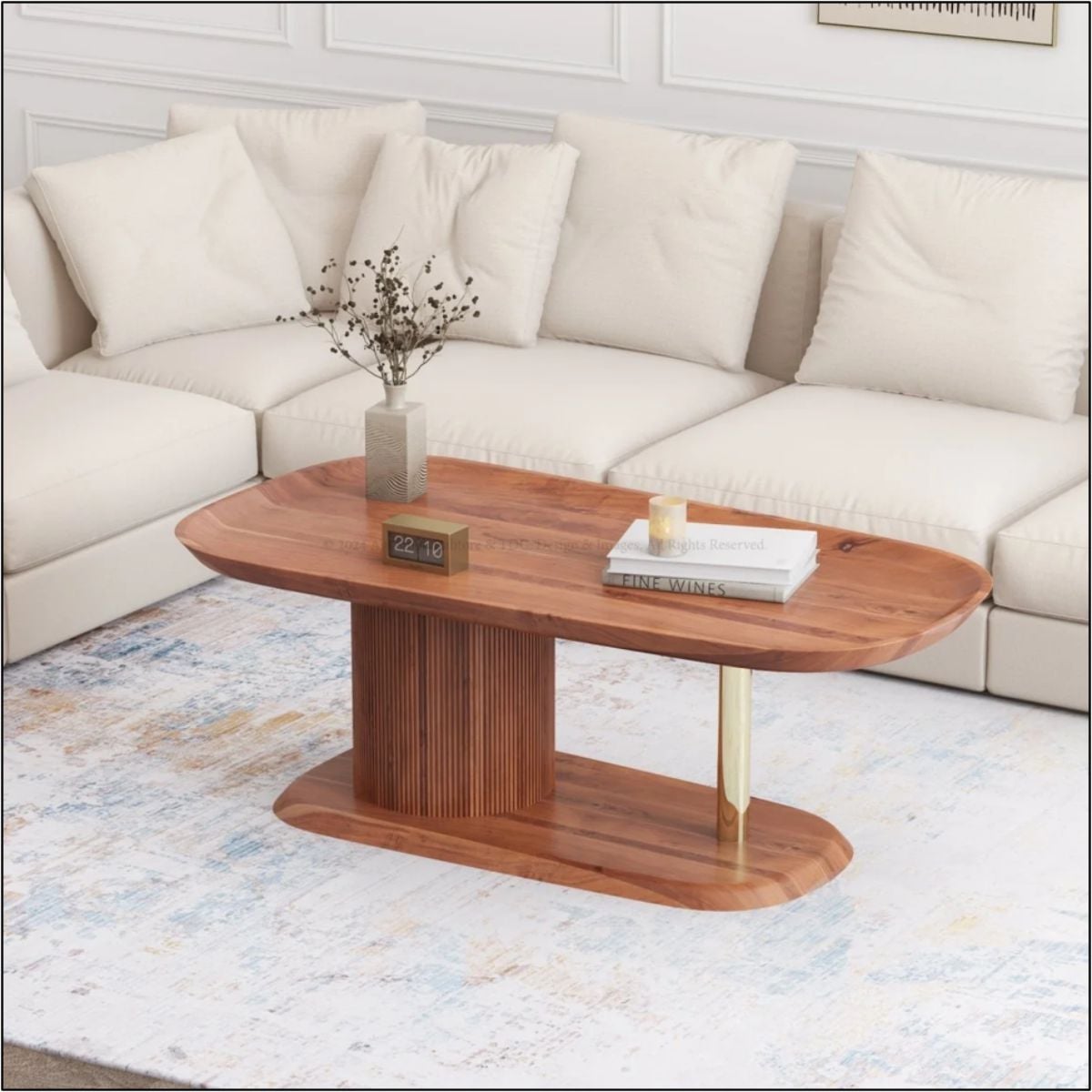
Years ago, I wanted a new living room set so badly. I didn't have the money for one, but my father, being the amazing dad that he was, told me to pick any set I wanted, plus any accents, coffee tables, and so on that I wanted to go with it. I was soooo excited! I picked out a gorgeous sofa and love seat, and then I found the most magnificent coffee table I had ever seen. It was a legitimate map table....absolutely beautiful, with just the right unique vibe I was looking for.
Daddy bought it, it was delivered....and the table was HUGE. Like, HUGE for my living room. I loved that table so much that I insisted it stay in the living room anyway, but for years it was literally in the way of everything. Lesson learned: measure.
Have you ever bought a coffee table that looked perfect when you picked it out, only to find it felt too big, too small, or just plain awkward once it was sitting next to your sofa? (If you have, you're in good company!) Getting the proportions right changes how comfortable and balanced the entire room feels, so I'm sharing the numbers I wish I'd had back then.
The right coffee table dimensions depend on more than the table itself. Your sofa length, seat height, available floor space, chair placement, and walking paths all play a part. A little measuring before you shop goes a long way toward a living room that feels comfortable and well arranged.
From time to time, articles on The How-To Home may reference third-party websites, businesses, products, services, or review platforms as part of editorial research. When evaluating companies or services, we may consider publicly available information such as customer reviews, business websites, service offerings, licensing information when available, and overall relevance to the topic.
Key Takeaways
- Match the table length to your sofa. About two-thirds of the sofa's length is a good place to start.
- Leave around 14 to 18 inches between the sofa and the table so it's easy to move around and reach things.
- Look for a table height around 16 to 18 inches, and check it against your sofa seat height.
- Think about your room size before choosing a large or compact design.
- Remember that shape changes how open or structured the room feels.
- Measure the whole seating area before you buy (my map table taught me that one the hard way!).
What Are the Standard Coffee Table Dimensions?
Coffee tables come in lots of sizes, but most land in a familiar range. The standard coffee table height is usually around 16 to 18 inches, which works well with many standard sofas.
Length and width can vary quite a bit depending on your room and seating arrangement. A longer sofa may need a longer table, while a compact love seat usually looks better with a smaller one.
Before you choose a table, check:
- Sofa length
- Sofa seat height
- Available floor space
- Chair positions
- Walking paths around the furniture
A table that fits all of these measurements will feel much more natural in your room.
How Long Should a Coffee Table Be Compared With Your Sofa?
A good starting point is a coffee table that's about two-thirds the length of your sofa. That keeps the table from looking too short or too big next to it.
For example, a 90-inch sofa would look good with a 60-inch table. The exact number can shift depending on the shape of your sofa and the seating around it.
A larger sectional may need a wider table, while a smaller seating arrangement often does better with a compact design. You want the table big enough for everyday items, but not so big that it takes over the room (I know that one firsthand!).
How Much Space Should You Leave Around a Coffee Table?
Comfortable clearance matters just as much as the size of the table. Aim for around 14 to 18 inches between your sofa and the coffee table. That's enough room to stretch your legs while keeping drinks, books, and other items within easy reach.
You may want a little extra space if the room has several chairs or doubles as a busy walkway.
Leave enough room to:
- Pull chairs out comfortably
- Walk between seating pieces
- Reach the table easily
- Move around the room without bumping into furniture
Good spacing helps your living room furniture feel connected without the area feeling crowded.
Use a Coffee Table Size Guide Based on Your Room
A simple coffee table size guide can help you narrow down your options before you start shopping.
Small Living Rooms
Compact spaces usually do best with tables that leave clear walking paths. Small coffee tables can give you a useful surface without eating up too much floor space.
Medium Living Rooms
Medium-sized rooms give you more flexibility. Rectangular, square, round, and oval tables can all work, depending on your sofa and seating arrangement.
Large Living Rooms
Large rooms can handle bigger tables, especially alongside a substantial sofa or sectional. If the table is too small, the center of the room can end up looking disconnected.
Choosing the Right Shape for Your Sofa
The shape of your coffee table should complement the lines of the other furniture in the room.
Rectangular tables go well with long couches and structured seating areas. Square tables fit in nicely with sectionals, where the seating is arranged around the table.
Round tables add softness to rooms with a lot of straight lines, and they make it easy to move around. An oval table gives you more surface area without any sharp edges.
Shape can also change how much visual space a table seems to take up, even when two tables have similar measurements.
How to Choose a Coffee Table for Everyday Use
Figuring out how to choose a coffee table gets easier when you think about how your room is actually used.
Think about:
- Whether the table will be used for meals or drinks
- How often guests visit
- Whether children use the room
- How much surface space you need
- Whether storage would be useful
- How much floor space you want to keep open
Material matters too. A wooden coffee table brings natural warmth and visible grain, while glass or metal gives the room a lighter look.
A Simple Measurement Checklist Before Buying
Before you order a table, measure the whole seating area, sofa included.
Check these measurements:
- The length of the sofa
- Height of the seat of the sofa
- Table space available
- Space between the seating and the table
- Space behind the chair
- Space from walls and other furniture
- Doorways
Another trick: use painter's tape to mark out the size of the table on your floor, then walk around the taped-out area to see if it feels comfortable. (This would have saved me years with that map table!)
Create a Balanced Living Room With the Right Table Size
The right coffee table should feel naturally connected to your sofa without taking over the room. Size, height, shape, clearance, and material all play a part in a comfortable arrangement.
The Rural Art's handcrafted furniture collection reflects the use of natural materials and carefully crafted forms across different interior settings. Looking at the proportions of your room and your furniture together can help you choose a table that feels comfortable, useful, and right for your space.
Do you have a coffee table story of your own, a too-big one or a too-small one? I would love to hear about it in the comments!
FAQs
1. What is the ideal height for a coffee table?
A coffee table around 16 to 18 inches high works well with many standard sofas. Check your sofa's seat height before you settle on the final table height.
2. How long should a coffee table be compared with a sofa?
A common guideline is about two-thirds of the sofa's length. Your chairs, the shape of your sectional, and the size of your room matter too.
3. How much space should be between a sofa and coffee table?
Around 14 to 18 inches is a good range for comfortable legroom and easy reach. You may want more space if the area is also a walkway.
4. Are oval coffee tables good for living rooms?
Yes! The rounded edges make it easier to move around, and the longer shape gives you more surface area for larger seating arrangements