Transform Bedrooms Into Statement Spaces with Custom Beds
Walk into any bedroom that makes you stop in the doorway, and chances are the bed is doing most of the work. Not the paint color, not the throw pillows arranged just so, but the bed itself.
There's something about a piece of furniture built specifically for a space, rather than dropped into it from a warehouse, that changes how the whole room reads. So, here's how a custom bed transforms your room into a statement.
*This post may contain affiliate links and I'll earn a commission if you shop through them. You can read my full disclosure here.
The Bed Sets the Architecture

Most people think about bedroom design backward. They pick a paint color, find some curtains, maybe add a rug, and then squeeze in whatever bed fits. But designers who know what they're doing tend to start with the bed and build outward from there.
That's because the bed occupies more visual real estate than anything else in the room. Its proportions, its silhouette, even the way light hits it all determine whether a bedroom feels intentional or just assembled.
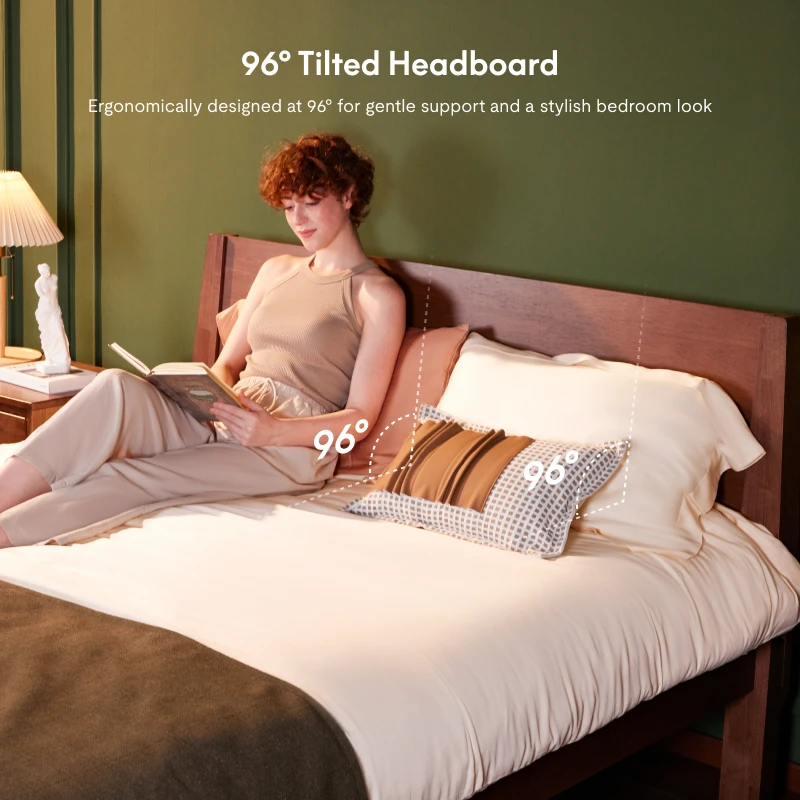
A custom headboard that runs floor to ceiling does something a standard 48-inch headboard simply can't: it pulls the eye upward and makes the ceiling feel taller, almost like you've wandered into a boutique hotel instead of your own house. Wood paneling or upholstery extended up the wall isn't just decoration at that point. It's architecture.
Curved frames and sculptural details work in a similar way, though more quietly. Instead of drawing the eye up, they soften the room's hard edges and give it a sense of movement. A platform bed with a gently curved silhouette can make an otherwise boxy room feel more organic, almost like the furniture was poured into the space rather than placed there.
From time to time, articles on The How-To Home may reference third-party websites, businesses, products, services, or review platforms as part of editorial research. When evaluating companies or services, we may consider publicly available information such as customer reviews, business websites, service offerings, licensing information when available, and overall relevance to the topic.
Reclaiming Space Without Sacrificing Style
Not everyone has a sprawling primary suite to work with, and honestly, most people don't. If you're working with a studio apartment, a guest room that's also supposed to function as a home office, or a kids' playroom that occasionally needs to become a sleeping space, a custom bed can solve problems that a standard one just can't.
This is where space-saving furniture earns its keep. Custom murphy beds fold up and disappear into the wall when you're not using them, which means a room can function as a home office by day and a guest room by night without looking like it's pulling double duty.
A queen murphy bed or king murphy bed with a barn door style cabinet front, for instance, looks more like a piece of built-in furniture than something hiding a mattress. It's a clever bit of design that solves a real square-footage problem without making the room feel like a compromise.
Storage beds solve a quieter version of the same problem. Drawers built into the base, or an ottoman-style lift mechanism, give you a place to put off-season clothing or extra linens without needing a separate dresser eating up wall space.
It's not flashy, but it's the kind of detail that makes a room function better day to day, which honestly matters more than most of the visual stuff once the novelty wears off.
Custom Texture and Color Matter
Most furniture stores sell the same five or six colors because that's what's statistically safe to stock. Greige. Off-white. A safe navy. Nothing wrong with those choices, but they're chosen for inventory reasons, not because they're right for your room.
When you go custom, that constraint disappears. You can choose a deep, textured velvet if you want the room to feel a little dramatic and cocoon-like at night.
You can go with warm linen if you're after that lived-in, slightly undone Scandinavian minimalism that's been popular for the better part of a decade now. Or you can lean into something closer to contemporary American interiors, clean lines, richer woods, a more tailored finish.
Wood species also matter. Maple reads lighter and more casual. Cherry tends to warm up a room and feels a bit more formal. And if you're not attached to showing off the grain at all, paint grade finishes let you match a headboard precisely to your trim or your walls, which is a small detail that makes a surprisingly big difference once it's done.
Little touches, like crown molding details on a headboard frame or beadboard paneling along the base, borrow language from architecture rather than furniture catalogs. That's usually the difference between a bedroom that looks "nice" and one that looks designed.
Lighting and Small Tech Details That Add Up
It's easy to overlook lighting when you're thinking about a bed, but it's become one of the more meaningful upgrades in custom bed design over the past several years.
Concealed LED strips built into the underside of a headboard cast a soft glow without needing a lamp on either nightstand. It's subtle, but it changes the mood of a room at night in a way that's hard to replicate with overhead lighting.
Built-in outlets and USB ports along the headboard or frame are another one of those features you don't think you need until you have them. No more reaching behind the nightstand at midnight trying to find a charger cord by feel.
It's a small convenience, but it's the kind of thing that makes a custom piece feel like it was designed around how people live, not just how furniture is supposed to look in a catalog photo.
Making It Personal, Not Just Pretty
The real value of a custom bed isn't really about luxury, even though that's often how it gets marketed. It's about fit. A bed built to your room's proportions, in a fabric or wood tone you chose, with storage or lighting solutions that solve your specific problems, ends up feeling less like a purchase and more like a piece of the house itself.
That's the difference between a bedroom that looks fine and one that feels like yours. The mattress matters, sure, the firmness, the comfort, all of that. But the frame around it, the part you see every day, is what turns a place to sleep into a space worth showing off.