6 Gutter Cleaning Myths That Lead to Costly Home Repairs

Gutters do one job all day long and get almost no attention until something goes wrong. Clogged gutters rarely announce themselves, and by the time stains or leaks show up indoors, the damage has usually been building for a season or more.
Much of the neglect comes from a handful of beliefs that sound sensible. Each one contains a grain of truth, which is exactly why they last, and why they end up costing homeowners real money in repairs.
I know this one firsthand. We live at the top of a hill, and my backyard has two large maple trees and one HUGE oak tree. All three are close enough to the house that their leaves land right in the gutters, especially the back gutter on the house and the gutters on our sunroom. So gutter season isn't a theory around here... it happens every single year.
From time to time, articles on The How-To Home may reference third-party websites, businesses, products, services, or review platforms as part of editorial research. When evaluating companies or services, we may consider publicly available information such as customer reviews, business websites, service offerings, licensing information when available, and overall relevance to the topic.
Myth #1: Gutter Guards Mean You Never Have to Clean Again
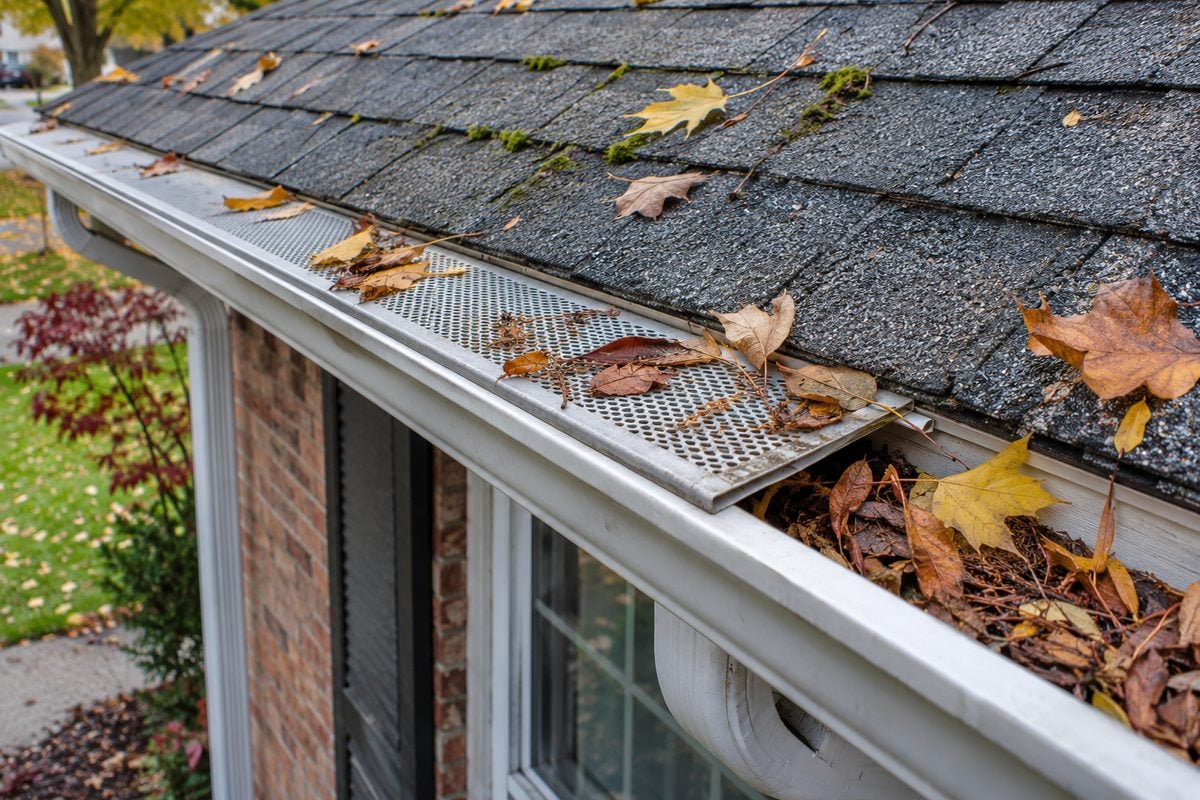
Gutter guards do real work. They keep leaves and larger debris out of the trough, so you climb a ladder less often. What they don't do is remove the job.
Fine material still gets through or settles on top. Shingle grit, pollen, seed pods, and silt can build into a thin mat on a screen, and some guard designs clog with fine debris faster than owners expect. Pine needles are another weak spot, since they can lie across a screen or slip through the openings.
A guard can also hide the problem. A blocked gutter under a cover looks perfectly fine from the yard. Realistically, guards reduce how often gutters need
I'm living proof of both sides of this one. About 20 years ago I had gutter guards put on our house, and honestly, they've held up really well. But living on top of a hill means high winds, and over the years a few of those guards have flown right off. I haven't had them replaced yet... which means, yes, those open sections still fill up with maple and oak leaves and still need to be cleaned. If your guards have gaps, your gutters have gaps.
Myth #2: Once a Year Is Plenty (How Often Should You Clean Gutters?)
For some houses it is. For many it isn't, because the schedule depends on the trees, not the calendar.
Maples and oaks drop leaves in a short burst, but some oaks hold their leaves well into late fall. A

A useful pattern is a
I learned the timing lesson the hard way, just not with gutters. We used to have a pool, and we usually closed it the day after Labor Day. One year we put it off until the end of September. The water was freezing, leaves were falling in, and my husband and I bickered the whole time. The skimmer seal didn't get fully sealed. Then a February snowstorm hit, the pool caved in on the skimmer side, and it drained out. We lost the pool and the wraparound deck along with it.
One small job, done a little late and a little rushed, cost us all of it. Gutters work the same way... the job you put off is the one that turns into the big repair bill.
Myth #3: I'd See It From the Ground (Signs of Clogged Gutters)
The inside of a gutter is invisible from the lawn. A trough can be packed solid while the front edge looks clean and straight. You can see the symptoms, and they tend to be ignored because they seem unrelated.
These are the signs worth taking seriously:
- water spilling over the edge during rain, especially at corners and below downspouts;
- dirty streaks on the siding beneath the gutter line;
- gutters that sag in the middle or pull away from the fascia;
- seedlings or grass growing out of the trough;
- peeling paint or dark staining on the fascia and soffit;
- pooled water or washed-out soil along the foundation;
- heavy clusters of icicles along one section of the roof edge in winter.
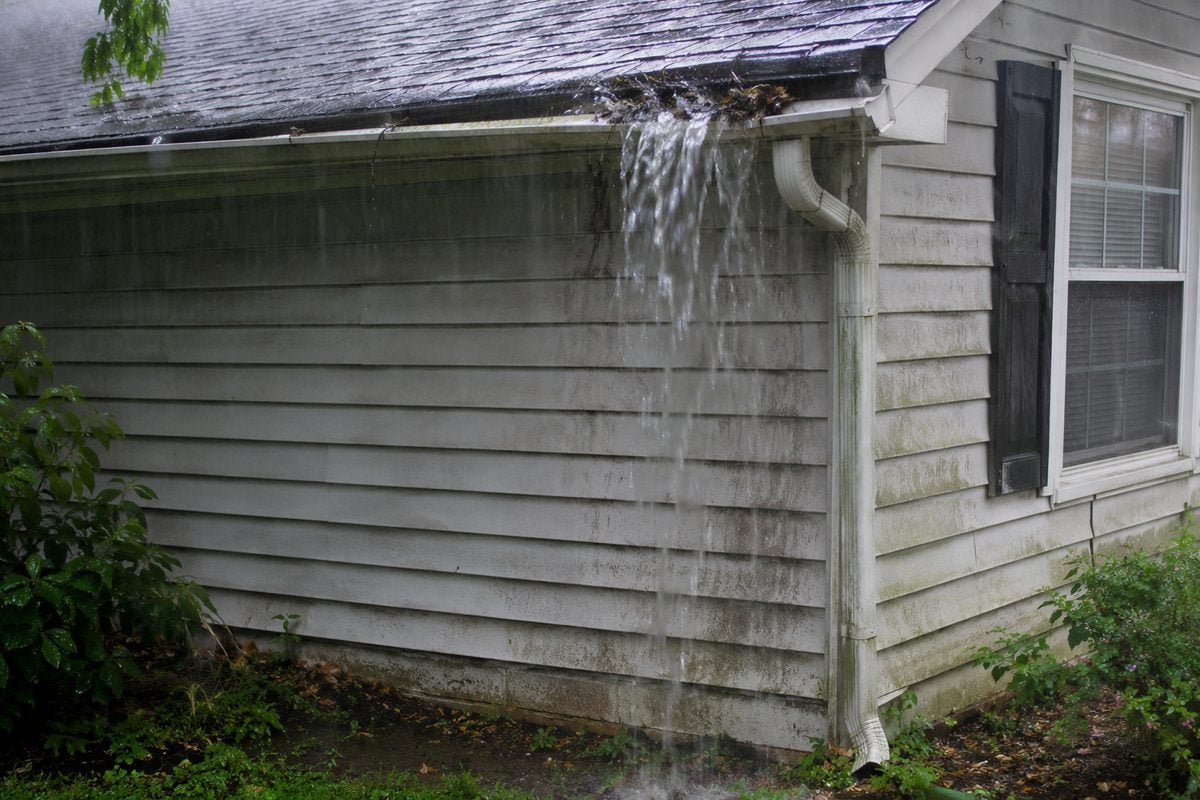
Any one of these means water isn't leaving the roof the way it should. A good habit is to stand outside during a steady rain and watch where the water goes. It takes five minutes and shows more than any ladder inspection.
Myth #4: A Little Overflow Is Harmless
It is easy to shrug at water spilling over a gutter, because it looks like rain doing what rain does. The trouble is where that water lands and what it does over time.
Fascia and soffit are the first to suffer. Wood that stays wet rots, and paint on it blisters and peels. Water can also work behind the gutter and soak the roof edge, where damage is hard to see and expensive to open up.
The foundation takes the next hit. A roof with about 2,000 square feet of surface sheds roughly 1,250 gallons for every inch of rain. When a blocked gutter dumps that volume at the base of a wall instead of carrying it to a downspout, the soil saturates, and moisture finds its way toward the foundation and basement.
Weight is a quieter problem. A trough full of wet leaves and sludge is far heavier than an empty one. Over a season, it can bend hangers, loosen fasteners, and pull sections away from the house.
Then there is winter. Ice dams have several causes, and heat escaping through the attic is the main one. But a gutter packed with debris gives meltwater nowhere to go, so it freezes at the roof edge. Water expands by about 9% as it turns to ice, and that expansion can lift shingles and push water under them.
Myth #5: The Next Rainstorm Will Flush Them Out
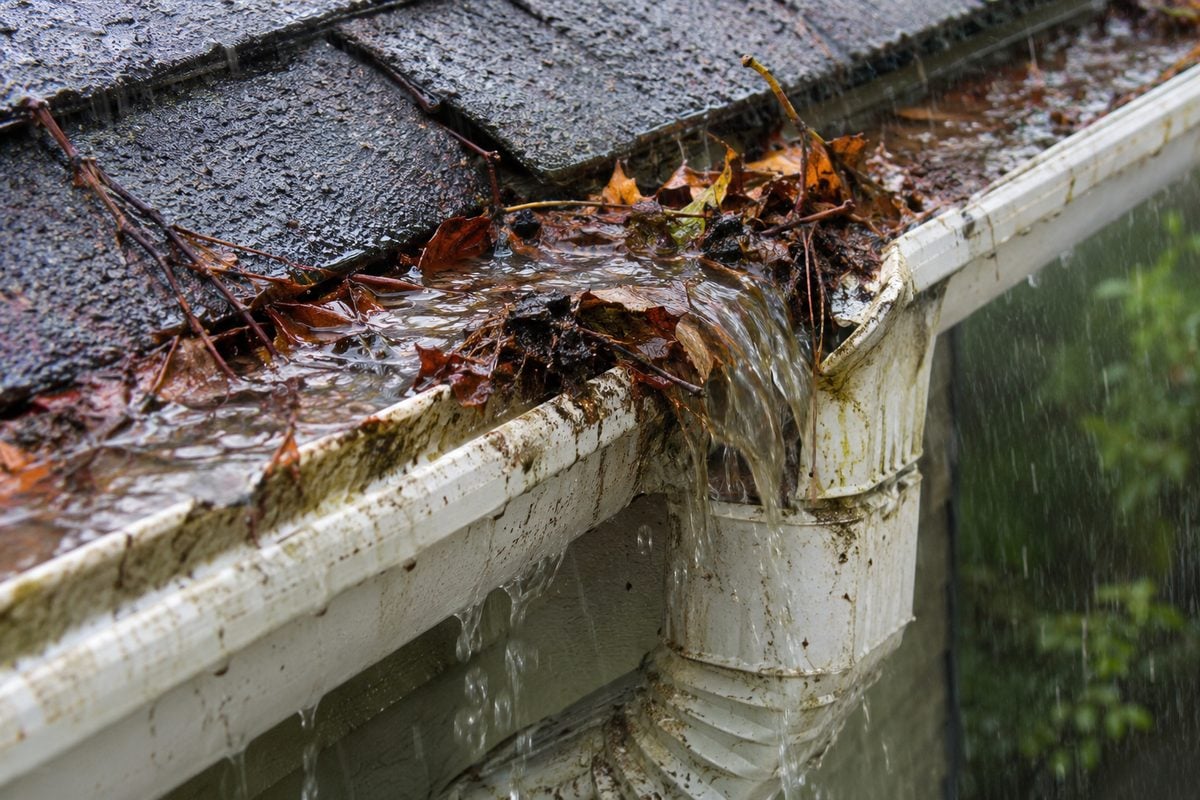
Rain moves some light material along, but it also does the opposite. Wet leaves compact into a dense mat, break down into sludge, and trap seeds that sprout in the trough. A downspout elbow is a classic choke point, and a small plug there can hold back an entire run of gutter.
A partly blocked gutter also fails exactly when you need it most. A light shower may pass through without incident, while a heavy downpour overwhelms the narrow opening left and sends water over the edge in sheets.
Myth #6: It's a Quick Ladder Job for Any Saturday
Clearing the visible debris takes an hour. Doing the job properly takes longer and involves more than scooping. Downspouts need to be flushed and checked for flow, seams and end caps need a look, and the pitch of the run matters, because a gutter that holds standing water will keep collecting sludge no matter how often it is emptied.
Ladders add risk. Falls from ladders are a common source of serious home injuries, and gutter work means reaching sideways, carrying a bucket, and leaning at the worst possible angle. On two-story homes, steep roofs, or gutters that haven't been touched in years, professional gutter cleaning services are often the safer, more thorough choice, and they will notice small problems such as loose hangers while they are up there.

At our house, gutters are a family job. My husband used to do them, and now my youngest son has taken over. I'm short, so I already need a ladder just to clean the high spots inside the house, and I have zero interest in balancing on one at the roofline with a bucket. When my guys can't get to the gutters in a timely fashion, I hire someone. That's not giving up... it's making sure the job gets done before the leaves turn to sludge.
What Actually Works: A Simple Gutter Maintenance Routine
None of these myths are silly. They survive because gutters are out of sight, and it's easy to assume a system you can't see is fine. The fix is to replace assumptions with a simple routine.
Match the schedule to your trees and clean after the leaves are down. Check the gutters again in spring and after major storms. If you have guards, inspect them rather than trusting them. Watch the system work in the rain, and repair sagging sections and loose hangers as soon as you notice them.
Gutters are among the cheapest parts of a house to maintain and among the most expensive to ignore. Fascia, soffit, siding, and foundation repairs all trace back to the same source: water going somewhere it was never meant to go.