How to Set Up a Bedroom That Actually Helps You Sleep
Most rooms in a house get set up for a job. The kitchen is arranged around
From time to time, articles on The How-To Home may reference third-party websites, businesses, products, services, or review platforms as part of editorial research. When evaluating companies or services, we may consider publicly available information such as customer reviews, business websites, service offerings, licensing information when available, and overall relevance to the topic.
Cooler than you think, with warm feet
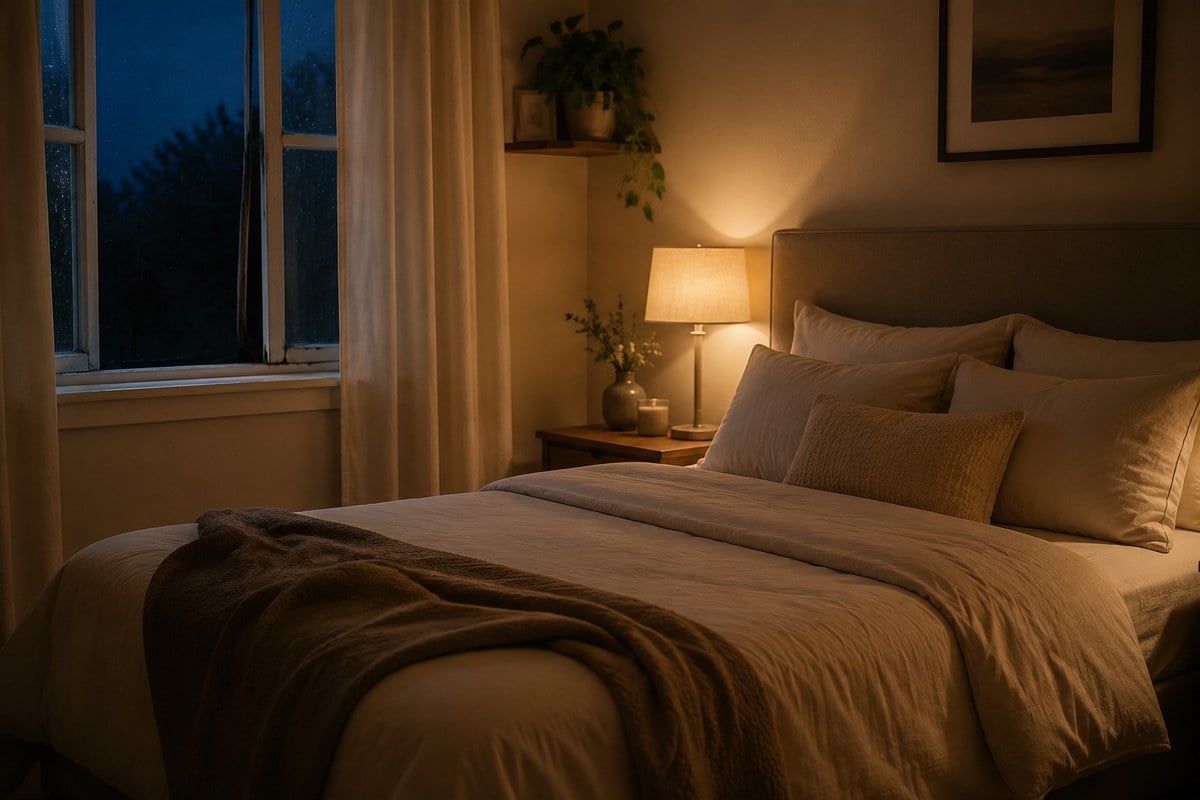
Your body doesn't just switch off at night. It cools down. Your core temperature starts dropping before you even fall asleep, and that drop is part of what gets you there.
The way your body sheds that heat is through your hands and feet. The blood vessels near the surface open up, the heat escapes, and your core temperature comes down.
A cool room helps because it gives that heat somewhere to go. And warm feet help too, because warm feet just mean those blood vessels are already doing their job. A cool room and a pair of socks aren't fighting each other. They're the same mechanism, working from two directions.
Set the thermostat lower than feels comfortable when you're standing in the room, dressed. You won't be standing there dressed, you'll be in bed. If your feet are cold once you're under the covers, reach for socks before you reach for the thermostat.
Be a little suspicious of the exact numbers you see quoted online. There's less research behind bedroom temperature than the confident phrasing suggests. The direction is well established. The exact number isn't.
Dark, and darker than a phone
Light is the signal your body uses to decide whether it's daytime. That's its whole job. Anything bright enough to read by is bright enough to argue with your body about what time it is.
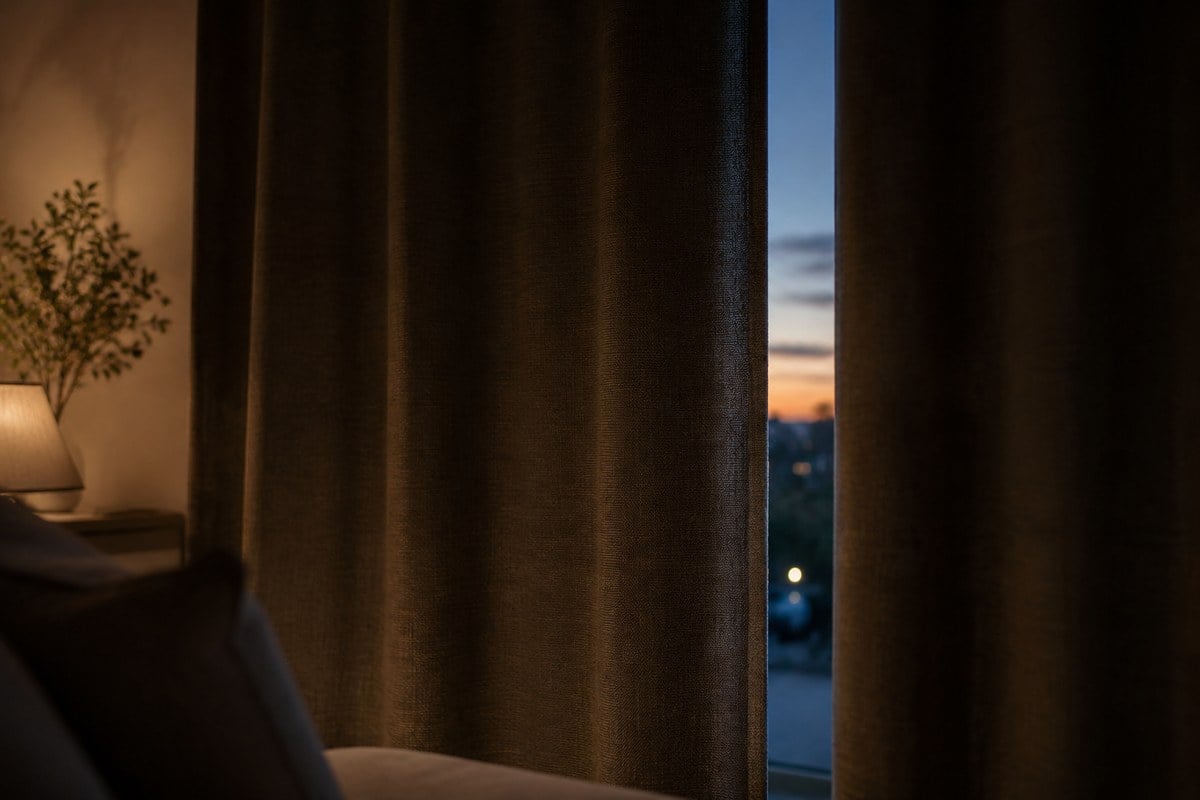
Blackout curtains if a streetlight reaches the bed. Cover or turn around those little glowing lights on chargers, TVs, and air purifiers, the ones you stop noticing after a week but are still there, still working on you. And in that last stretch of the evening, skip the overhead light. Use a lamp instead.
Steady noise beats sudden noise
Silence isn't the goal, and honestly, it's rarely achievable anyway. What wakes people up is change: the ice maker cycling, a car door, a dog two houses over.
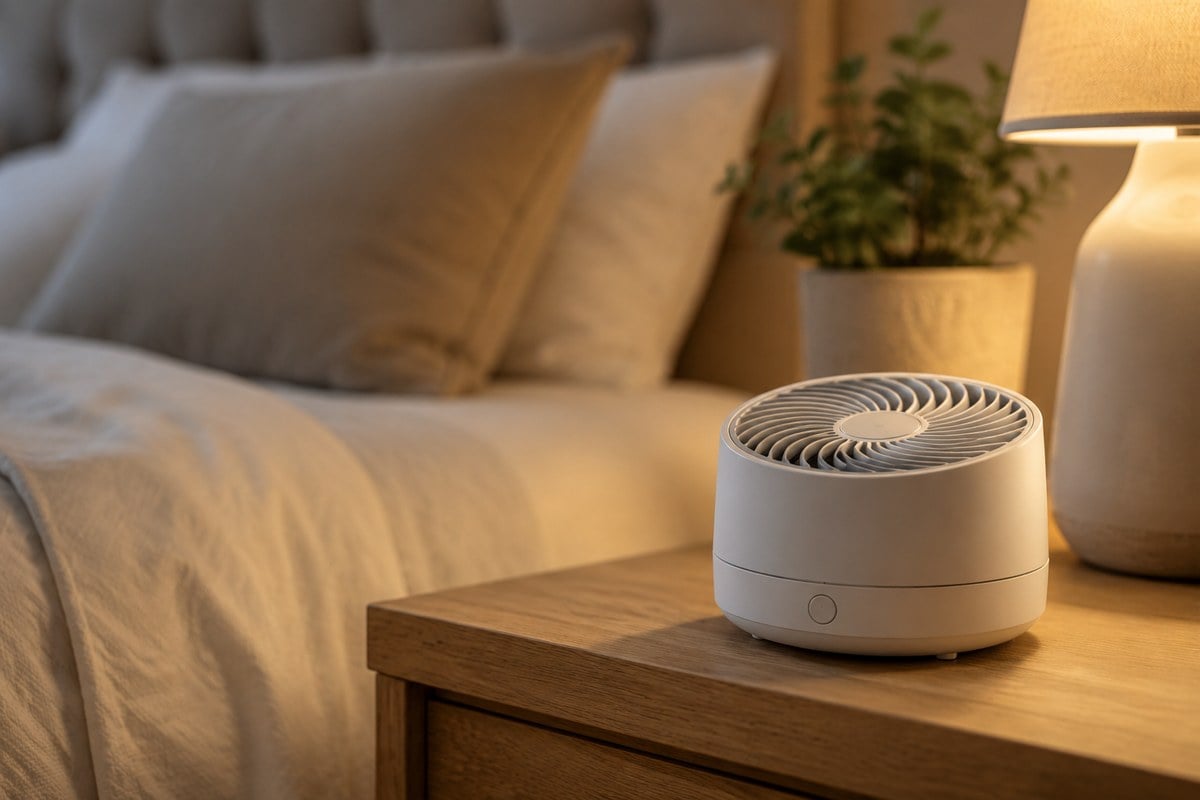
A fan or a white noise machine works by flattening that gap between background and interruption. The dog still barks. It just doesn't arrive into total quiet anymore.
What the bed is for
Use the bed for sleep and sex, and nothing else. No working from it. No scrolling in it. No lying there awake for an hour, just hoping.
This isn't about tidiness or discipline. It's about what your brain has learned that bed means. A bed you've spent months lying awake in becomes a place where being awake feels normal. You get in, and instead of settling, you switch on. It's a strange thing... people in that situation often fall asleep just fine on the sofa, then find themselves wide awake the second they get into bed. Odd, until you understand what's actually happening.
The fix is unglamorous. If you've been lying there a while and it's clearly not happening, get up. Go somewhere else, do something quiet and a little boring in low light, and go back only when you're actually sleepy. It feels like the opposite of trying. That's the point.
Where the room stops helping
Do all of this and you've removed the obstacles. That's worth doing, and for a lot of people, it's enough. A cool, dark, quiet room makes a good night a lot more likely.
A well set up bedroom makes good nights easier. It doesn't change a pattern, though. If you've already got the temperature right, the room dark, the noise handled, and you're still lying awake at two in the morning, several nights a week, month after month... the room was never the variable. Something else is holding it in place.
That's a different problem. The American College of Physicians recommends cognitive behavioral therapy for insomnia as the first line treatment for chronic insomnia. You've actually already met some of it. That rule about getting up and leaving the room? That's one of its pieces, which is why it never really belonged on a list of bedroom tips in the first place. Most of the rest is about your schedule, and it asks more of you than a thermostat ever could.
A clinician trained in it can walk you through the whole thing. But most people meet it as an app these days. Rest is one of those.
The apps differ more than their descriptions let on, and a side by side of what each one actually includes lives at getrest.app/blog/the-best-cbt-i-apps.
None of that replaces a good bedroom, though. Set the room up properly first. It's cheap, it's mostly one afternoon of work, and it's the one part you control completely. Just know what it can do... and know when you're looking at something the thermostat was never going to fix.