Why Your Outdoor Space Feels 'Off' (The Psychology of Porch Design)
You spent thousands on a beautiful composite deck in 2025, complete with a modular sectional, string lights, and potted hydrangeas, yet you rarely step outside to enjoy it. Your outdoor space feels off, and you can't quite explain why. In photos it looks magazine-worthy, but in real life, sitting out there feels awkward, slightly stressful, even exposed. The problem usually isn't the furniture or the Pinterest inspiration. It's hidden porch design psychology that most homeowners don't know exists. The good news is that once you understand how simple shifts in coverage, proportion, and transitions work, you can turn an uncomfortable, unused deck into a true extension of your home.
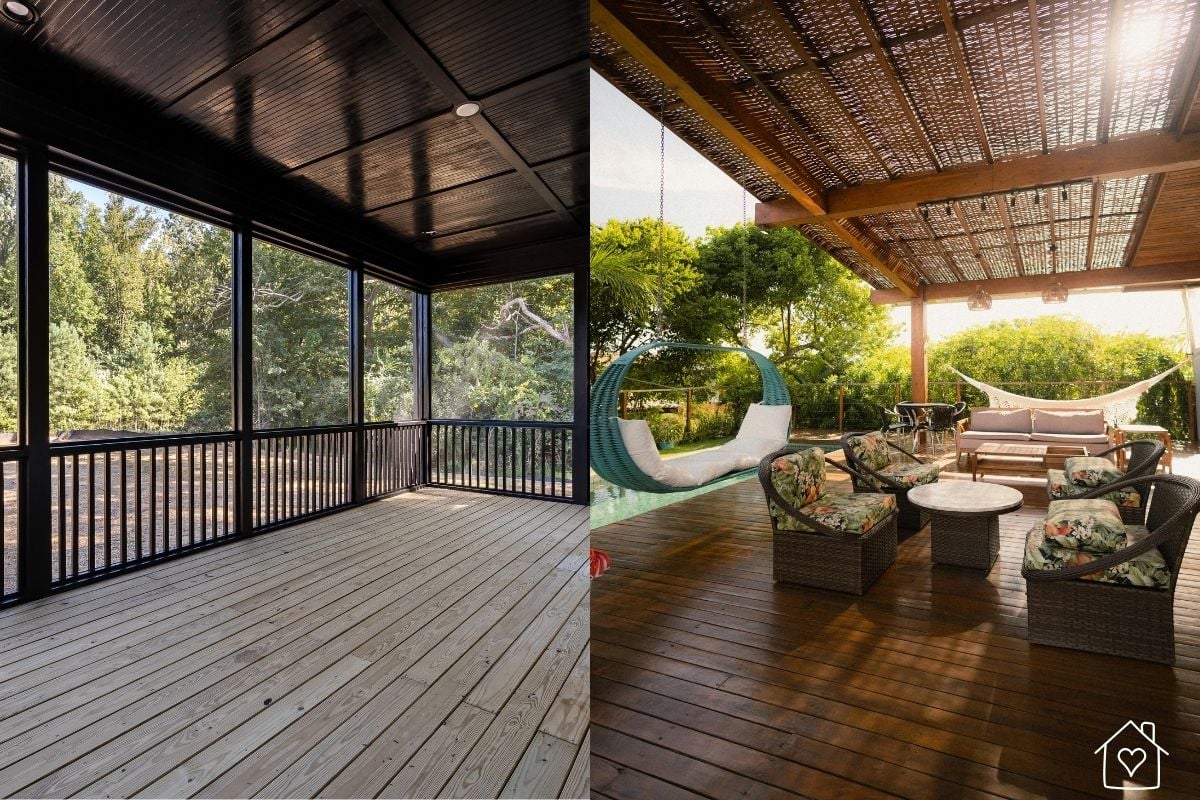
Both spaces use similar furniture but feel completely different because of coverage and proportion.
*This post may contain affiliate links and I'll earn a commission if you shop through them. You can read my full disclosure here.
The Hidden Psychology Behind Uncomfortable Outdoor Spaces
Your brain constantly reads every space you enter for safety, comfort, and usability, even when you're not aware of it. This is architectural and environmental psychology at work. Professional outdoor builders like Deck Guardian in Pennsylvania and New Jersey understand these psychological principles when designing year-round outdoor spaces that actually get used.
When a patio doesn't feel right or a deck feels unwelcoming, the issue is often invisible: too much exposure, no transition from indoors, or proportions that feel strangely wrong. Many homeowners try to fix an outdoor space that feels uncomfortable with more decor (pillows, planters, lanterns), but the core issue is usually structural and spatial, not decorative. Let's explore why exposure, thresholds, proportion, and biophilic design ideas matter so much.
Why Exposure Makes You Uncomfortable (Even When Weather is Perfect)
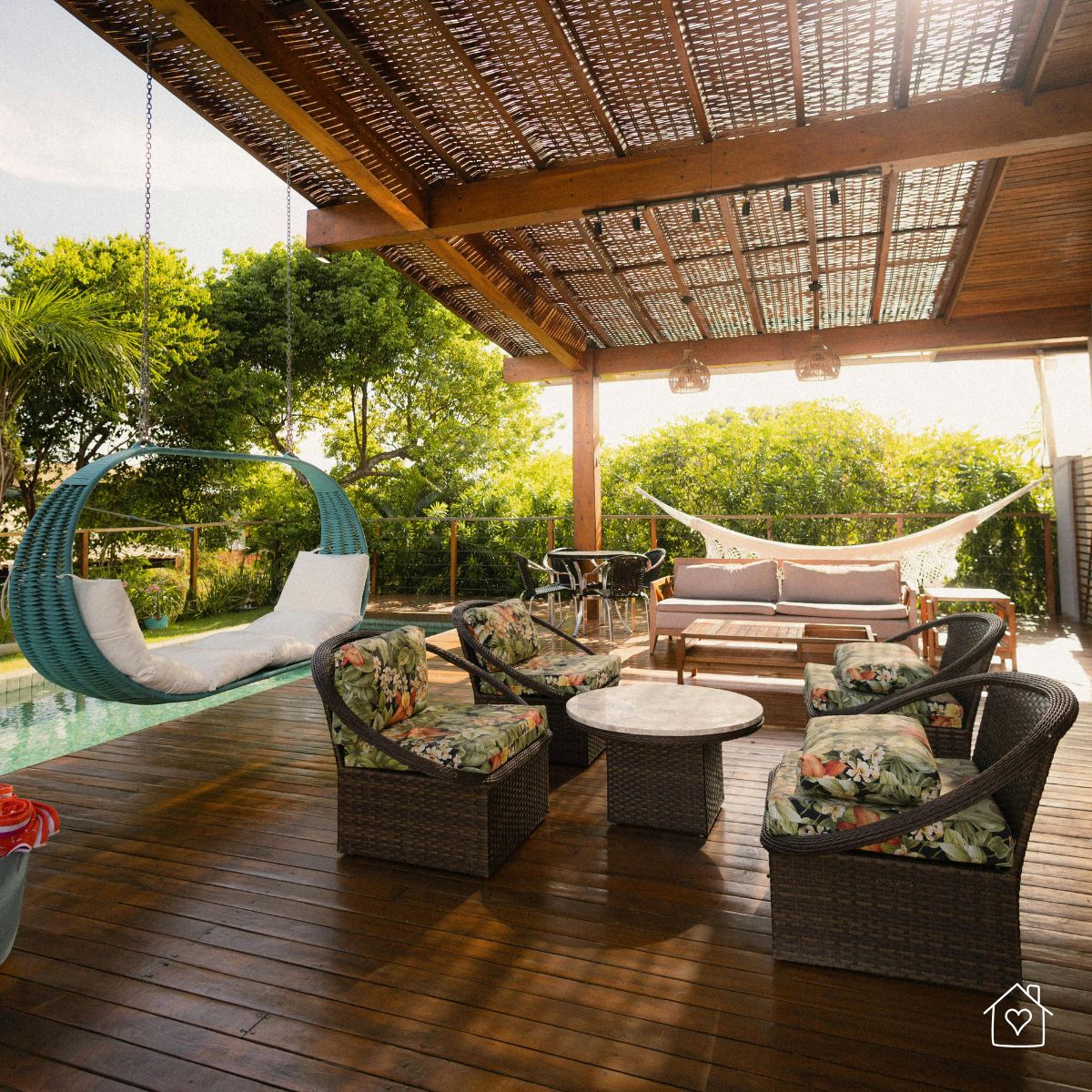
Think about the last time you sat down on your patio and immediately noticed the neighbors' windows, street traffic, or the harsh midday sun beating down with no overhead cover. That uneasy feeling isn't in your head. It's your brain doing exactly what evolution designed it to do.
Humans instinctively seek shelter and "refuge" while still being able to look out at our surroundings. Environmental psychology calls this the "prospect and refuge" principle. When a deck doesn't feel cozy, it's often because it functions as an exposed platform rather than a protected room. A patio feels uncomfortable when there's nowhere to retreat from the open sky or prying eyes.
Here's a simple example: place identical furniture (same table, same seating, same cushions) under a covered porch versus on an open deck. The covered space feels calmer and safer simply because of the roof and defined edges. When your outdoor space is too exposed, even perfect weather won't make you want to sit outside and read a book or enjoy a drink with friends.
The Threshold Problem: Your Outdoor Space Has No "In Between"
Architects have long understood the importance of threshold spaces, those "in-between" zones that soften the jump between indoors and outdoors. Think of porches, stoops, covered landings, and entryways. They give you a place to pause, adjust, and transition.
Now picture a common New Jersey home layout: a sliding door opens straight from a climate-controlled living room onto a full-sun deck. There's no step in temperature, light, or privacy, just an abrupt shift that feels jarring to your senses. This harsh transition creates a psychological barrier, which is one reason why an outdoor space isn't used even when it's technically convenient and nicely furnished.
Covered porches, shallow roof extensions, or even deep overhangs act as decompression zones. You can pause there to put shoes on, set down a bag, or chat with visitors without feeling fully outside. That's why covered entryways always feel more welcoming to guests arriving at your front door. Stepping "onto a porch" feels fundamentally different from stepping directly "into the yard." Your brain needs that in-between space to process the change.
The absence of threshold spaces is one of the most common reasons homeowners avoid their outdoor areas, even when they've invested in fun furniture and beautiful plants. The fix often isn't more decor. It's creating enough space between your house and the open air for your mind to adjust.
Proportion Matters More Than You Think
Our bodies recognize "human scale" automatically. When porch or deck dimensions are off, the space feels odd, echoey, or strangely empty, even if you can't articulate why.
Research and building history suggest that most people feel comfortable under covered ceilings between about 7.5 and 9 feet high. A functional porch depth is at least 8 feet to allow chairs, a small table, and comfortable circulation. Very shallow decks or 4-foot "token" porches tend to feel cramped, while huge, unbroken 16×30-foot platforms can feel like empty stages rather than outdoor rooms.
Architectural studies consistently show that people prefer spaces with room-like ratios rather than long, skinny layouts or overwhelmingly open floor plans. A covered porch with defined edges, appropriate ceiling height, and balanced depth creates a "room" you want to visit. A flat platform with no visual boundaries is just a wood or composite floor in the open air, and your brain knows the difference even when you can't quite name it.
The Missing Biophilic Connection
Biophilic design means humans feel better when we're visually and physically connected to nature, but with some control over sun, wind, and view. This is why a screened porch or a deck with a louvered roof often feels more inviting than either a fully enclosed room or a bare slab.
A covered outdoor space lets you enjoy trees, sky, and fresh air while still feeling protected. Adjustable elements like louvered roofs, retractable screens, and light curtains let you dial in comfort and reduce the sense that the space is too exposed or unpredictable. The most comfortable porches don't block nature; they filter it. Framed views, partial railings, and open sides create a balance between openness and enclosure.
Contrast sitting behind solid walls (no nature at all) versus sitting on a bare concrete patio (too much exposure). The sweet spot is "nature with shelter," the kind of space where you can step outside, sit down, and actually relax. That biophilic connection is why adding plants, a small water feature, or even a trellis with climbing vines can elevate your outdoor experience beyond what any amount of modern furniture alone can achieve.
How to Fix an Outdoor Space That Feels "Off"
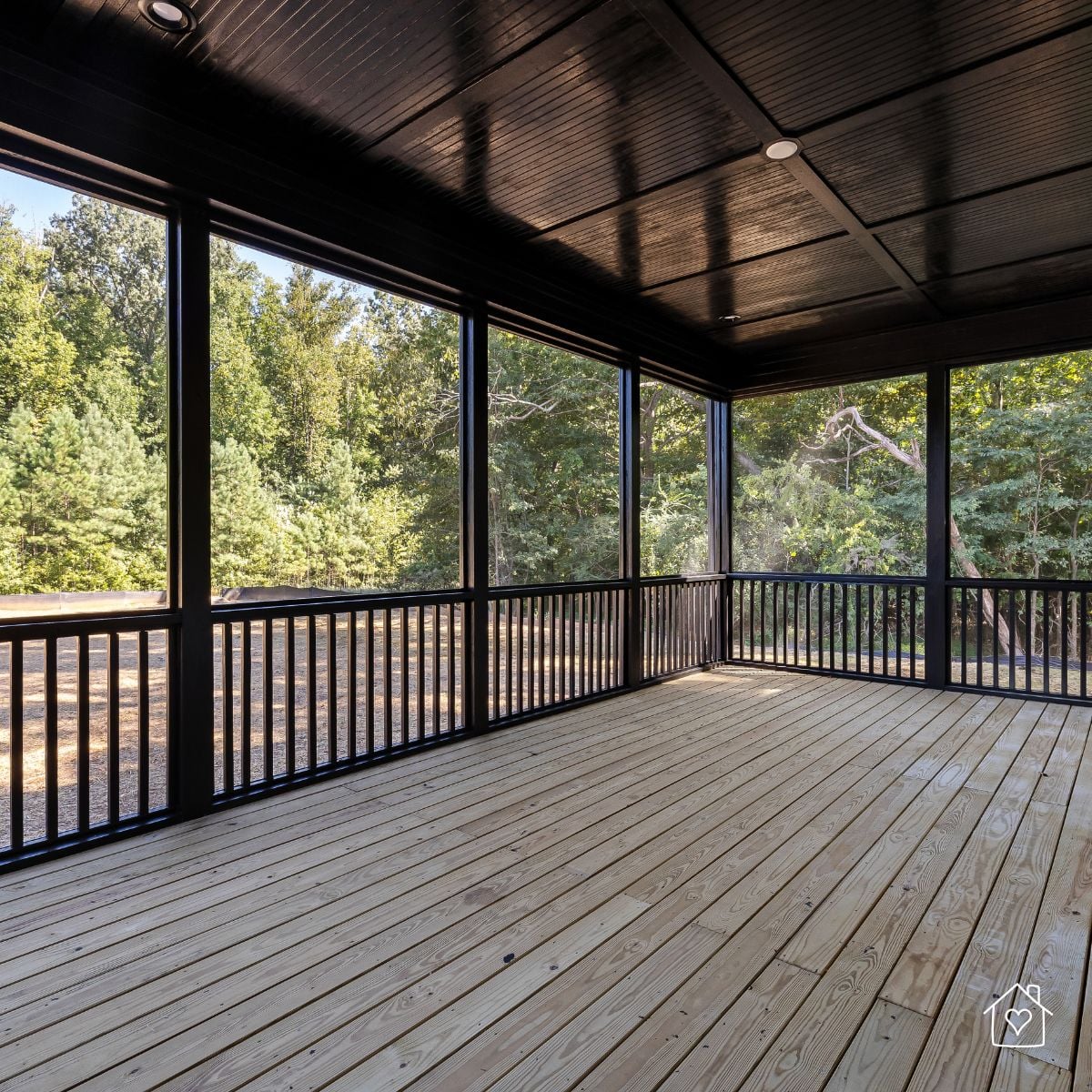
If your patio doesn't feel right or your deck feels unwelcoming, you don't necessarily need to start over. Targeted changes can shift the psychology of a space dramatically. This section will give you practical ways to adjust coverage, transitions, and proportions, organized into four short sub-sections with concrete, homeowner-friendly porch ideas.
Suggestions range from quick weekend fixes (rugs, planters, lighting) to bigger projects (adding a roof or porch) so you can find something that fits your budget and timeline.
Add Overhead Coverage
If your outdoor space feels too exposed, any form of overhead structure will instantly improve psychological safety. Start with scalable options: a simple shade sail or fabric canopy, a wood pergola with climbing vines, or a fully roofed porch or deck cover tied into your home's structure.
Even partial coverage, like a pergola with slats or a small covered zone near the front door, creates a "refuge" spot where people naturally gravitate. Position coverage where you actually sit (over the dining table or seating group), not just over circulation paths.
In climates like New Jersey and eastern Pennsylvania, adding a solid roof or louvered system extends the outdoor season and reduces the sense of discomfort that comes when summer ends. A bit of overhead protection can transform how you use your space from spring through fall, and sometimes even into winter.
Create Transition Zones
If your door opens straight onto a bare deck, you can still create a soft threshold using design elements, even without rebuilding the structure. Start with practical tools: an outdoor rug just outside the door, a small console or bench, tall planters flanking the opening, and layered lighting (wall sconces near the door, then lanterns or string lights farther out).
Arranging furniture in distinct "zones" helps the brain read a gentle progression from inside to semi-inside to outside. Try a small seating cluster by the door, then a dining area farther out. Subtle changes in flooring materials or rugs can mark these zones so stepping out feels like entering a front porch first, not instantly the open street or yard.
These are easy fixes you can set up in a weekend, and they make a surprising difference in how inviting your space feels to you and your visitors.
Consider Proportions
Grab a tape measure and check your existing space: length, width, and any overhead height. Note if the deck is unusually narrow or overwhelmingly large. This simple step can reveal a lot about why the space feels off.
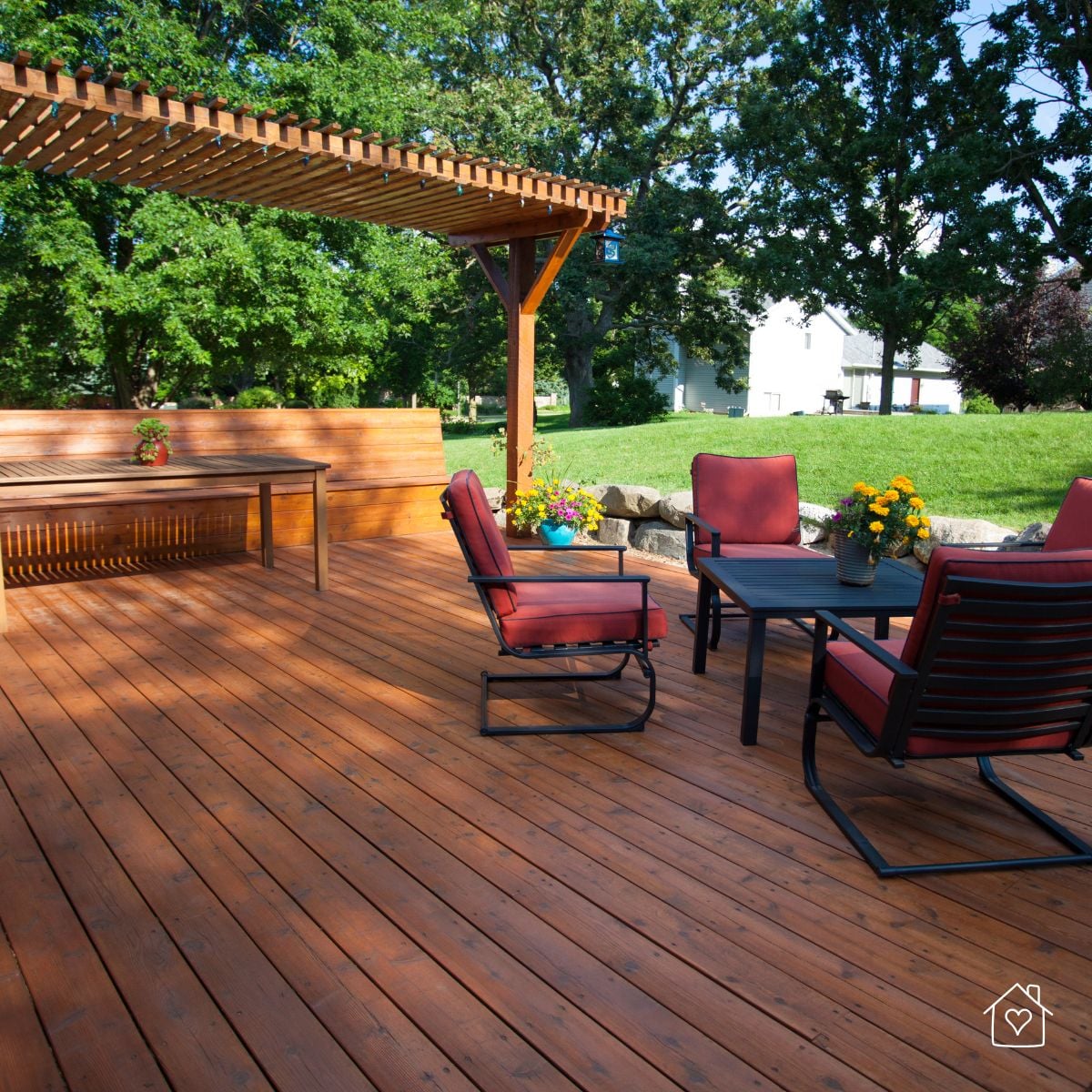
For oversized decks, pull furniture in toward the house and define a "room" with an 8×10 or 9×12 rug. Leave extra perimeter as circulation instead of empty void. For shallow porches, use slimmer furniture (benches, built-in seating) and arrange pieces along the perimeter to maximize usable depth.
If your covered porch has very tall ceilings, visually lower them with hanging lanterns, ceiling fans, or outdoor drapery to create a more intimate envelope. The goal is spaces that feel like outdoor rooms, not stages. Furniture grouping and visual boundaries can compensate when structural changes aren't feasible, and they can make a lot of difference even with a small investment.
When to Call Professionals
Adding a permanent roof, extending a porch, or structurally changing a deck in states like New Jersey and Pennsylvania typically requires permits, engineering, and experienced builders. This is when it makes sense to bring in professionals who understand both construction and porch design psychology. Placement of posts, roof pitch, depth, and railing height all affect comfort and safety.
Pennsylvania and New Jersey homeowners often work with local specialists like Deck Guardian for covered porch additions, three-season rooms, or redesigned composite decks. When you visit a professional for a consultation, come prepared with notes about how the outdoor space feels off, whether it's too exposed, too big, or too cramped. That way, the building team can solve psychological problems, not just cosmetic ones. A clean design and proper materials matter, but so does getting the spatial psychology right from the start.
Conclusion: Comfort Is Psychological, Not Just Pretty
When an outdoor space feels uncomfortable or a deck goes unused, the culprit is rarely the color of the cushions or the style of the furniture. It's underlying porch design psychology: exposure versus refuge, missing thresholds, off-scale proportions, and the need for a sheltered connection to nature.
Small, affordable tweaks like coverage, zones, light, and plants can change how a patio feels long before any major renovation. Larger moves, like adding a roof, creating a real porch, or re-proportioning the deck with the help of professionals, can transform an underused platform into a year-round living space your whole life revolves around. The difference between an outdoor space you avoid and one you love to live in often comes down to psychological design, not the price tag.